
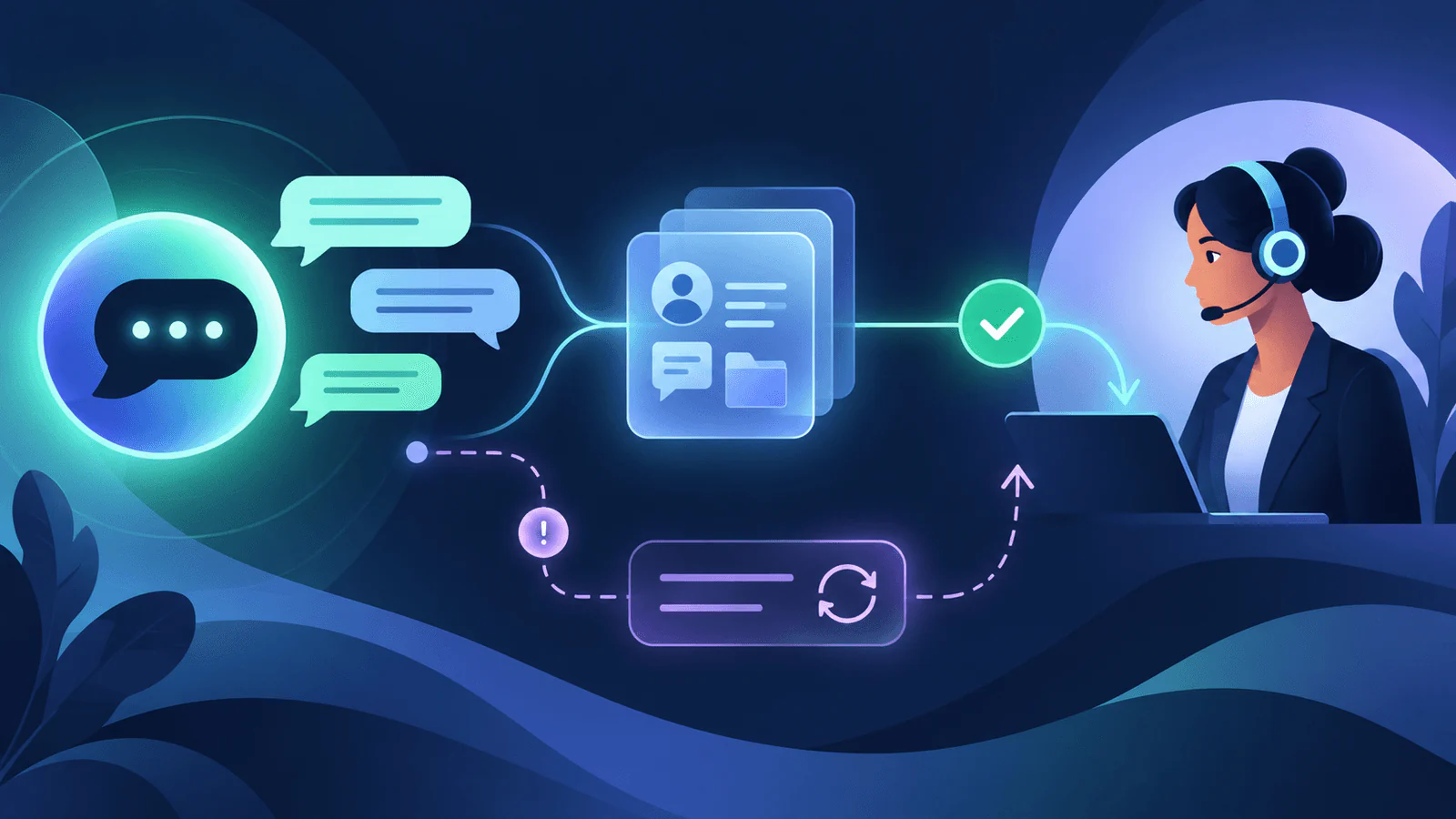
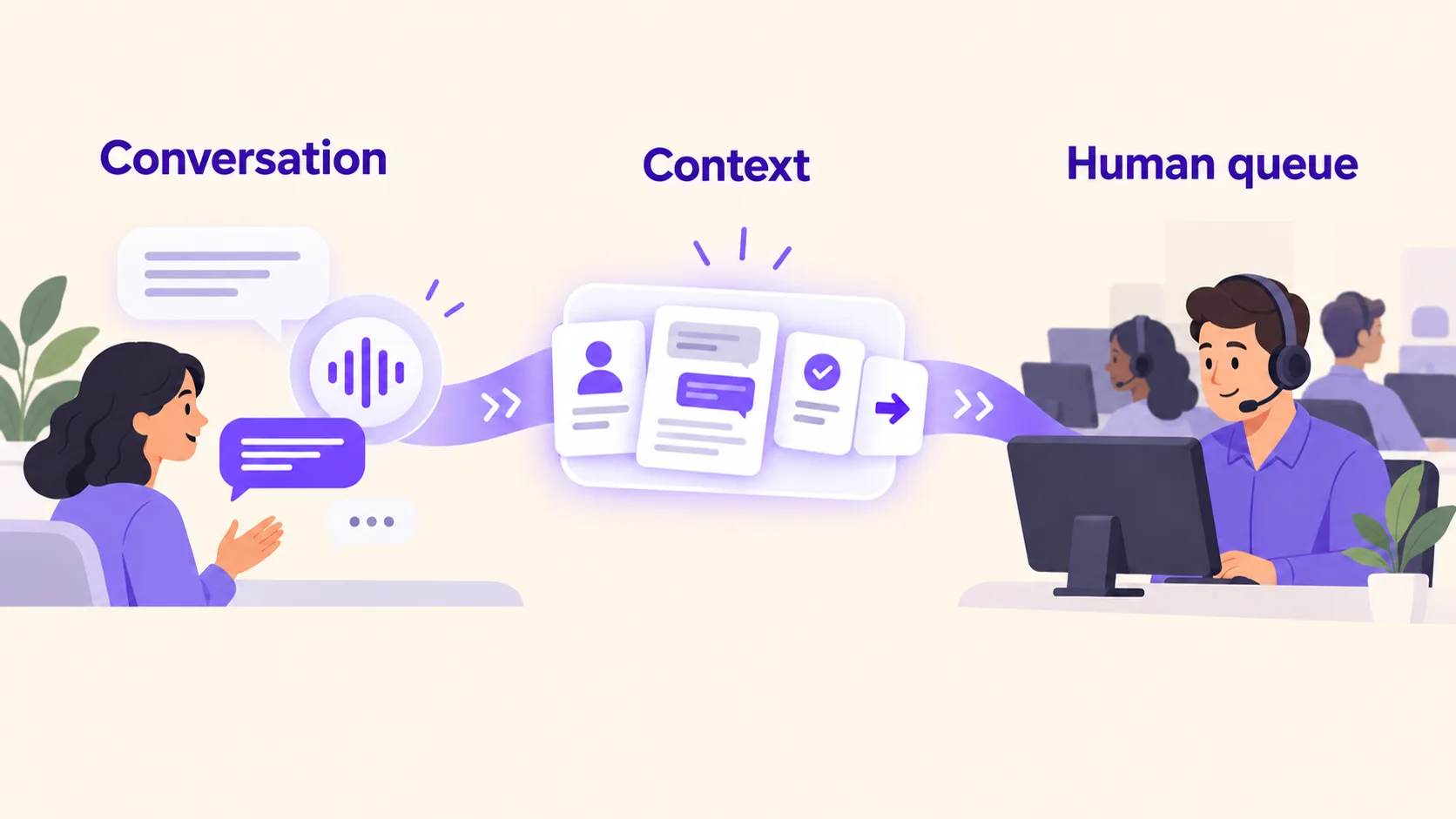
AI to human handoff succeeds only when the right person receives both the conversation and the work. A transfer signal by itself is not success. The design must define why the handoff occurs, what context travels, where it goes, who accepts it, what the caller hears, and how the process recovers when no person is available.
This article owns the transfer moment, payload, destination, acceptance, and recovery. Broader lead routing, supervisor operations, call dispositions, and CRM integration remain separate. The article uses only current first-party evidence for NextLevel warm-handoff claims.
The operating analysis connects warm transfer, handoff context, and failed transfer as distinct controls. The evidence set covers routing, queue, callback, transcript. Later checks also address qualification outcome, next action, owner. These concepts describe the review scope; they do not imply an unsupported product feature.
The operating principle: a handoff is a contract between the AI path and an accountable human destination, not a telephony event.
A practical model for this decision
The handoff contract makes the receiving obligation visible. It also separates a routing decision from accepted ownership and final resolution.
| Layer | Question | Required evidence | Accountable owner |
|---|---|---|---|
| Trigger | Why must a person take over? | reason and severity | workflow owner |
| Context | What does the receiver need now? | structured payload and transcript reference | conversation owner |
| Destination | Which person or queue is qualified? | routing rule and availability | operations |
| Acceptance | Did the human path take ownership? | answer or acknowledgement | receiving owner |
| Recovery | What happens if transfer fails? | fallback and final state | operations owner |
Define handoff success
What makes a handoff successful? The receiving human path accepts ownership with enough context to continue safely.
A call leaving the AI channel is only an intermediate event. Success includes acceptance, continuity, the next action, and a verified final record.
Use this production sequence:
- Define the endpoint. Name the person, skill queue, callback owner, or case queue.
- Define acceptance. Specify answer, acknowledgement, or assigned work.
- Protect continuity. Preserve verified facts and pending actions.
- Verify closure. Confirm the system of record reflects the new owner and state.
Evidence to retain. Keep trigger, payload, destination, acceptance, fallback, final owner, and CRM result.
Common failure. The transfer is counted as complete when the AI disconnects.
Decision gate. A handoff passes only after accountable ownership is confirmed.
Choose explicit triggers
When should a voice agent hand off? Use customer, confidence, policy, action, and business triggers defined before launch.
The right trigger depends on the workflow. A human request is different from a failed booking, a policy exception, or an emotionally complex case.
Use this production sequence:
- Honor human requests. Provide a direct path when the caller asks for a person.
- Use uncertainty rules. Escalate when missing or conflicting facts change the action.
- Use policy rules. Route restricted, sensitive, or specialist decisions.
- Use failure rules. Escalate when tools, routes, or business state are uncertain.
Evidence to retain. Retain trigger name, detected evidence, severity, allowed response, and destination.
Common failure. A generic confidence threshold routes too many safe calls and misses the cases that matter.
Decision gate. Each trigger needs one intended destination and one unavailable-path rule.
For a primary implementation reference, see NextLevel AI Call Transfer. Use only if the current page remains live and supports the specific transfer statement.
Build a compact context payload
What context should transfer with the call? Send identifiers, verified facts, caller goal, qualification outcome, conversation context, pending action, and handoff reason.
A transcript can support deeper review, but the receiving person needs a scan-friendly summary. Preserve provenance so guesses do not look like verified facts.
Use this production sequence:
- Identify the contact. Use the approved lead or contact identifier.
- Summarize the goal. State why the caller engaged and what changed.
- Separate fact states. Mark confirmed, caller-stated, inferred, and unknown fields.
- Name the next action. Show what the human must decide or complete.
Evidence to retain. Keep the sent payload, transcript reference where available, route, receiver view, and final correction.
Common failure. The summary sounds complete but turns an inference into a customer fact.
Decision gate. Critical context must show provenance and unresolved uncertainty.
Select the right handoff mode
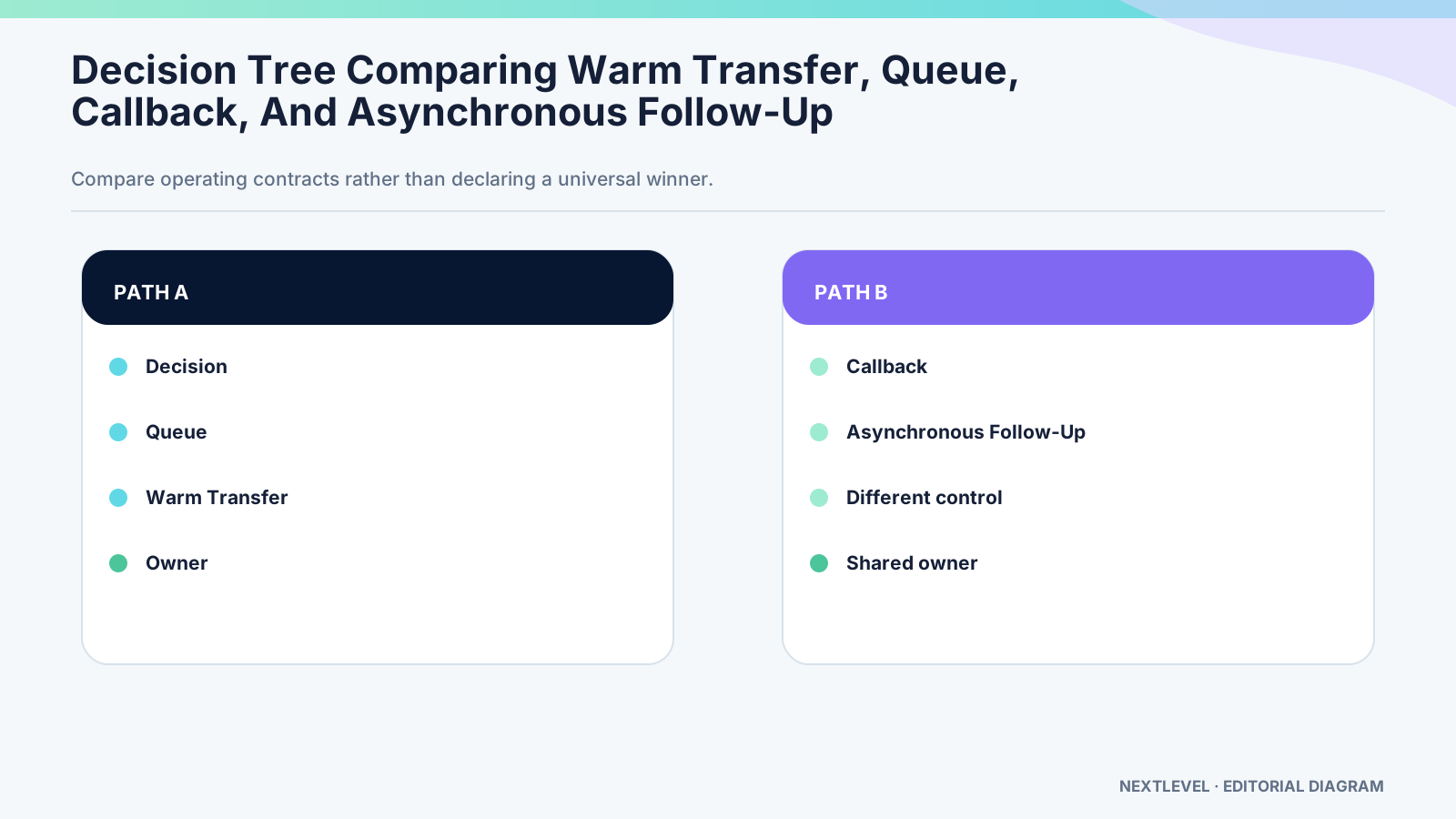
When is warm transfer better than callback? Use the mode that matches urgency, human availability, caller preference, and context risk.
Warm transfer preserves momentum. Callback avoids long holds. A queued task may fit lower urgency. None is best for every case.
Use this production sequence:
- Use warm transfer. Choose it when live dialogue, emotion, or complex state matters.
- Use a queue. Choose it when a qualified team is available within a known wait.
- Use callback. Choose it when no person is ready and the caller accepts a time window.
- Use follow-up work. Choose it when the task can proceed without a live call.
Evidence to retain. Retain selected mode, reason, caller consent where needed, destination, timing, and owner.
Common failure. The system promises a callback without creating an owned task.
Decision gate. The chosen mode must have a verified destination, timing rule, and fallback.
For a primary implementation reference, see Google Cloud virtual-to-human transfer documentation. Use for current transfer patterns and contact-center handoff context.
Route to accountable capacity
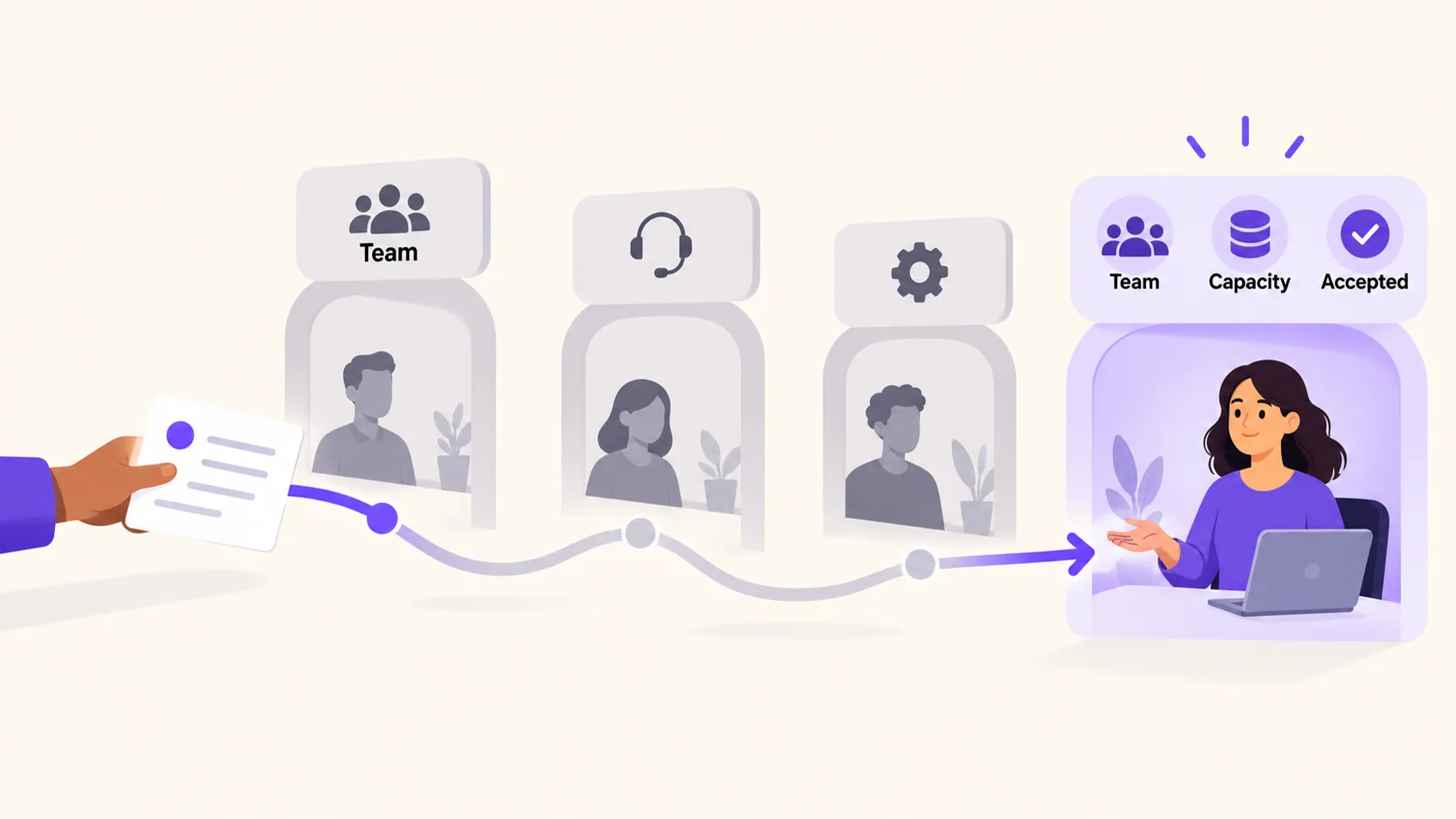
How should handoff routing work? Match intent, skill, language, risk, priority, availability, and ownership.
Routing by department name alone may land the call with a team that lacks context or authority. Capacity and acceptance matter as much as taxonomy.
Use this production sequence:
- Match skill. Use the capability required to finish the job.
- Check availability. Use hours, queue state, and alternate coverage.
- Set priority. Prioritize risk and customer harm before convenience.
- Require acceptance. Do not treat enqueue or ringing as ownership.
Evidence to retain. Keep route inputs, selected destination, alternatives, queue state, acceptance, and final owner.
Common failure. A correct skill queue is closed, but the workflow has no alternate path.
Decision gate. Routing passes only when live capacity or a tested deferred path exists.
Design the caller experience
What should the caller hear during handoff? Explain the reason, next step, expected wait or callback, and whether key details will travel.
Silence and vague promises erode trust. The message should be short and honest. It must not guarantee a response time the workflow cannot keep.
Use this production sequence:
- State the transition. Tell the caller that a person will continue the task.
- Set expectations. Explain hold, queue, callback, or follow-up clearly.
- Avoid repetition. Tell the caller which details are already shared.
- Handle delay. Provide a safe choice if the wait or connection changes.
Evidence to retain. Keep the spoken transition, wait or callback state, caller choice, and outcome.
Common failure. The agent promises “someone will answer now” when the destination is unavailable.
Decision gate. The caller message must match the real destination and current state.
Recover from failed transfers
What happens if the transfer fails? Preserve the call or task, explain the change, and move to an owned fallback.
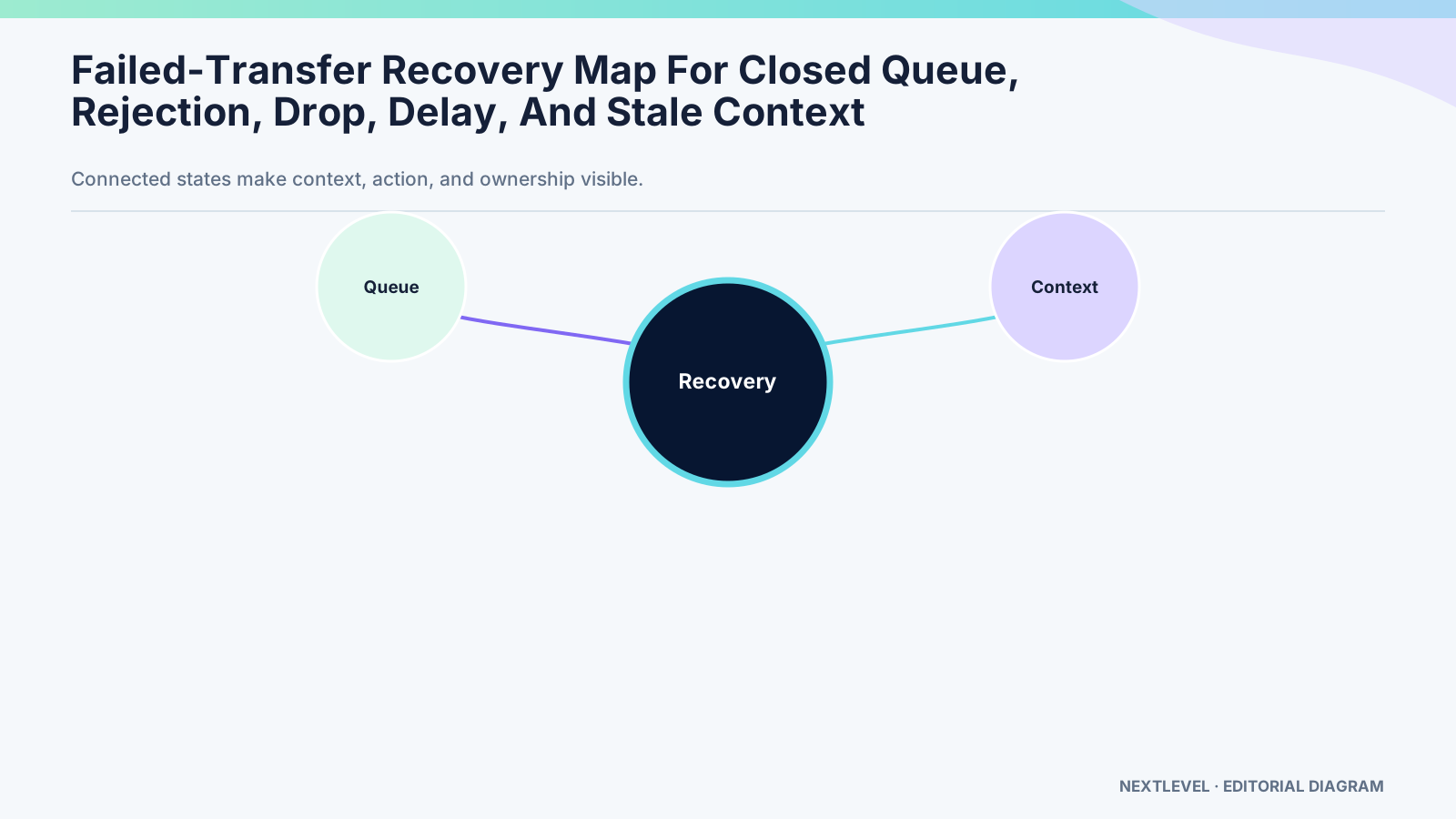
Failure modes include no answer, closed queues, rejection, dropped legs, expired callbacks, and stale context. Each needs a pre-approved response.
Use this production sequence:
- Detect the failure. Differentiate ringing, rejection, disconnect, timeout, and queue expiry.
- Keep context. Avoid losing the verified facts and pending state.
- Choose fallback. Try an alternate queue, callback, task, or safe stop.
- Reconcile ownership. Write the final route and owner to the system of record.
Evidence to retain. Retain failure class, caller effect, fallback attempt, final state, and owner.
Common failure. A dropped transfer loses both the caller and the work item.
Decision gate. Every transfer mode needs at least one tested failure path.
Test the full handoff path
How should teams test handoff? Test trigger, payload, telephony, acceptance, unavailable paths, and final CRM state together.
Component tests can show that routing and summaries work separately. End-to-end calls reveal whether timing, context, people, and records remain aligned.
Use this production sequence:
- Run normal cases. Test each handoff reason and destination.
- Run unavailable cases. Close queues, reject calls, and let callbacks expire.
- Inspect context. Check receiver view and factual provenance.
- Verify records. Confirm owner, disposition, next action, and final state.
Evidence to retain. Keep scenario, expected result, receiver feedback, telephony result, CRM result, and retest.
Common failure. The transfer works in a lab but fails outside staffed hours.
Decision gate. No handoff launches until its unavailable and recovery paths pass.
For a primary implementation reference, see NextLevel AI Call Transfer. Use only if the current page remains live and supports the specific transfer statement.
Use the framework as an operating review
Sample the whole contract. Check cases that were transferred, deferred, rejected, dropped, and completed. Ask the receiving team whether context was accurate and useful. Then verify the owner and next action in the system of record. Do not use transfer initiation as the success denominator.
A complete review should produce five outputs: a bounded workflow, a named owner, a testable acceptance rule, a safe exception path, and evidence that the final business state is correct. If one output is missing, the work is not ready to scale. Conversation quality matters. Action correctness and recovery matter just as much.
Where NextLevel fits
The current NextLevel SIP Bridge page describes soft AI escalation with full context and routing to existing human queues. The current AI Call Center page describes warm transfer with transcript and diagnostic context. The safe generic payload in this guide is lead or contact identifiers, qualification outcome, conversation context, next action, and other configured fields.
For the broader operating model, see NextLevel AI Sales Agent. For telephony integration and confirmed fallback behavior, see NextLevel SIP Bridge. The NextLevel AI Call Center page provides current context for call handling, warm transfer, transcripts, and call-level diagnostics. These links describe the public product scope. They do not turn the recommended controls in this guide into universal NextLevel features.
Field review: Define handoff success
Use this as a live operating review, not as a policy slogan. Ask the accountable owner to demonstrate how the team will name the person, skill queue, callback owner, or case queue; then specify answer, acknowledgement, or assigned work; then preserve verified facts and pending actions; then confirm the system of record reflects the new owner and state. The demonstration should follow one realistic path from its initial condition to the final business state, while preserving every decision that another reviewer would need to reconstruct the result.
Retain trigger, payload, destination, acceptance, fallback, final owner, and crm result. Then recreate this challenge case: The transfer is counted as complete when the AI disconnects. A fluent response, a successful transport event, or a plausible summary is not enough when the downstream state is wrong. Review the exception in context, identify the first control that failed, and assign the correction to a named owner with a retest date.
Apply one explicit approval rule: A handoff passes only after accountable ownership is confirmed. If the team cannot show that outcome consistently, reduce the workflow's authority, route the case to a person, or keep the existing process until the evidence supports a wider release. This makes the section testable without turning a recommended practice into an unsupported NextLevel product claim.
Field review: Choose explicit triggers
Use this as a live operating review, not as a policy slogan. Ask the accountable owner to demonstrate how the team will provide a direct path when the caller asks for a person; then escalate when missing or conflicting facts change the action; then route restricted, sensitive, or specialist decisions; then escalate when tools, routes, or business state are uncertain. The demonstration should follow one realistic path from its initial condition to the final business state, while preserving every decision that another reviewer would need to reconstruct the result.
Retain trigger name, detected evidence, severity, allowed response, and destination. Then recreate this challenge case: A generic confidence threshold routes too many safe calls and misses the cases that matter. A fluent response, a successful transport event, or a plausible summary is not enough when the downstream state is wrong. Review the exception in context, identify the first control that failed, and assign the correction to a named owner with a retest date.
Apply one explicit approval rule: Each trigger needs one intended destination and one unavailable-path rule. If the team cannot show that outcome consistently, reduce the workflow's authority, route the case to a person, or keep the existing process until the evidence supports a wider release. This makes the section testable without turning a recommended practice into an unsupported NextLevel product claim.
Field review: Build a compact context payload
Use this as a live operating review, not as a policy slogan. Ask the accountable owner to demonstrate how the team will use the approved lead or contact identifier; then state why the caller engaged and what changed; then mark confirmed, caller-stated, inferred, and unknown fields; then show what the human must decide or complete. The demonstration should follow one realistic path from its initial condition to the final business state, while preserving every decision that another reviewer would need to reconstruct the result.
Retain the sent payload, transcript reference where available, route, receiver view, and final correction. Then recreate this challenge case: The summary sounds complete but turns an inference into a customer fact. A fluent response, a successful transport event, or a plausible summary is not enough when the downstream state is wrong. Review the exception in context, identify the first control that failed, and assign the correction to a named owner with a retest date.
Apply one explicit approval rule: Critical context must show provenance and unresolved uncertainty. If the team cannot show that outcome consistently, reduce the workflow's authority, route the case to a person, or keep the existing process until the evidence supports a wider release. This makes the section testable without turning a recommended practice into an unsupported NextLevel product claim.
Field review: Select the right handoff mode
Use this as a live operating review, not as a policy slogan. Ask the accountable owner to demonstrate how the team will choose it when live dialogue, emotion, or complex state matters; then choose it when a qualified team is available within a known wait; then choose it when no person is ready and the caller accepts a time window; then choose it when the task can proceed without a live call. The demonstration should follow one realistic path from its initial condition to the final business state, while preserving every decision that another reviewer would need to reconstruct the result.
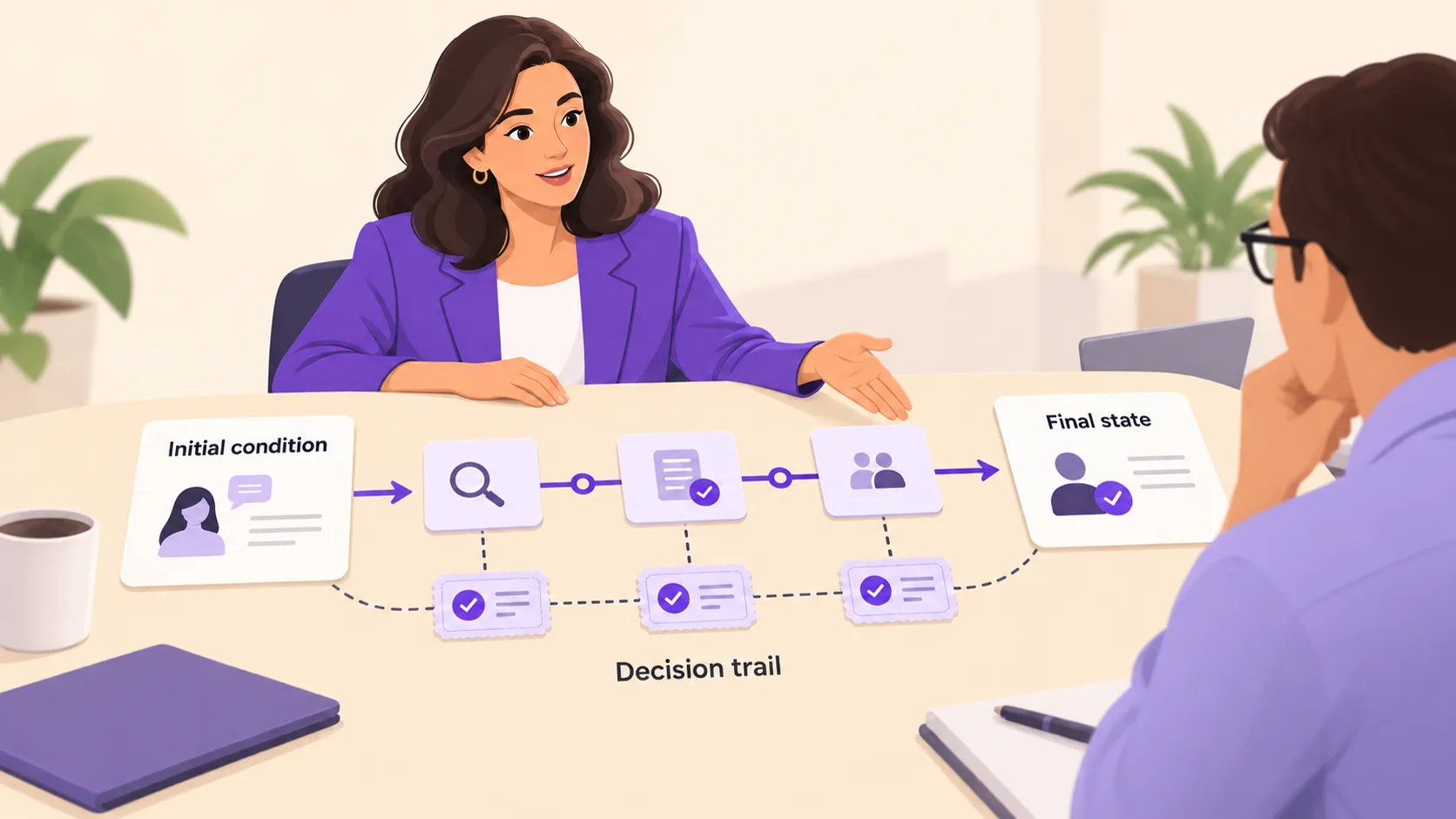
Retain selected mode, reason, caller consent where needed, destination, timing, and owner. Then recreate this challenge case: The system promises a callback without creating an owned task. A fluent response, a successful transport event, or a plausible summary is not enough when the downstream state is wrong. Review the exception in context, identify the first control that failed, and assign the correction to a named owner with a retest date.
Apply one explicit approval rule: The chosen mode must have a verified destination, timing rule, and fallback. If the team cannot show that outcome consistently, reduce the workflow's authority, route the case to a person, or keep the existing process until the evidence supports a wider release. This makes the section testable without turning a recommended practice into an unsupported NextLevel product claim.
Field review: Route to accountable capacity
Use this as a live operating review, not as a policy slogan. Ask the accountable owner to demonstrate how the team will use the capability required to finish the job; then use hours, queue state, and alternate coverage; then prioritize risk and customer harm before convenience; then do not treat enqueue or ringing as ownership. The demonstration should follow one realistic path from its initial condition to the final business state, while preserving every decision that another reviewer would need to reconstruct the result.
Retain route inputs, selected destination, alternatives, queue state, acceptance, and final owner. Then recreate this challenge case: A correct skill queue is closed, but the workflow has no alternate path. A fluent response, a successful transport event, or a plausible summary is not enough when the downstream state is wrong. Review the exception in context, identify the first control that failed, and assign the correction to a named owner with a retest date.
Apply one explicit approval rule: Routing passes only when live capacity or a tested deferred path exists. If the team cannot show that outcome consistently, reduce the workflow's authority, route the case to a person, or keep the existing process until the evidence supports a wider release. This makes the section testable without turning a recommended practice into an unsupported NextLevel product claim.
Field review: Design the caller experience
Use this as a live operating review, not as a policy slogan. Ask the accountable owner to demonstrate how the team will tell the caller that a person will continue the task; then explain hold, queue, callback, or follow-up clearly; then tell the caller which details are already shared; then provide a safe choice if the wait or connection changes. The demonstration should follow one realistic path from its initial condition to the final business state, while preserving every decision that another reviewer would need to reconstruct the result.
Retain the spoken transition, wait or callback state, caller choice, and outcome. Then recreate this challenge case: The agent promises “someone will answer now” when the destination is unavailable. A fluent response, a successful transport event, or a plausible summary is not enough when the downstream state is wrong. Review the exception in context, identify the first control that failed, and assign the correction to a named owner with a retest date.
Apply one explicit approval rule: The caller message must match the real destination and current state. If the team cannot show that outcome consistently, reduce the workflow's authority, route the case to a person, or keep the existing process until the evidence supports a wider release. This makes the section testable without turning a recommended practice into an unsupported NextLevel product claim.
Frequently asked questions
What is AI to human handoff?
It is the controlled transfer of a conversation or work item from an AI path to an accountable human destination with relevant context.
What should be included in the handoff context?
Include identifiers, verified facts, caller goal, outcome, reason, pending action, and unresolved uncertainty.
Is warm transfer always best?
No. Callback, queue, or asynchronous follow-up may fit availability, urgency, and caller preference better.
How should failed transfers be handled?
Detect the failure, preserve context, explain the change, use a tested fallback, and record final ownership.
How can handoff quality be measured?
Measure trigger correctness, context accuracy, acceptance, time to ownership, repeat questions, recovery success, and final state.
Build the next review around evidence
Start with the three most common handoff reasons and one unavailable path. Define the payload and receiver. Test the spoken transition. Verify acceptance and final state. Add more routes only when each path has capacity, context, and a safe recovery.
If you want to map this framework to a bounded voice workflow, Book a call.
Explore the fit
Talk through your workflow
Bring the workflow, boundaries, and ownership questions that matter to your team.
Book a call