
- Growing Market The competitive intelligence tools market was estimated at $53.2 billion in 2023 and is projected to reach $96 billion by 2030, growing at 8.8% CAGR.
- AI Adoption Curve 25% of competitive intelligence leaders already use AI at work, and another 56% plan to start soon.
- Reactive vs Predictive Traditional competitive analysis focuses on what competitors have already done; AI shifts monitoring from reactive to predictive by analyzing behavior patterns before moves become public.
- Fragmentation Problem Most companies run disconnected tools for competitor websites, regulatory databases, patent filings, and sentiment, preventing the connected analysis needed for strategic insight.
- Signal Correlation AI correlates hiring patterns, R&D spending, patent filings, and partnership announcements to predict strategic pivots months before traditional channels reveal them.
- Regulatory Radar Continuous AI monitoring of regulatory bodies across jurisdictions provides early warning of policy changes that can reshape competitive positioning overnight.

Search "ai competitive intelligence" and most of what comes back follows the same shape: a market-size statistic with no named source attached, a promise that one platform now monitors competitor websites, regulatory filings, patent applications, and competitive threats all at once, and a product — usually with a name like "Competitor Intelligence Analyst" or "Strategic Intelligence Agent" — said to predict a competitor's next move months before it becomes public.
Almost none of these pages name the actual research behind their percentages. Fewer still mention a single real, named competitive-intelligence vendor, as if the whole category exists only in the abstract, sold by nobody in particular, guaranteeing a competitive advantage no single tool can promise. None of it explains how a wall of dashboards becomes insight a strategy team can act on.
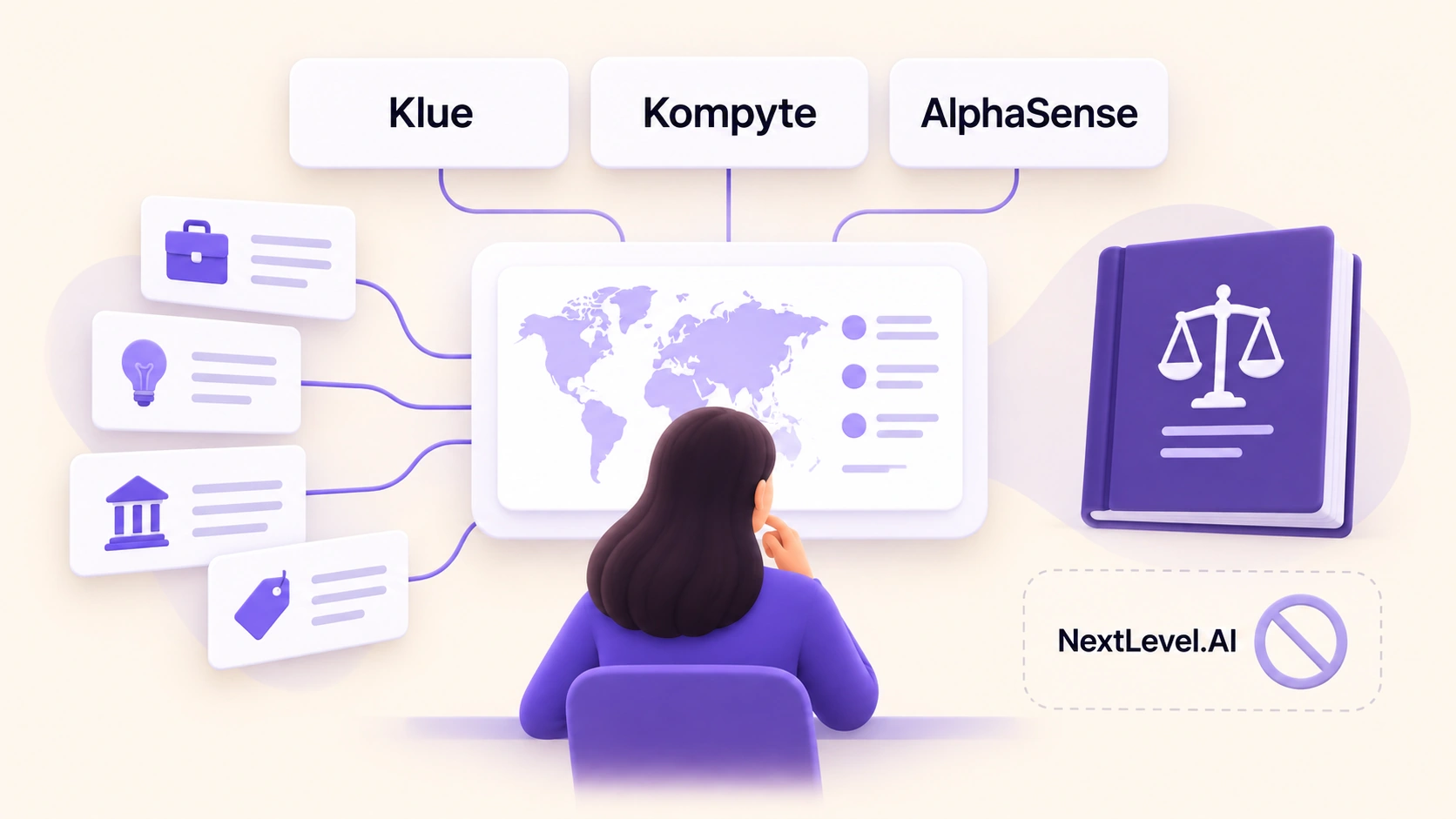
This article is the other kind. It covers what real, named platforms — Klue, Kompyte, AlphaSense — actually automate today, what a brand-new Gartner analyst category says about how seriously enterprises now take AI in competitive intelligence work, what real survey research says about where CI teams actually struggle, and why monitoring competitors through public job postings, patent filings, regulatory submissions, and pricing pages — mapping the competitive landscape the same way analysts always have — is legitimate, well-established practice with a real professional ethics code behind it, not a legal gray area. It also says plainly where NextLevel.AI itself fits into this picture — which, for this specific topic, is nowhere as a dedicated product. We're not going to invent one to fill the gap.
What the Data Actually Shows About Competitive Intelligence Today
The global market for competitive intelligence tools was valued at $53.2 billion in 2023. It's projected to reach $96.0 billion by 2030, a CAGR of 8.8%, according to Research and Markets' "Competitive Intelligence Tools Strategic Business Report 2024–2030." That's a real, checkable figure with a named publisher — worth stating plainly, since a market-size stat with no attribution is one of the easiest things in this category to repeat without ever verifying.
The more useful numbers are about what CI teams struggle with. Crayon's research is the closest thing this category has to a longitudinal survey. Crayon's 2024 State of Competitive Intelligence report is based on responses from more than 700 CI, product-marketing, and sales-enablement leaders. It found 58% of CI teams struggling to keep battlecards and other competitive content up to date. A separate 58% struggled to gather competitive intel in a timely manner. Those are the two problems AI-assisted monitoring is built to help with. The same report found real numbers on AI adoption. 25% of CI leaders were already using AI to help with their work, and another 56% planned to start soon — a real, named, sample-sized figure, not a floating percentage. Worth noting what "using AI" actually means for most of these teams in practice. The same report found CI leaders reaching mostly for general-purpose AI tools like ChatGPT rather than specialized platforms. 47% used free ChatGPT, 45% paid ChatGPT, 38% Google Gemini, and 28% Microsoft Bing Chat to help with job responsibilities. That's a meaningfully different picture than the one implied by a page pitching a single all-in-one "AI competitive intelligence" product. Most of the actual AI usage in this field right now is ad hoc, spread across general tools, not concentrated in one purpose-built platform. Ad hoc tool use produces ad hoc insight, not a repeatable system.
The same research found competitive pressure rising faster than headcount. 65% of the average software company's sales opportunities are now competitive, while the share of companies running a CI team of three or more people fell from 34% in late 2022 to 25% in 2024. Fewer people are being asked to track more competitive activity across more channels. It's the same volume-versus-headcount squeeze that shows up across most operations functions once a category matures enough for AI tooling to enter it. None of this is really about defending market share in the abstract — it's a shrinking team covering a growing list of named competitors. Crayon's earlier 2022 research adds context for why that squeeze matters. 98% of stakeholders surveyed said CI was at least somewhat important to their company's success, and 66% of growing CI teams planned to increase their technology investment. Demand for this function was already outpacing the resourcing behind it, well before generative AI entered the picture. Two years later, the 2024 data shows that gap didn't close. It's the same demand-outpacing-resourcing pattern, just with AI now the tool teams are reaching for to close it rather than more headcount.
The clearest sign this category has matured is procedural, not promotional. In April 2026, Gartner published its first-ever Magic Quadrant for Competitive and Market Intelligence Platforms. It's a dedicated analyst category that had previously been folded into broader market research or sales-enablement coverage. AlphaSense and Northern Light were named Leaders, Market Logic Software a Visionary, with Klue, Crayon, Kompyte, and Contify also evaluated in the same report. A brand-new Gartner Magic Quadrant is a real, structural signal that enterprise buyers now shop this category deliberately. A formal vendor-evaluation framework backs it up. That's worth more to a buyer than any market-size percentage, however precise-sounding.
**Book a call** if you want to talk through where your own competitive visibility is thin — bring your specific market and sales motion, not an industry-wide average.

What Real AI-Driven Competitive Intelligence Platforms Actually Automate
"AI competitive intelligence" isn't one product. It's several different tools solving different parts of the problem, built by different companies. They're worth naming individually, the same way it's worth naming HireVue and Paradox instead of treating "AI recruiting" as one interchangeable thing. "AI" here is shorthand for a mix of techniques — machine learning, natural language processing, and increasingly generative artificial intelligence built on large language models. It's not one specific technology, which is part of why these platforms behave so differently from each other in practice.
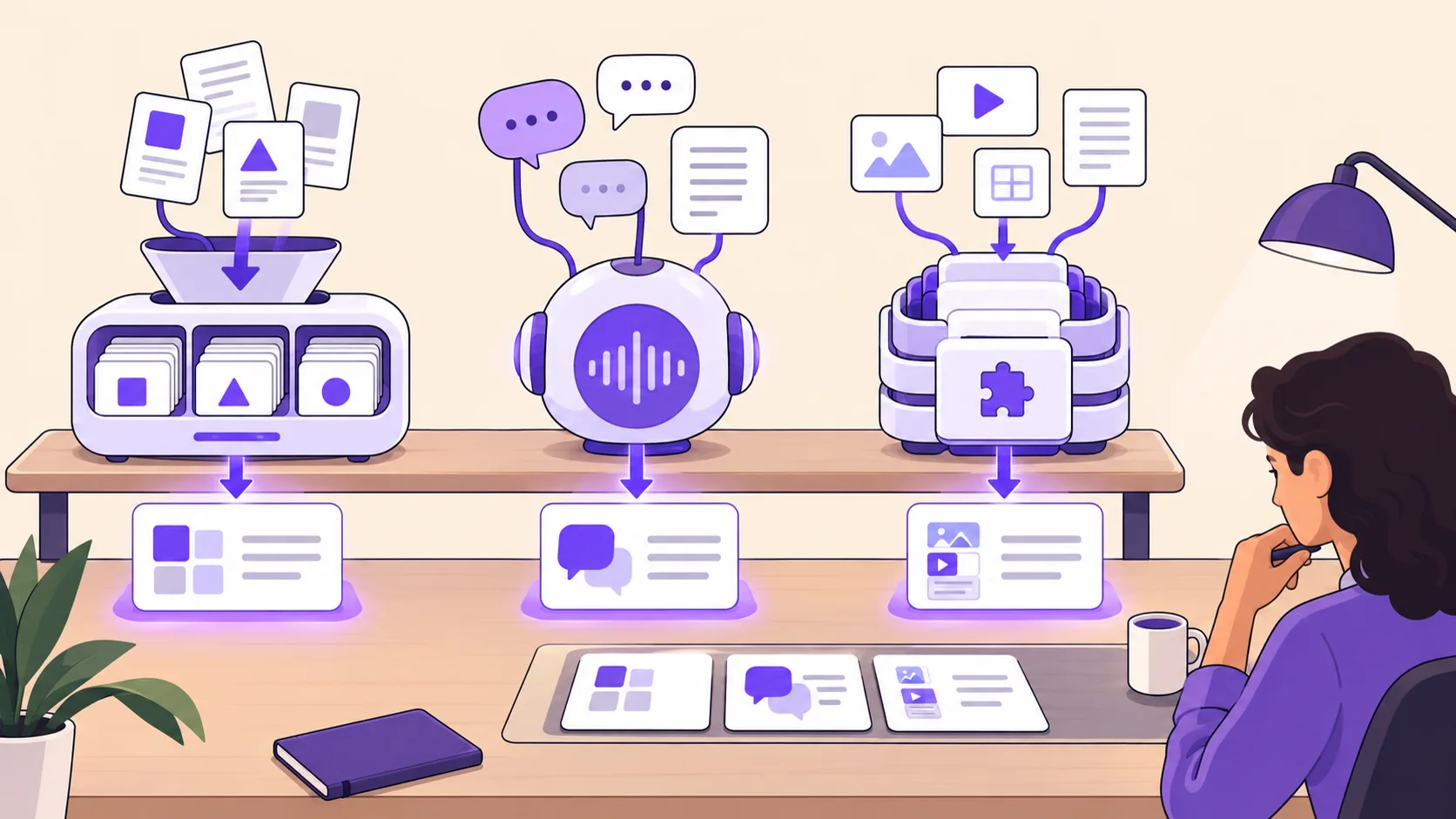
Klue pairs intelligence monitoring with battlecard creation and win-loss analysis in a single system. The same platform that spots a competitor's move also updates the card a rep sees before their next call. Klue's AI summarizes and triangulates collected intelligence from multiple sources into competitor profiles, product teardowns, and executive summaries. That's insight formatted for a rep who has ninety seconds before a call, not a slide deck. It then distributes battlecards into a rep's existing workflow through Salesforce, email, web, and mobile, rather than a dashboard nobody opens. It's built primarily for sales-facing competitive programs — arming reps for specific competitors and deal scenarios. It then measures the program's own impact through analytics on revenue impact, battlecard consumption, and competitive win rates. That last part matters. It's an accountability metric aimed at justifying the tool's budget line to a CFO — not just proving its usefulness to the sales team already using it.
Kompyte goes narrower on monitoring itself: machine-learning-based tracking of competitor websites, product pages, blogs, review websites, social media, and job postings. AI filters the noise into daily summaries. That includes sentiment analysis on review websites, where customers compare products directly. Kompyte describes its own coverage as tracking activity across hundreds of data sources and millions of data points. That's a vendor-stated figure worth treating as exactly that — a claim from the company about its own product, not an independently audited number. Kompyte also says its AI Daily Summaries have cut what used to take days of manual review down to about an hour a week for the teams using it. That's a vendor's own efficiency claim, not an independently audited benchmark — but it's specific and checkable. That already puts it ahead of a vague "80% automation" figure with no comparison point attached. Real-time intelligence alerts, customizable dashboards, and battlecard templates round out the platform, aimed at the same sales-enablement use case as Klue.
AlphaSense sits in a different part of the category entirely. It's an AI-powered search and market-intelligence platform built on natural-language processing and generative AI. It aggregates a large library of public and private business documents — earnings call transcripts, regulatory filings, news, analyst research. That's data analysis at a scale no single team could do manually. It also searches a company's own internal content through federated search, which keeps internal documents from leaving the client's network. AlphaSense says it's used by a majority of S&P 500 companies. Use cases span investment research, due diligence, and corporate strategy as much as day-to-day competitive tracking and benchmarking. The insight it produces reads more like an analyst brief than a sales battlecard. It was named a Leader in Gartner's inaugural Magic Quadrant for this category.
That's what ai-powered competitive intelligence looks like in production today — three platforms, three different centers of gravity. Klue and Kompyte are built for sales-facing competitive programs — battlecards, win-loss, deal-level intel, delivered fast enough to matter in a live sales cycle. They catch pricing changes and pricing model shifts before a rep gets blindsided by one on a call. AlphaSense is built for search across a much larger document universe, serving finance, consulting, and corporate-strategy use cases as much as product marketing. None of them claims to predict a competitor's next move with certainty months in advance. What they sell is faster, broader monitoring of public signals and market trends. AI does the triage a human analyst used to do by hand. That's a real, valuable claim — and a far more modest one than "predicts strategic pivots before they're public."
Which of these problems matters most tends to track by industry. Crayon's research puts software and SaaS at the center of the category — the 65% competitive-opportunity figure above is specifically about software companies. CI programs there are most mature where competitive pressure is most direct and public pricing pages change often. Healthcare and finance lean differently — a different set of market dynamics than software's pricing-page-driven competition. Regulatory filings, clinical and trial data, and earnings disclosures carry more weight there than a competitor's pricing page. That's closer to AlphaSense's document-search strength than Klue's or Kompyte's sales-battlecard focus. There's no single "best" AI competitive intelligence tool independent of which of these problems is the expensive one for a given business.
How Legitimate Competitive Intelligence Actually Gathers Its Signal
None of this is new in concept. Competitive intelligence predates the AI boom by decades as a formal discipline. It's a different discipline than business intelligence, which looks inward at a company's own data rather than outward at competitors. It has its own professional association (more on its ethical standards below). It also has its own academic grounding, tracing back to Michael Porter's work on industry structure, strategic planning, and competitive strategy in the 1980s. That's the same era that gave the business world the SWOT analysis as a standard strategy tool. Reading hiring patterns, patent filings, and regulatory submissions as leading indicators of a competitor's direction is a practice CI analysts have used for decades. It goes back long before AI entered the picture. A burst of senior engineering job postings in a new metro, or a cluster of related patent filings, has always been read as a signal worth investigating. What AI-assisted platforms actually add is speed and coverage: flagging that kind of pattern across thousands of public listings in hours instead of the weeks manual review used to take. That's genuinely useful insight. It's a different, much smaller claim than predicting what the pattern means with any certainty.
Regulatory and policy monitoring works the same way. Real competitive-intelligence functions — especially in healthcare, finance, and other regulated industries — track regulatory bodies, public comment periods, and compliance filings across jurisdictions as an early-warning system. A rule change can reshape a market faster than a competitor's own product roadmap can. AI-assisted monitoring speeds up the "did anything change" check across many jurisdictions at once. It doesn't turn a filing into a forecast.
Worth addressing directly: this is a different, and meaningfully lower-risk, sourcing question than the one that comes up in AI-driven recruiting tools. There, "LinkedIn sourcing automation" often means managed accounts and rotating proxies built specifically to evade a platform's anti-automation enforcement. Legitimate competitive intelligence gathering works almost entirely from public sources — job postings, patent and trademark databases, regulatory dockets, pricing pages, press coverage. None of it requires impersonating a user or evading a platform's terms of service to access. The professional standard for how that data collection actually happens is well established. The Strategic and Competitive Intelligence Professionals association's Code of Ethics requires practitioners to comply with all applicable law, domestic and international. It also requires them to accurately disclose their identity and organization before any interview, and to fully respect any request for confidentiality. That's a genuinely lower-risk category than some of its AI-adjacent cousins. It's worth saying plainly, rather than importing a caution that doesn't apply here.
None of that amounts to prediction in the confident sense a lot of AI-competitive-intelligence marketing implies, though. A pattern in hiring or filings is a leading indicator, not a forecast. It narrows the range of plausible next moves. It doesn't reveal a competitor's roadmap. Strategic decisions built on a leading indicator alone are still a bet — better-informed decisions than guessing blind, but not certainties. Good decision-making treats that difference as the whole point. Treat any vendor claiming otherwise the way you'd treat an unsourced statistic: ask for a specific example it got right, and how often it doesn't.

Where NextLevel.AI Actually Fits
NextLevel.AI doesn't build a competitive-intelligence product. Nothing in NextLevel's current lineup monitors competitor websites, tracks regulatory filings, or generates battlecards. We're not going to describe a hypothetical future version of one just to fill out this article. If your business needs the kind of monitoring covered above, the real tools that can give you a competitive edge are the ones already named. Klue or Kompyte for sales-facing battlecards and win-loss tracking. AlphaSense for broader document search across finance and corporate strategy.
What NextLevel actually builds is custom voice AI agents — for sales outreach, customer support, scheduling, and internal coordination. There's an honest, if indirect, connection to competitive intelligence worth naming. The output of a good CI program — a sharp, current battlecard — is only as useful as the conversation it eventually reaches. A rep on a live call still has to deliver that competitive positioning correctly, in the moment, without reading from a script. NextLevel's AI Sales Agent and AI BDR Voice Agent operate in that adjacent layer. They handle live outbound and inbound sales conversations, in up to 30 supported languages. That's not the intelligence-gathering layer this article is about. Worth being precise about which problem you're evaluating a vendor for. They're different problems, usually solved by different vendors — the same pattern that runs through the rest of this article.
On compliance and data privacy — fair questions for any AI vendor, regardless of category — NextLevel is independently attested under a SOC 2 Type I report. It also holds genuine ISO/IEC 27001:2022 certification. HIPAA, GDPR, and PDPL alignment applies where relevant, with ISO 42001 alignment currently in progress, not complete. Evidence is available under NDA. That's NextLevel's status as a company — not a claim about a competitive-intelligence product NextLevel doesn't sell.
**Book a call** if live voice AI for sales or support conversations is the actual problem you're solving — a look at what NextLevel runs today, not a description of what it might build someday.
How to Evaluate Any AI Competitive Intelligence Vendor's Claims
This is a genuinely useful, maturing category, which also makes it a crowded, noisy one. Everyone selling competitive analysis software claims to do all of it at once. A short list of specific questions does more work here than a longer list of vague ones. That's especially true before committing budget to any of the ai competitive intelligence tools on the market.
Ask which layer it covers. Monitoring and alerting, battlecard creation, win-loss analysis, and broad document search are different problems. They're usually solved by different products. Klue and Kompyte lean toward the first three; AlphaSense leans toward the last. A vendor claiming to own the entire strategic-intelligence function with one product deserves a follow-up question, not a signature.
Ask for the study behind any round percentage. "80% automation," "35–50% cost reduction," a market-size figure floating with no named publisher — none of that is a real number. A real number has a publisher, a year, and a sample size, the way Crayon's 700-plus-respondent report does. If a vendor can't produce one, treat the number as marketing, not evidence.
Ask how the platform reaches its data. Public web sources, basic web scraping of already-public pages, licensed data feeds, and official APIs are a different answer than something closer to scraping behind a login. SCIP's ethical standard — legal compliance, honest identity disclosure, respect for confidentiality — is a reasonable bar. Hold any vendor to it, not just the ones that advertise it.
Ask what "predicts" means in practice. A leading indicator flagged early gives you real, actionable insights. A certainty claim with no track record attached is not the same thing, no matter how similar the marketing copy makes them sound. Ask for a specific example the vendor got right, and how often it didn't.
Ask what's attested today versus targeted for later. A SOC 2 report or an ISO certificate either exists right now or it doesn't. "In progress" is a real, honest answer — a different one than "certified," and a vendor that blurs the two is worth a harder look, in this category or any other.
A vendor with plainspoken, sometimes-unflattering answers to all five is worth more trust — and better insight — than one with a uniformly polished pitch. That's true of us, too. **Book a call** and ask us the same five questions — starting with the first one, since the honest answer is that competitive intelligence isn't a layer we cover at all.
Frequently Asked Questions
What makes AI-driven competitive intelligence different from traditional competitive intelligence?
Speed and coverage, mainly. A human analyst checking a dozen competitor websites, job boards, and filing databases by hand takes days to notice a pattern. Teams that use AI to monitor the same sources can flag it across hundreds of public listings in hours. That's a real, meaningful difference — genuine insight into what's changing, not a crystal ball. It is not the same claim as "predicts what a competitor will do before it happens." That's a different, much less provable claim — one that a lot of marketing in this category treats as interchangeable with faster monitoring.
Can AI actually predict a competitor's next strategic move?
Not reliably, and any vendor claiming otherwise should be asked for a specific, checkable example. What AI-assisted platforms can do is surface leading indicators faster than manual review would catch them. That includes a cluster of senior hiring in a new category, a burst of related patent filings, or a regulatory comment-period submission. A leading indicator narrows the range of plausible next moves. It doesn't reveal a roadmap, and treating the two as equivalent is the single most common overclaim in this category.
What kinds of intelligence do AI competitive-intelligence platforms actually gather?
Public sources, primarily — the raw material for competitor analysis, the same sources any analyst would use to track competitors by hand, just faster. That means competitor websites and pricing pages, job postings, patent and trademark filings, regulatory submissions, and press coverage. Depending on the platform, it can also mean earnings calls and analyst research for public companies. Klue and Kompyte focus on the sales-facing slice of that list — pricing, positioning, job postings. AlphaSense covers a much larger document universe aimed at finance, consulting, and corporate strategy.
Do AI competitive-intelligence tools integrate with CRM or sales-enablement systems?
The category leaders do. Klue, for instance, distributes battlecards through Salesforce, email, web, and mobile. The intelligence reaches reps inside the tools they're already using, rather than living in a separate dashboard nobody opens. That kind of integration is a large part of why this category matured enough for Gartner to give it a dedicated Magic Quadrant in April 2026.
Which industries get the most value from AI competitive intelligence?
Software and SaaS lead in maturity, mostly because competitive pressure there is constant and public — pricing pages change often. Crayon's research found 65% of the average software company's sales opportunities are now competitive. Healthcare and finance use the category differently. Regulatory filings, clinical and trial data, and earnings disclosures matter more there than a competitor's marketing site. That's closer to what a document-search platform like AlphaSense is built for than a sales-battlecard tool like Klue or Kompyte. Retail and consumer categories tend to lean specifically on pricing and promotional trend analysis. There's no universal answer independent of which of these problems is the expensive one for a given business.
Is monitoring competitors through public sources actually legal?
Yes, when it stays within public sources and an established professional ethics standard, which is the norm for this category, not an exception. The Strategic and Competitive Intelligence Professionals association's Code of Ethics requires compliance with applicable law. It also requires honest disclosure of identity before any interview, and respect for confidentiality requests. That's a different, lower-risk starting point than something like automated LinkedIn profile scraping. That kind of scraping operates against a platform's explicit terms, and has produced real legal consequences for vendors that tried it.
What ROI should a business expect from competitive intelligence tools?
There's no single honest percentage to offer here, and a vendor that hands you one with no numbers of your own attached is rounding up. What's real: Crayon's 2024 research found 65% of the average software company's sales opportunities are now competitive. That's the actual reason CI investment tends to pay off in crowded categories — not a flat, industry-wide ROI multiplier. Gartner creating a dedicated Magic Quadrant for this category in 2026 is a real signal of enterprise investment. It isn't a return-on-investment figure, and a market-size projection isn't one either, however often that substitution gets made.
Does NextLevel.AI offer a competitive-intelligence monitoring product?
No. NextLevel builds custom voice AI agents — for sales conversations, customer support, and internal coordination. That's not competitor or regulatory monitoring. If your business needs the kind of tool this article covers, Klue, Kompyte, and AlphaSense are real, named places to start. Which one depends on whether the need is sales-facing battlecards or broader document search. If the need is a live voice agent for the sales or support conversations downstream of that intelligence, that's the piece NextLevel builds.
About the Author

Andriy Senyk is Co-founder and COO of NextLevel.AI. He writes about enterprise voice AI, customer communication infrastructure, sales automation, and controlled AI deployment.