
Optimize Supply Chain Operations with
AI Agents in Supply Chain
Automates order management, inventory planning, logistics coordination, and supplier communication – delivering real-time visibility across your entire supply chain.
Our AI call center solutions
Our Voice Ai Agent solutions
AI Agents in Supply Chain Features

Intelligent Order Management Automation
AI order management agents handle purchase orders, fulfillment workflows, and status tracking autonomously—processing thousands of orders simultaneously while detecting anomalies, managing exceptions, and ensuring accurate delivery scheduling with complete audit trails.
Predictive Inventory & Replacement Planning
Automated inventory agents analyze demand patterns, supplier lead times, and market conditions to optimize stock levels—preventing stockouts and overstock situations while automating copper inventory and replacement planning, raw materials forecasting, and just-in-time replenishment across multiple locations.
Real-Time Logistics & Distribution Intelligence
Distribution and logistics optimizer agents coordinate shipment routing, carrier selection, and warehouse operations autonomously—reducing transportation costs by up to 25% through dynamic route optimization, load consolidation, and real-time delivery tracking with automatic exception handling.
Supply Chain Market & Pricing Analytics
AI agents continuously monitor market pricing trends, commodity fluctuations, and supplier availability—providing predictive analytics for procurement decisions, contract negotiations, and strategic sourcing while alerting teams to potential supply disruptions before they impact operations.
Supplier Relationship & Performance Management
Autonomous agents evaluate supplier performance metrics, compliance requirements, and delivery reliability—identifying optimization opportunities, automating vendor communications, and recommending alternative suppliers when quality or timing issues arise.
Enterprise System Integration & Data Synchronization
Seamless two-way integration with ERP platforms including SAP agentic AI capabilities, WMS, TMS, procurement systems, and IoT sensors—enabling agents to access real-time data, execute transactions, update records, and trigger workflows across your technology stack without manual intervention.
Get Your Tailored AI Agents in Supply Chain Free of Charge!
Request AI Agents in Supply Chain trained on your company website data, and we’ll send you a demo web page with your tailored AI Agents within 24 hours — featuring both a web-widget voice AI chatbot and a phone callback AI Agent.
Free trial. 5 hours of voice conversations credit included.
No credit card required.

70%
Reduction in manual order processing and inventory management tasks

35%
Decrease in supply chain operational costs through intelligent automation

99.5%
Accuracy in demand forecasting and inventory optimization
AI Agents in Supply Chain Key Capabilities:
Specific
Automated order processing & fulfillment
AI order management agents handle purchase order creation, validation, routing, and status updates autonomously across multiple channels and vendors
Dynamic inventory optimization
Continuously analyze demand signals, seasonality, and lead times to maintain optimal stock levels while minimizing carrying costs and preventing stockouts
Intelligent shipment coordination
AI shipment agents manage carrier selection, route optimization, tracking, and delivery confirmation while handling exceptions and delays proactively
Predictive demand forecasting
Leverage machine learning models trained on historical data, market trends, and external factors to generate accurate demand predictions weeks or months in advance
Supplier performance monitoring
Track on-time delivery rates, quality metrics, compliance adherence, and responsiveness to automatically score suppliers and flag performance issues
Procurement automation
Generate requisitions, compare quotes, negotiate pricing, and execute purchases based on predefined rules and real-time market intelligence
Warehouse operations optimization
Coordinate receiving, put-away, picking, packing, and shipping activities while optimizing space utilization and labor allocation
General
Multi-system integration
Connect with SAP, Oracle, Microsoft Dynamics, NetSuite, and custom ERP/WMS platforms through APIs and secure data exchange protocols
Real-time analytics & reporting
Generate customized dashboards tracking KPIs like inventory turnover, order cycle times, fulfillment accuracy, and supply chain costs
Natural language interaction
Query supply chain data, generate reports, and execute workflows through conversational interfaces without technical expertise
Exception management
Automatically detect anomalies like delayed shipments, quality issues, or demand spikes, then escalate or resolve based on severity and business rules
Compliance & audit trails
Maintain complete records of all transactions, decisions, and changes for regulatory compliance and internal auditing purposes
Scalable architecture
Handle growing transaction volumes and expanding operations without performance degradation or infrastructure overhaul
Continuous learning
Improve decision-making accuracy through machine learning models that adapt to changing patterns, seasonal variations, and new supply chain dynamics
Get Your Tailored AI Agents in Supply Chain Free of Charge
AI Agents in Supply Chain prototyping with 5 hours of voice conversations, 5M tokens for text interactions, and no limitations on the number of managed appointment calls/chats

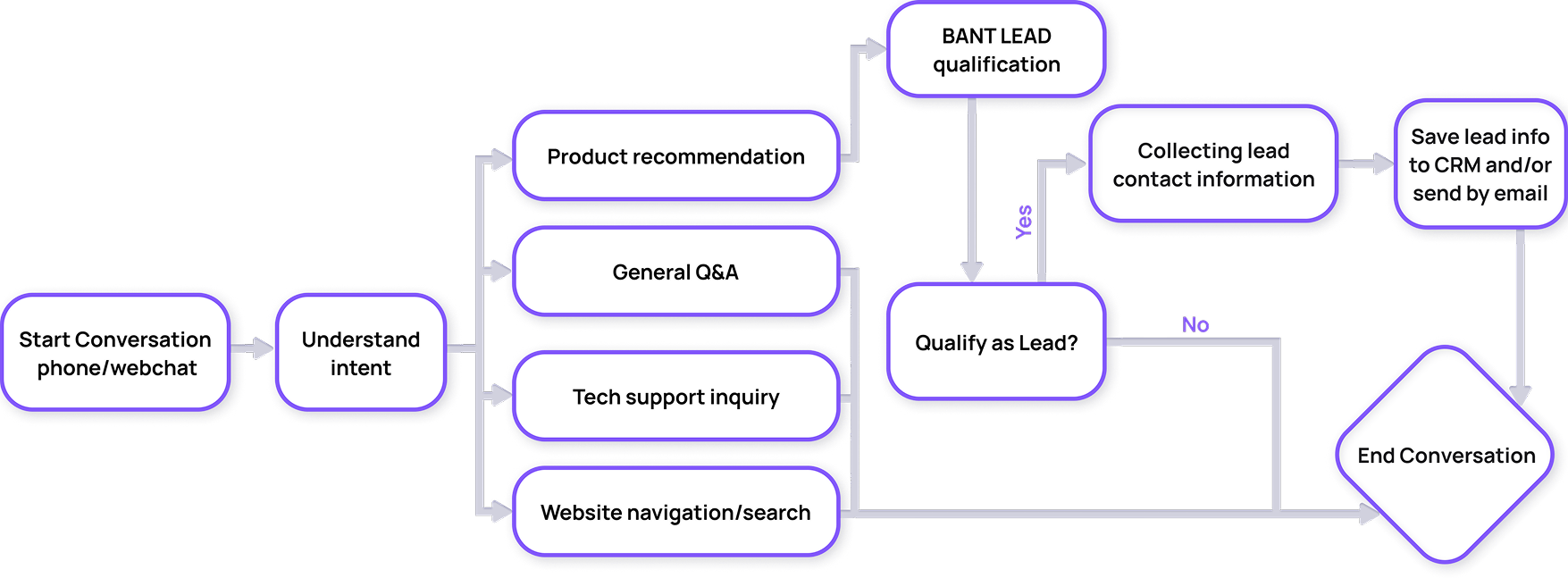
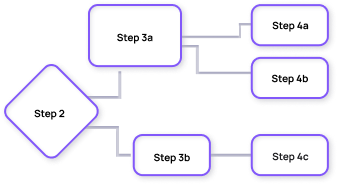
1.
Data Integration & Real-Time Monitoring
Connects to systems and data sources to track orders, inventory, shipments, and demand in real time.

2.
Intelligent Analysis & Decision-Making
Analyzes data to detect risks, opportunities, and optimal actions based on business priorities.

3.
Autonomous Action Execution
Executes workflows like orders, inventory updates, and supplier communication automatically.

4.
Exception Handling & Escalation
Flags complex issues and alerts stakeholders with context and recommended actions.

5.
Continuous Optimization & Learning
Tracks outcomes and continuously improves decisions using data and predictive models.
Integrations
We provide over 100 out-of-the-box integrations using n8n and Zapier services.


AI Agents in Supply Chain Pricing
We provide over 100 out-of-the-box integrations using
n8n and Zapier services.
Compare plansChoose your workspace plan according to your organisational plan | SaverFrom $89/ mChoose Plan | StandardFrom $175/ mChoose Plan | BusinessFrom $385/ mChoose Plan | PremiumFrom $650/ mChoose Plan | EnterpriseLet’s talkChoose Plan |
|---|---|---|---|---|---|
| Total monthly voice conversation time included (hours) | 8.5 | 17.5 | 40 | 70 | Custom |
| Recommended website traffic | up to 1,000 | up to 10,000 | up to 25,000 | up to 100,000 | over 100,000 |
| Website pages scanned | up to 25 | up to 100 | up to 1,000 | up to 5,000 | 100,00+ |
| AI Video Avatar | V | V | 100,00+ | ||
| Internal Page Links in Answers | V | V | V | V | |
| MultiLanguage Support | 1 | 5 | 30 | 30 | 45+ |
| Agent conversation concurrency | 3 | 5 | 15 | 50 | 100-1000 |
| External AI integrations | V | V | |||
| Communication channels | Website or phone line | Both | Both | Both | Both |
Request Your Tailored AI Agents in Supply Chain
Now for Free
Request Your Tailored AI Agents in Supply Chain
Fill out and submit the form and we’ll start creating your tailored AI Agents in Supply Chain right away, free of charge.
Activate Your 14-Day Free Trial
Get access to your tailored AI Agents in Supply Chain and client portal, and start your 14-day free trial. We’ll email you the agent page link, portal credentials, the one-line installation script, and setup instructions. Delivery usually takes up to 2 business days.
Continue or Wrap Up After 14 Days
Become a customer of the AI Agents in Supply Chain or chat soon about other products. After the 14-day free trial, we’ll send you a payment link — feel free to process it, or simply end the trial and we’ll see you later.




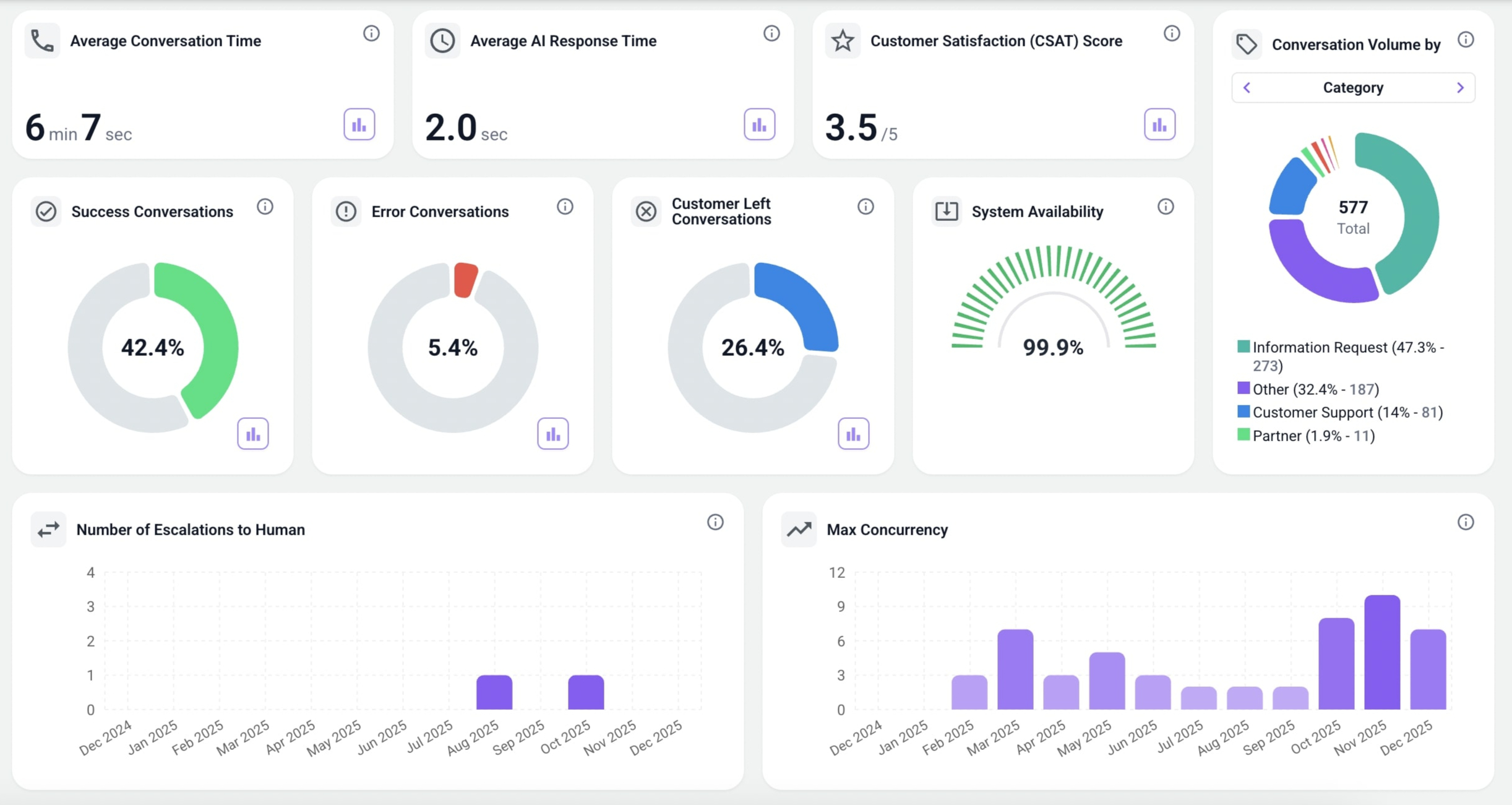
Learn how your AI Agent performs
Analyze AI Agent success rate, errors, gaps, trends, inquiry topics & much more

1.
Performance Insights
View Success, Error, and Abandoned conversation rates to identify gaps and improve agent performance.

2.
Smart Categorization
Categorize conversations by topic, inquiry type, and sentiment for deeper insights.

3.
Transcript Review
Drill down from flagged or categorized conversations to actual transcripts directly from the dashboard KPIs.

4.
Continuous Optimization
Track trends and continuously refine your agents — either independently or with our expert support.

For Supply Chain Managers:
- Gain end-to-end visibility across your supply network with real-time insights into inventory positions, order status, and supplier performance
- Enable proactive decision-making rather than reactive firefighting
- Let AI agents handle routine monitoring and routine decisions autonomously
- Free up time to focus on strategic initiatives, supplier relationships, and continuous improvement projects that drive competitive advantage

For Operations Directors:
- Achieve significant cost reductions through optimized inventory levels, reduced expedited shipping, improved warehouse efficiency, and better supplier negotiations
- Scale operations efficiently without proportional increases in headcount while maintaining or improving service levels
- Leverage predictive analytics to identify bottlenecks and improvement opportunities before they impact business performance
- Access comprehensive performance data to power better decision-making across all operations

For Procurement Teams:
- Automate time-consuming purchase order processing, supplier communications, and quote comparisons
- Maintain complete compliance with procurement policies and approval workflows
- Receive market intelligence on pricing trends and identify alternative suppliers proactively
- Ensure optimal contract utilization through automated monitoring
- Focus on strategic sourcing relationships and contract negotiations rather than transactional execution
Compliance
Our platform adheres to the highest compliance standards, ensuring full regulatory alignment.

AICPA SOC2

Hitrust

ISO 27001

HIPAA

GDPR

ISO 42001

CCPA

CPRA

CPA
What clients say about NextLevel.AI

Made The Trade
Working with Michael and his team has been an incredible experience.
They developed a cutting-edge AI solution that has truly revolutionized our business operations. We’ve been able to promote and showcase the technology with confidence, and the team has been highly receptive to feedback, making continuous improvements.
We’re excited to implement it into our day-to-day processes and look forward to the ongoing impact it will have on our business.

SalonHQ
The NextLevel. ai team has successfully developed the first advanced prototype of our Stylist AI agent in under a week.
This innovation allows our web shoppers to receive personalized beauty product recommendations directly on our web store through an engaging voice conversation with our AI Stylist. This enhanced customer interaction has not only improved the shopping experience but also attracted significant investor interest, recognizing its potential to revolutionize beauty retail.
Collaborating with NextLevel.ai has truly been a game-changer for SalonHQ.
Thank you, Michael and the NextLevel!

Digital Innovation
Teaming up with NextLevel AI to create our Voice AI BDR agent has been a game-changer for us.
Now, our AI BDR agent takes care of the first touch—engaging website visitors, understanding their needs, and passing qualified leads to our sales team. It even books meetings and seamlessly syncs everything into our CRM, saving us a ton of time.
What really sets it apart is how it adapts in real-time, personalizes conversations, and even identifies high-value enterprise prospects for targeted engagement. NextLevel AI absolutely nailed it. Their team has been incredible—super responsive, always open to feedback, and constantly pushing the technology forward.
Ready to innovate your business?
Looking to transform your business? Let’s collaborate to
create innovative solutions that drive success.
Call Us: +13233105315
Book a meeting
* Schedule a conversation with our team and explore how we can help your business thrive.
Have questions about Supply Chain AI Agents?
What are AI agents in supply chain and how do they differ from traditional AI systems?
AI agents in supply chain are autonomous software systems that perceive their environment through data integration, make decisions based on complex logic and machine learning models, and take actions without human intervention. Unlike traditional AI systems that require constant human oversight, supply chain agents work autonomously to optimize operations across the entire supply chain.
These AI agents for supply chain can process vast amounts of real-time data from ERP systems, IoT sensors, supplier feeds, and market intelligence to make nuanced decisions about inventory levels, order routing, supplier selection, and logistics optimization. While traditional AI follows rigid rules, agentic AI systems continuously learn from outcomes, adapt to changing conditions, and handle unexpected situations with intelligent decision-making—transforming supply chain management from reactive to proactive operations.
How do AI agents transform supply chain operations and what business value do they deliver?
AI agents transform supply chains by automating complex business processes across supply chain operations, from procurement through delivery. These autonomous AI agents enable supply chain organizations to achieve 60-80% reduction in manual processing tasks, 25-40% decrease in inventory carrying costs, and 15-30% reduction in transportation expenses. Supply chain AI delivers business value through intelligent inventory management across multiple locations, automated supplier management with performance tracking, and predictive analytics that identify disruptions before they impact operations.
The adoption of AI in supply chain operations enables supply chain leaders to shift focus from firefighting daily issues to strategic initiatives. AI is reshaping how supply chain teams work by handling routine decisions autonomously while escalating complex scenarios to human experts with complete context, revolutionizing supply chain efficiency without requiring proportional increases in headcount.
What role do AI agents play in supply chain management today and in the future?
AI agents play a critical role in supply chain management by serving as intelligent assistants that augment human decision-making rather than replace it. Today’s supply chain sees AI agents handling order processing, inventory optimization, shipment coordination, and supplier communications autonomously. Supply chain managers use AI agents to gain real-time visibility across global supply chain networks, enabling proactive rather than reactive management.
The future of supply chain management will see expanded agentic capabilities handling increasingly complex supply chains, coordinating across multiple tiers of suppliers, and optimizing end-to-end value chains. As new technology emerges, AI agents will manage supply chain transformation initiatives, orchestrate responses to disruptions, and drive continuous improvement through advanced machine learning. The world of supply chain is evolving from human-driven processes to human-AI collaboration where agents can augment supply chain teams with 24/7 monitoring, instant analysis, and autonomous execution.
How do agentic AI applications improve manufacturing and logistics operations?
Agentic AI applications in manufacturing focus on production planning optimization where agents balance capacity, materials, and demand to create optimal schedules while minimizing changeovers. Quality control agents monitor production data in real-time to detect defects early and predict equipment failures. Within supply chain operations, various logistics agents coordinate movement of goods from receiving through storage to shipping, optimizing warehouse management, picking routes, and labor allocation.
Logistics spend reduction of 15-30% results from AI agents managing carrier selection, route optimization, and load consolidation. Managing supply chain complexity becomes feasible as agents handle thousands of concurrent decisions about inventory positioning, transportation routing, and supplier coordination. Warehouse management systems integrated with AI agents achieve higher space utilization, faster order fulfillment, and reduced labor costs while maintaining accuracy and service levels across the supply chain.
Can AI agents provide real-time supply chain visibility and how do they handle disruptions?
Yes, AI agents provide intelligent supply and comprehensive real-time visibility across supply chain networks through continuous data integration from ERP systems, warehouse management platforms, transportation systems, IoT sensors, and supplier portals. These agents use real-time data to monitor inventory positions, order status, in-transit shipments, and supplier performance without delays inherent in manual reporting. When supply chain disruptions occur—like supplier failures, quality issues, or transportation delays—AI agents immediately detect anomalies and assess impact.
Exception management capabilities enable agents to resolve routine issues autonomously while escalating complex disruptions to supply chain managers with complete context and recommended actions. Predictive analytics help agents identify potential disruptions before they occur, analyzing weather patterns, supplier risk factors, and demand volatility. This proactive approach to risk management enables supply chain organizations to maintain operations continuity even during unexpected events.
How do AI agents integrate with enterprise resource planning (ERP) systems and other platforms?
AI agents connect seamlessly with ERP systems including SAP, Oracle, Microsoft Dynamics, and NetSuite through certified connectors and APIs. Agentic AI systems access master data, create transactions, and update records while maintaining data integrity and security protocols. Integration with enterprise resource planning platforms enables agents to retrieve customer information, check inventory availability, create purchase orders, and update financial records automatically.
Beyond ERP, agents integrate with warehouse management systems for real-time inventory tracking, transportation management systems for shipment coordination, and supplier portals for automated communications. Multi-system integration creates a unified view where agents can orchestrate actions across your entire technology stack—from forecasting demand in planning systems to executing orders in ERP to coordinating shipments in logistics platforms—all without manual intervention or data silos.
What are the key use cases for AI agents across the supply chain?
High-impact use AI agents scenarios include intelligent inventory management where agents maintain optimal stock levels across locations while preventing stockouts and reducing excess inventory by 25-40%. Agent performs order processing tasks autonomously, validating orders, selecting fulfillment locations, and coordinating execution across multiple systems. Supplier management agents track performance metrics, compliance requirements, and delivery reliability while automating vendor communications and recommending alternatives when issues arise.
AI agents help optimize procurement by comparing quotes, negotiating pricing based on market intelligence, and executing purchases within predefined rules. Transportation agents coordinate carrier selection, route optimization, and delivery tracking while handling exceptions proactively. Introducing AI to demand forecasting enables accurate predictions weeks or months in advance by analyzing historical patterns, market trends, and external factors. Each agent performs specialized functions while collaborating to optimize end-to-end supply chain processes.
How do AI agents work within complex supply chains and what capabilities enable their effectiveness?
AI agents work by continuously ingesting data from multiple sources, analyzing it against business rules and machine learning models, then executing actions autonomously or recommending decisions to humans. Agentic capabilities include natural language understanding for processing unstructured data, predictive analytics for forecasting outcomes, and autonomous decision-making within defined guardrails. Agents use AI to understand context across multi-step processes, maintaining state and adapting strategies as conditions change. Machine learning enables continuous improvement where agents analyze their decision outcomes and refine models automatically.
Within complex supply chains involving multiple tiers, regions, and stakeholders, AI agents coordinate actions while respecting dependencies and constraints. The potential for agentic Generative AI lies in handling complexity that overwhelms human capacity—optimizing inventory across thousands of SKUs and locations, coordinating deliveries across dozens of carriers, or analyzing supplier performance across hundreds of vendors simultaneously.
What advantages does AI offer for supply chain efficiency and how is AI revolutionizing operations?
Advantages of AI in supply chain include 24/7 autonomous operations without fatigue, instant processing of vast data volumes, consistent decision-making free from bias, and continuous learning that improves performance over time. AI is revolutionizing supply chain efficiency by eliminating manual data entry, automating routine decisions, and optimizing resource allocation across operations. Supply chain efficiency gains of 40-70% in processing time result from AI handling order management, inventory allocation, and shipment coordination autonomously.
AI won’t replace supply chain professionals but will augment their capabilities, handling routine tasks while humans focus on strategy, relationships, and exceptional situations. AI has the potential to transform cost structures by reducing labor requirements for transactional work, minimizing inventory carrying costs through better optimization, and decreasing transportation expenses through intelligent routing—enabling organizations to scale operations without proportional cost increases.
How do supply chain agents handle supplier relationships and procurement processes?
Supply chain agents automate supplier management by tracking on-time delivery rates, quality metrics, compliance adherence, and responsiveness to score suppliers continuously. Agents use business processes to evaluate vendor performance against contracts, flagging issues proactively and recommending corrective actions. For procurement, agents generate requisitions based on inventory levels and demand forecasts, compare quotes from multiple suppliers automatically, and execute purchases within approved parameters. Supplier management automation includes vendor communications for order confirmations, shipment updates, and issue resolution without human intervention.
When agent development includes supplier selection logic, the system can recommend alternative vendors when primary suppliers face constraints or quality issues. This systematic approach to supplier relationships ensures consistent evaluation, timely communications, and optimal vendor utilization while freeing procurement teams from transactional work to focus on strategic partnerships and contract negotiations.
What does implementing AI agents across the supply chain require and what’s the adoption process?
Adoption of Gen AI in supply chain operations typically begins with identifying high-impact use cases where automation delivers clear value, such as order processing or inventory optimization. Implementation requires integration with existing systems (ERP, WMS, TMS), configuration of business rules and decision logic, and knowledge base development with product data and operational procedures. Agent development follows a phased approach: initial pilot with limited scope to validate functionality, gradual expansion to additional processes or locations, and continuous optimization based on performance data.
Organizations should plan 8-16 weeks for initial deployment of focused use cases. Agentic solutions require change management as supply chain teams adapt to AI augmentation, learning when to trust autonomous decisions versus when to intervene. Successful adoption depends on executive sponsorship from supply chain leaders, clear governance frameworks defining agent authority, and commitment to iterative improvement as capabilities expand.
How do AI agents ensure security, compliance, and appropriate governance in supply chain operations?
AI agents implement real time comprehensive security measures including encrypted data transmission, secure authentication through OAuth or SSO integration, and role-based access controls limiting agent capabilities. Agents operate within defined guardrails preventing unauthorized transactions or communications with unapproved systems. Compliance and audit trails maintain complete records of all agent actions, decisions, and data access for regulatory requirements and internal auditing. For sensitive operations requiring human approval, agents can be configured with multi-factor authentication or escalation workflows.
Risk management protocols enable agents to assess potential impacts before executing significant decisions, escalating when thresholds are exceeded. Organizations maintain full control over agent permissions and can adjust authority levels as confidence grows. Regular security assessments and compliance audits ensure agents meet industry standards like SOC 2, ISO 27001, and sector-specific requirements while protecting sensitive supply chain data.
Can AI agents adapt to changing market conditions and continue improving productivity?
Yes, modern AI agents incorporate continuous learning capabilities enabling adaptation to changing business conditions without manual reprogramming. Machine learning models are regularly retrained on new data, incorporating recent outcomes to improve prediction accuracy for demand, inventory levels, supplier reliability, and logistics performance. When agents encounter novel situations outside their training, they operate in learning mode where they recommend actions for human approval while observing outcomes to expand capabilities.
Organizations can inject new business rules, updated policies, or strategic priorities that immediately modify agent behavior. This combination of rule-based governance and adaptive learning enables supply chain agents to remain effective as markets, suppliers, product mix, and strategies evolve. Performance tracking across metrics like forecast accuracy, cost optimization, and service level achievement triggers model refinement when performance drifts, ensuring agents continuously improve their decision-making quality.
What makes introducing AI to supply chain operations different from other digital transformation initiatives?
Introducing AI to supply chain represents a fundamental shift from automating individual tasks to deploying intelligent agents that orchestrate complex workflows autonomously. Unlike traditional digital transformation focused on system connectivity and data visibility, AI-powered agents actively make decisions, execute actions, and optimize outcomes across the supply chain. This technology introduction requires rethinking business processes to leverage autonomous capabilities rather than simply digitizing existing manual workflows.
Success depends on identifying where agent performs tasks more effectively than humans (high-volume routine decisions) versus where human judgment remains essential (strategic trade-offs, relationship management). Organizations must develop new competencies in AI strategy, change management for human-AI collaboration, and governance frameworks balancing automation with appropriate oversight—making this transformation more impactful but also more complex than previous technology adoptions.
How does NextLevel.AI’s approach to supply chain agents deliver superior results?
NextLevel.AI delivers enterprise-grade supply chain agents purpose-built for complex operational environments where reliability, integration depth, and measurable outcomes are paramount. Our approach combines deep supply chain domain expertise with advanced agentic AI capabilities, ensuring agents understand industry requirements like demand variability, supplier dynamics, and logistics constraints. We focus on rapid value delivery through pre-configured agent templates for common supply chain use cases that deploy in weeks rather than months.
Our AI agents could incorporate sophisticated exception management logic developed from real-world operations, knowing when to act autonomously versus when to escalate while providing complete transparency into decision reasoning. Post-deployment, we provide ongoing optimization services that continuously refine agent performance based on your actual business outcomes, ensuring sustained value and expanding capabilities as your organization builds confidence in supply chain AI automation. This combination of domain expertise, proven templates, and continuous optimization enables faster time-to-value and higher ROI than generic AI platforms requiring extensive customization.
