
- 90% faster claims Per McKinsey's Insurance 2030 report, AI-powered claims handling can cut processing times by up to 90% while improving accuracy by 30%.
- Personalization at scale IBM research indicates 85% of insurance executives believe AI will significantly enhance customer satisfaction and retention by 2026, with agents engaging customers via their preferred channels.
- Sharper underwriting A Swiss Re study found AI-enhanced underwriting can improve loss ratios by up to 20% while reducing quote generation time by over 80%.
- Superhuman fraud detection KPMG analysis shows AI fraud systems identify 80% more potentially fraudulent claims than rule-based systems while cutting false positives by up to 40%.
- 24/7 service wins Accenture research shows round-the-clock AI-powered service can raise customer satisfaction by up to 35% while reducing operational costs by 15-25%.
- Support, not substitution AI is framed as a tool that amplifies human expertise — handling routine tasks so agents can focus on advisory roles, relationships, and complex decisions, not as a replacement.

Insurance doesn't move fast on new technology.
It's one of the most heavily regulated, risk-averse sectors in the economy. There's a good reason for that: a bad claims decision or a mispriced policy has real financial consequences for real people. That's what makes the current shift worth watching. Deloitte's 2026 Global Insurance Outlook puts generative AI deployment at 76% of insurers, in at least one business function. KPMG's own global technology survey found something similar. It asked respondents to name the single most important technology for their business goals over the next three years. 52% named AI, including machine learning and generative AI. This isn't a hype cycle playing out in press releases. It's operational already. It's already regulated in a growing number of states. And it's changing how five specific parts of the business run.
Here are those five reasons. Each one is grounded in what McKinsey, Deloitte, KPMG, IBM, Swiss Re, Accenture, and U.S. insurance regulators have actually published — not the version of those firms' research that sometimes circulates in marketing copy. Where a statistic commonly attributed to one of these firms didn't hold up under a direct check, we say so. Then we cite what the firm actually published instead.

1. Transforming Claims Processing from Days to Minutes
The traditional claims journey is one of insurance's biggest points of customer friction. There's the multiple touchpoints, the manual document review, and an approval chain that can stretch for days. That's usually at the exact moment a customer is dealing with a loss. They need an answer, not a queue. That mismatch between "what the customer needs right now" and "how long our process takes" is the single biggest reason claim processing is the first place insurers point AI at. It's also the first workflow most carriers try to streamline.
McKinsey's real "Insurance 2030" report was authored by Ramnath Balasubramanian, Ari Libarikian, and Doug McElhaney. It doesn't say what gets attributed to it in a lot of secondary content. It doesn't claim a flat "90% faster" processing time. And no version of it we could find mentions a 30% accuracy improvement. What it actually predicts is more specific, and arguably a bigger deal. By 2030, claims for personal-lines and small-business insurance could reach straight-through-processing rates of more than 90%. That means roughly nine in ten of these claims handled start-to-finish without a person touching the file. Claims-related headcount could shrink 70% to 90% compared with 2018 levels as a result. The report frames this as part of a broader shift in how insurers use data. Insurers are moving away from "detect and repair," where claims get investigated after a loss occurs. They're moving toward "predict and prevent," where the same data heads off part of the loss before it happens.
In practice, today, this shows up as ai for insurance claims systems. They read damage photos, cross-reference the policy on file, and produce an initial assessment without waiting for a human adjuster to open the file. Meanwhile, conversational AI insurance assistants handle the documentation walkthrough, so a customer isn't stuck alone with a PDF checklist of what to upload next. The claim doesn't fully close itself end to end at most carriers today. A person still reviews and signs off on anything with real financial or coverage complexity. McKinsey's own 2030 timeline reflects that this is a multi-year shift, not something that already happened. But the wait between "I filed a claim" and "someone looked at it" is where AI has already made its most visible, measurable dent. That's the reason claims automation is usually the first AI investment an insurer makes, not the last.
2. Delivering Personalized Customer Experiences at Scale
Insurance buyers don't benchmark their carrier's service against other carriers anymore. They benchmark it against whatever app they used most recently. That's usually a retailer or a streaming service — one with a much bigger UX budget than most insurance IT departments. Basic chatbots that only handle FAQs don't close that gap. The bar customers hold a virtual assistant to today is much higher than a scripted menu tree. AI is largely how insurers are trying to close that gap, without matching the budget increase behind it.

IBM's Institute for Business Value has studied this directly. Its real numbers are worth knowing, because they're more specific than the version that gets paraphrased elsewhere. IBM surveyed 1,000 C-level insurance executives across 23 countries in Q3 2024, alongside 4,700 insurance customers in nine countries. It found that insurers using generative AI extensively in their customer-facing systems saw a 14% higher customer retention rate. Those same insurers saw a 48% higher Net Promoter Score than insurers not using generative AI at all. Separately, IBM's broader insurance research puts the share of executives who believe AI will meaningfully improve personalization and customer experience at roughly 75%. Neither of those is the same claim as "85% of insurance executives believe AI will significantly enhance customer satisfaction and retention by 2026" — a figure commonly attributed to IBM. We could not locate it in IBM's published insurance research, despite checking from several angles. The real numbers are close in spirit. They're impressive on their own, and don't need rounding up.
This is also where ai for insurance agents stops being about replacement and starts being about scale. The point isn't automating away the licensed professional. It's giving that person, and the customer, a channel that's available and consistent outside the hours a human team can staff. NextLevel.AI's own AI Insurance Agent is built as a single, configurable agent, not six different branded bots for six different tasks. It engages customers over voice, text, and embedded web chat, and it carries context across the conversation, so a returning caller isn't re-explaining themselves. It hands off to a licensed human the moment a question needs one. **Book a call** if you want to see how that maps onto your actual policy and claims workflows, rather than a generic demo script.
3. Supercharging Underwriting Accuracy and Speed
Underwriting is where generative AI changes the shape of the job, not just its speed. It can process unstructured data: PDFs, inspection notes, third-party records, prior claims history. That's what actually changes the underwriting process itself. Modern systems can evaluate far more variables per application than a single underwriter reviewing the same file by hand. That's a different capability than simply working faster at the same task. AI doesn't underwrite the policy on its own. It changes how much the underwriter can weigh before making that risk management call.
Here's where we want to be direct about what the real research says. The claim we were asked to fact-check for this section was this: "AI-enhanced underwriting systems can improve loss ratios by up to 20% while reducing quote generation time by over 80%," attributed to Swiss Re. It doesn't match anything Swiss Re has actually published that we could find. We looked from several angles, including a direct site-scoped search of swissre.com. Swiss Re's own most recent sigma research is notably more cautious than that specific claim. It was published January 2026, under the title "AI adoption is reshaping the risk landscape." As of 2025, insurers had allocated an estimated 3% to 8% of their IT budgets to building AI capabilities. Fewer than 5% of insurers had disclosed any measurable financial impact from that investment yet. That's a real reinsurer's own research institute telling the market to hold off on clean round numbers. It's a more credible signal, if a less exciting one, than an unattributed 20%/80% split.
What Swiss Re does put its name on are specific, named tools, not blanket percentages. SwiftRe® automates facultative reinsurance quote generation within minutes. CatNet® is a catastrophe-risk platform; named clients, including Golden Bear Insurance Company, have used it to target loss-ratio improvement in property lines. Those are real, working examples of AI-adjacent underwriting tools. None of them carries a single number that applies across every book of business — the actual impact depends on the portfolio.
Accenture's underwriting research adds a concrete reason this matters, beyond any one vendor's tooling. Underwriters currently spend an estimated 40% of their time on non-core administrative work. That means chasing documents, re-entering data, and formatting reports, rather than assessing risk. That's the real bottleneck generative ai in insurance is being built to attack. A broader industry pattern across advanced-analytics pilots shows loss-ratio improvements in the range of 2% to 5%, under real trading conditions. It's a useful gain, and a far more defensible one than an unsourced "up to 20%."
4. Catching Fraud Before It Costs Everyone
Insurance fraud isn't a rounding error in anyone's budget. The Coalition Against Insurance Fraud puts the total cost across all U.S. insurance lines at $308.6 billion a year. Health insurance fraud alone accounts for an estimated $105 billion of that. Property-and-casualty fraud adds roughly $90 billion more. Spread across every policyholder, that works out to close to $900 a year in inflated premiums per person — paid to cover losses that have nothing to do with any individual policyholder's own behavior. The FBI has a separate estimate, just for non-health insurance fraud: auto, property, workers' comp. It puts that figure above $40 billion annually on its own, adding an estimated $400 to $700 a year to the average family's premiums.
The KPMG claim we were asked to check for this section was this: "AI-powered fraud detection systems can identify 80% more potentially fraudulent claims than traditional rule-based systems while reducing false positives by up to 40%." It isn't in KPMG's own published insurance research. We read KPMG's actual "AI in insurance: A catalyst for change" article directly. It discusses AI's role in fraud detection only in general, unquantified terms. "They can also identify false claims more effectively" is the extent of it. No 80% or 40% figure appears anywhere on the page. That same KPMG research does contain real numbers, just different ones. 52% of respondents in KPMG's 2023 Global Tech Report named AI as the most important technology for their business goals over the next three years. And in KPMG's 2023 Insurance CEO Outlook, 58% of insurance CEOs said they were confident about achieving a return on AI investment within five years.
The real, sourced fraud number worth knowing instead comes from Deloitte. Its 2026 Global Insurance Outlook states that by deploying AI-driven, real-time fraud analytics, property-and-casualty insurers could save up to $160 billion by 2032. That's a specific, dated, attributed projection. And Deloitte frames it as a "could," not a guarantee — the same honesty we'd want from any vendor pitching a fraud-detection number.
Here's what AI fraud detection actually does today, at most insurers that use it. It flags claims with unusual patterns — timing anomalies, provider clusters, inconsistencies against prior claims history — for a human investigator to review. It doesn't declare a claim fraudulent on its own, and it doesn't deny it. That distinction matters, both legally and practically. It's worth remembering the next time a fraud-detection statistic sounds too clean to have a source attached.
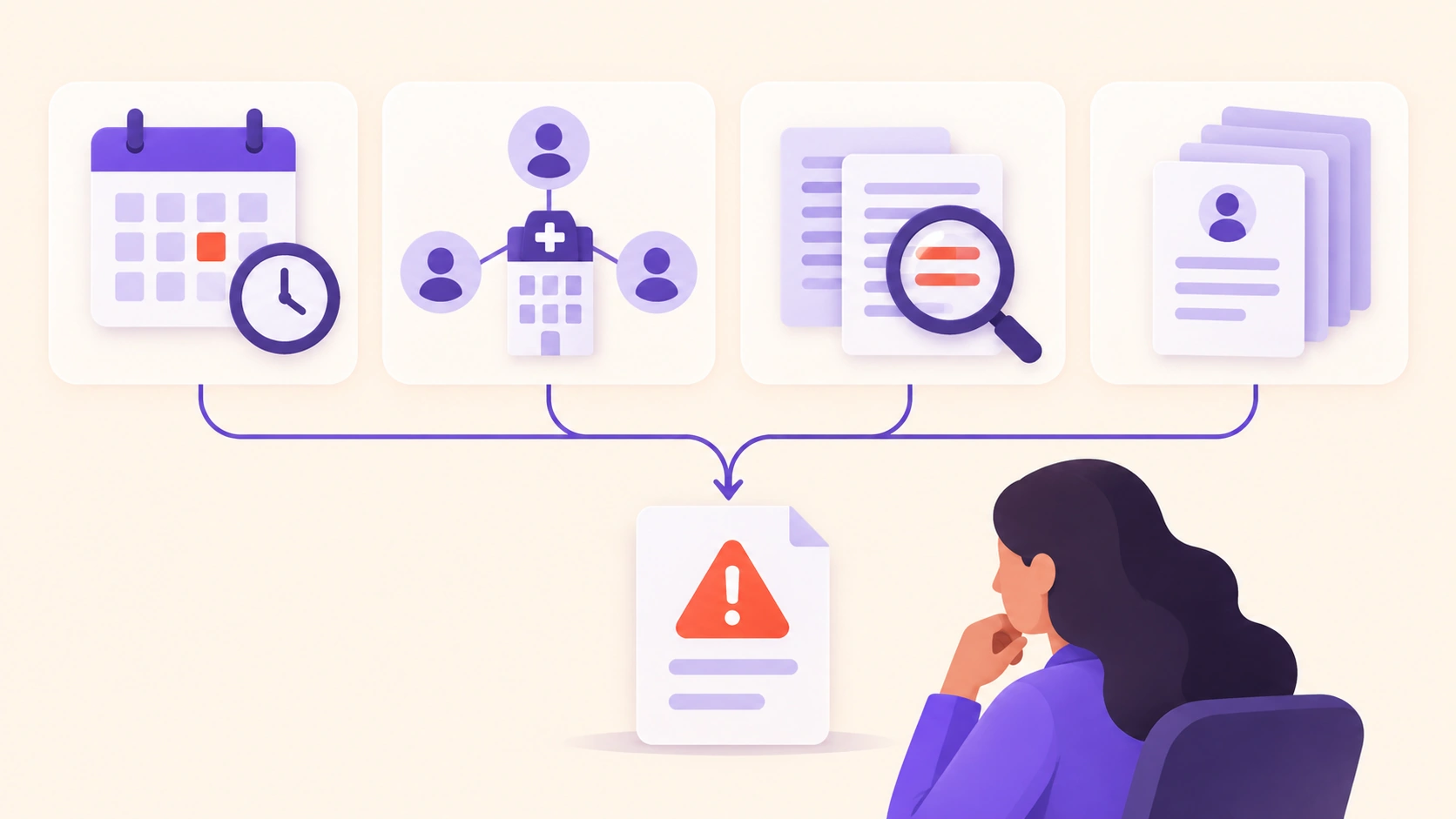
5. Enabling 24/7 Service Without Staffing Constraints
A policy question doesn't wait for business hours. Neither does a car accident. Traditional call centers handle after-hours demand with overnight and holiday staffing premiums. Those premiums are expensive to maintain year-round. And in a tight labor market, it's genuinely hard to staff the right skills on every shift.
Accenture's own insurance research puts a real number on what's at stake if carriers get this wrong. $170 billion in premium is at risk over the next five years, as customers switch insurance carriers. The industry faces an estimated $85 billion to $160 billion in efficiency losses over the same period, if these operational gaps go unaddressed. We looked specifically for one figure: "24/7 AI-powered service capabilities can increase customer satisfaction by up to 35% while reducing operational costs by 15-25%," attributed to Accenture in this section's source material. We could not find it anywhere in Accenture's own published insurance research. The real numbers Accenture does publish — the churn-risk and efficiency-loss figures above — make a strong enough case for 24/7 coverage on their own.
**Book a call** to see what a 24/7 AI Insurance Agent would look like against your own call volume, rather than a generic demo script. NextLevel.AI's platform runs 3-5 concurrent conversations at the SMB tier, and up to 100+ at full enterprise scale. Behind that sits SOC 2 Type I attestation, and genuine ISO/IEC 27001:2022 certification valid through February 2028. There's also HIPAA, GDPR, and PDPL alignment for insurers with health-data or cross-border exposure. ISO 42001 is explicitly in progress, not yet achieved. We'd rather say that plainly than round it up, the way the rest of this source draft's statistics did.
Why Regulators and Boards Are Already Involved
None of the above matters much without oversight. Insurance regulators have already moved on this. It isn't a future risk to plan around — it's a current compliance requirement across the insurance sector, in a growing number of states today.

The National Association of Insurance Commissioners adopted its Model Bulletin on the Use of Artificial Intelligence Systems by Insurers on December 4, 2023, at its Fall National Meeting. It's deliberately principles-based, not prescriptive, and it doesn't mandate specific technical practices. But it does require insurers to maintain a written AI governance program, ensure that AI-supported decisions comply with existing unfair trade practice laws, and align with the NAIC's own 2020 AI principles. The bulletin is explicit that it is "not a model law or regulation." It's guidance meant to build consistency across state insurance departments. Individual states then adopt it at their own pace, on their own timeline. Legal trackers that follow state-by-state adoption have reported roughly two dozen states adopting the bulletin within about two years of its release. More continue to follow. This is tracked by third-party law firms, not a single central registry. So the exact current count is worth confirming with a given state's insurance department, rather than any single secondary source, including this one.
Insurance leadership is largely aligned with the direction of that oversight, not resisting it. In KPMG's 2023 Insurance CEO Outlook, 52% of insurance CEOs flagged a highly challenging issue for their business: the ethical implications of AI decision-making, combined with the current absence of robust regulation. More than 72% said they wanted AI regulation held to the same rigor as climate-related regulation. That's a different posture than "move fast and figure out compliance later." It also lines up with what a regulated AI insurance deployment has to look like in practice. There's a defined escalation path to a licensed human for anything involving judgment. There's a documented governance program. And there are compliance attestations a vendor can name specifically, rather than gesture at.
Key Takeaways
- Real research backs the *shape* of what's changing in the insurance industry. But five specific figures didn't hold up when checked against each firm's own published research: "90% processing time cut," "85% of executives," "20%/80% underwriting," "80% more fraud caught," and "35% satisfaction," attributed to McKinsey, IBM, Swiss Re, KPMG, and Accenture. This article replaces every one of them with what those firms actually published.
- McKinsey's real "Insurance 2030" report predicts straight-through-processing rates above 90% for personal-lines and small-business claims by 2030. Claims headcount could shrink 70-90% from 2018 levels. It's a dramatic prediction — just a different one than "90% faster processing."
- Fraud is a $308.6 billion-a-year problem in the U.S. alone, per the Coalition Against Insurance Fraud. Deloitte separately projects that AI-driven fraud analytics could save P&C insurers up to $160 billion by 2032. Both are real, sourced numbers that don't need rounding to make the case for AI fraud detection.
- The NAIC's AI Model Bulletin, adopted in December 2023, is active regulatory guidance already, not a future consideration. Insurance CEOs' own sentiment, per KPMG, skews toward wanting more rigorous AI regulation, not less.
- A single, configurable AI Insurance Agent is a more honest, more usable architecture than a lineup of separately branded bots for each function. It covers claims status, policy questions, and 24/7 availability, with a defined handoff to licensed staff for anything requiring judgment.
Frequently Asked Questions
Will AI replace insurance agents?
No, not the licensed, judgment-driven parts of the job. AI is well-suited to routine, high-volume, well-defined tasks insurers can automate today. Think data entry, document processing, initial claims triage, and answering policy questions. Underwriting judgment, contested claims, and coverage decisions still route to a licensed human. That's partly because the work requires human judgment, and partly because insurance regulation requires it. The realistic frame for ai for insurance agents is removing repetitive work. That frees agents to spend time on the advisory conversations that actually need them, instead of replacing the license itself.
How will AI systems affect insurance operations overall?
The clearest, best-documented effects show up in speed and consistency, not headcount alone. Claims intake is faster. Underwriters spend less time on non-core administrative work — Accenture puts that figure at around 40% of current underwriter time today. Customer questions get answered outside business hours, without overnight staffing premiums. McKinsey's real research also points to a longer-term shift in claims specifically: much higher straight-through-processing rates by 2030 than most carriers run today.
How is AI actually used in insurance today?
The core, well-documented ai in insurance use cases break down into four areas. Claims automation: photo review, policy cross-referencing, initial assessment. Fraud detection: pattern-flagging for human investigators, not automatic denial. Underwriting support: faster data synthesis across more variables per application. And customer service: policy questions, claims-status updates, renewal reminders, answered conversationally instead of through a phone menu. Generative AI adds document drafting and policy summarization on top of those four.
Do insurance companies use AI to deny claims?
Not directly — and any vendor implying otherwise is worth a follow-up question. AI systems flag claims with unusual patterns for human investigation: timing anomalies, provider clusters, inconsistencies against policy history. But the decision to deny a claim is a regulated action. It stays with a licensed claims professional. An insurer that let an algorithm auto-deny claims without human review would take on significant legal exposure, under existing unfair claims practices laws. That's exactly the kind of decision the NAIC's AI Model Bulletin was written to govern.
What is the future of AI in insurance?
Based on research already published, not speculation, three things stand out. First, more automation in the routine share of claims and underwriting work that doesn't require judgment calls, per McKinsey's straight-through-processing prediction. Second, continued regulatory formalization as more states adopt frameworks like the NAIC bulletin. Third, there's a gap that still needs closing. 76% of insurers have deployed generative AI in some form, per Deloitte's 2026 outlook. But far fewer have restructured how their people work alongside it — only about 25% have taken tangible action, even though 90% of insurance executives agree it's urgent. Right now, the technology is ahead of the operating model at most organizations.
What's the difference between generative AI and conversational AI in insurance?
They're related, but not the same thing. Generative ai in insurance typically refers to large language models drafting or summarizing content: insurance policies, claims notes, coverage summaries. A human usually reviews the output before it goes anywhere. Conversational ai insurance tools are purpose-built for live, two-way interaction — a customer calling about a claim, or a chatbot answering a policy question in real time. In practice, the strongest platforms use generative AI to draft and understand language. They use conversational AI to structure that into an actual real-time exchange with a customer.
What should insurers actually look for in an AI insurance agent platform?
Four things are worth checking before signing anything. What's genuinely automated versus still routed to a human — ask for the exact handoff triggers, not a vague "seamless escalation" claim. Which compliance attestations are current versus "in progress" — a vendor should be able to tell you the difference without being asked twice. What languages and channels are natively supported, versus bolted on afterward. And whether the vendor can show you real numbers from its own platform, rather than industry-wide statistics borrowed from someone else's research. **Book a call** if you want to run that evaluation against your own claims and policy workflows.
About the Author

Andriy Senyk is Co-founder and COO of NextLevel.AI. He writes about enterprise voice AI, customer communication infrastructure, sales automation, and controlled AI deployment.