Browse every guide, case study and practical article in the NextLevel.AI library.
We tested 12 AI voice platforms across business integration, latency, compliance, and scalability. Here's our ranking — and how to pick the right one.


Moving to a new contact-centre platform? Use six dependencies to decide when voice AI joins the migration, with a worked example, tests and a decision memo.

Renewing a BPO contract with AI in scope? Settle pricing unit, baseline, AI asset ownership, data, change control and exit. Worked example inside.
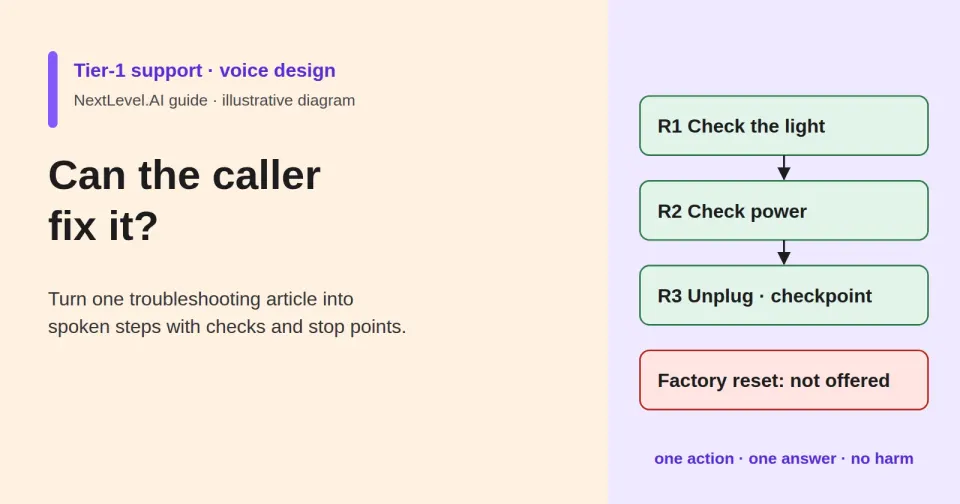
Turn a written troubleshooting article into spoken steps with a check after each step, a resume point after a dropped call, stop conditions and a handover.
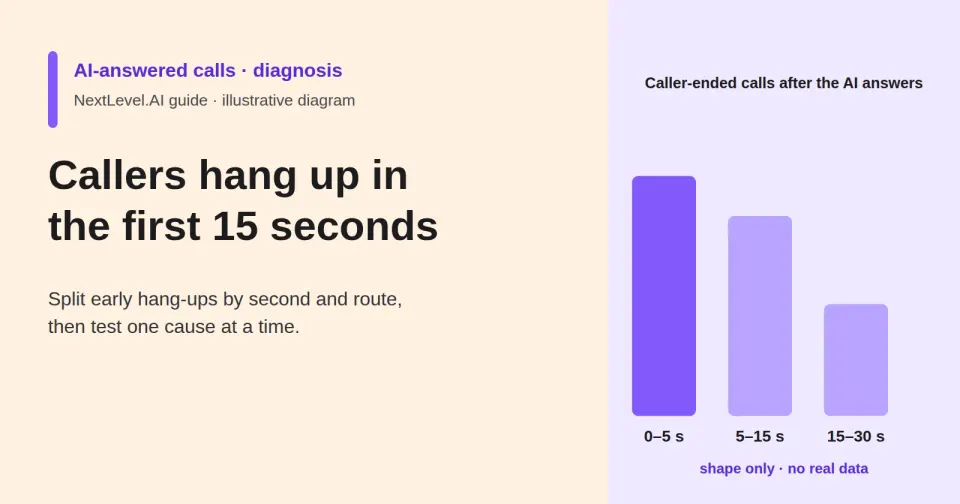
Why callers hang up right after the AI answers: define the rate, split it by second and route, match the pattern to a cause, test one change, keep disclosure.
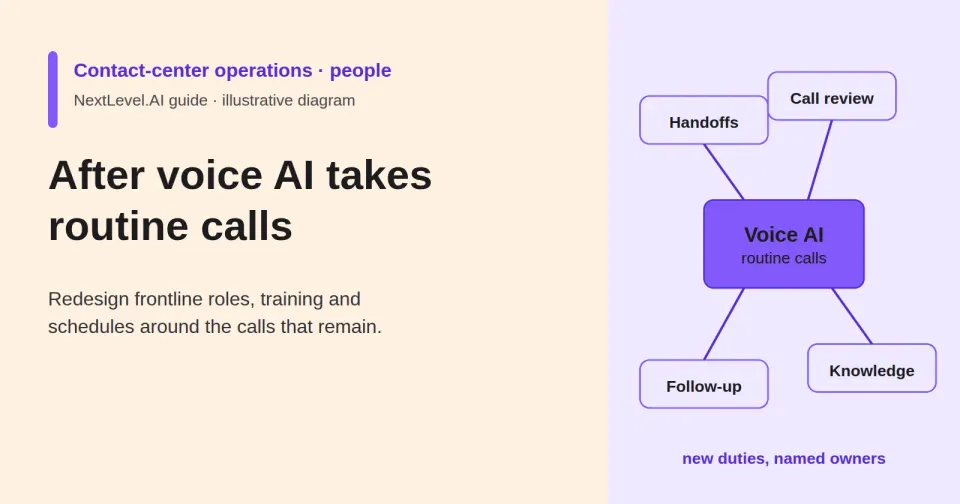
When voice AI takes routine calls: describe the human queue left, assign new duties with owners, train for them, re-plan capacity. Fictional worked example.
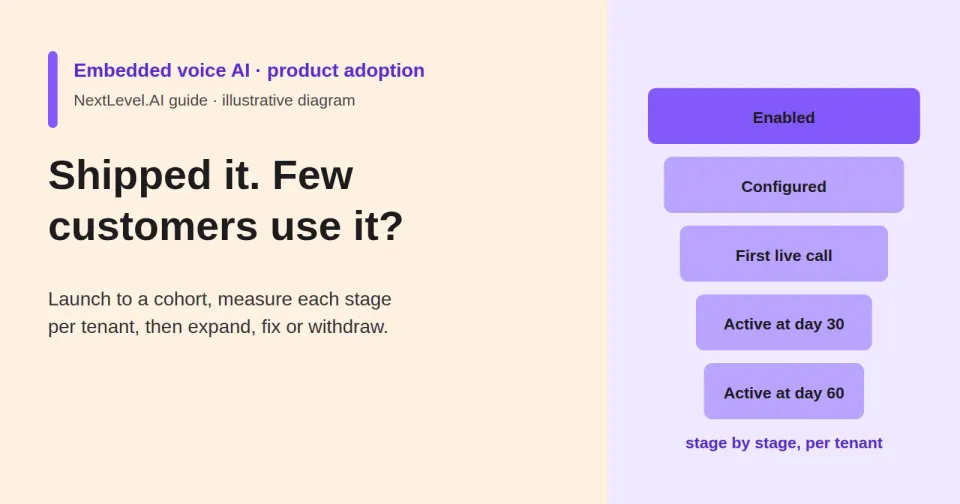
Launch an embedded voice feature to a cohort, measure tenant adoption stage by stage, then expand, fix or withdraw. Vendor-neutral; fictional example.
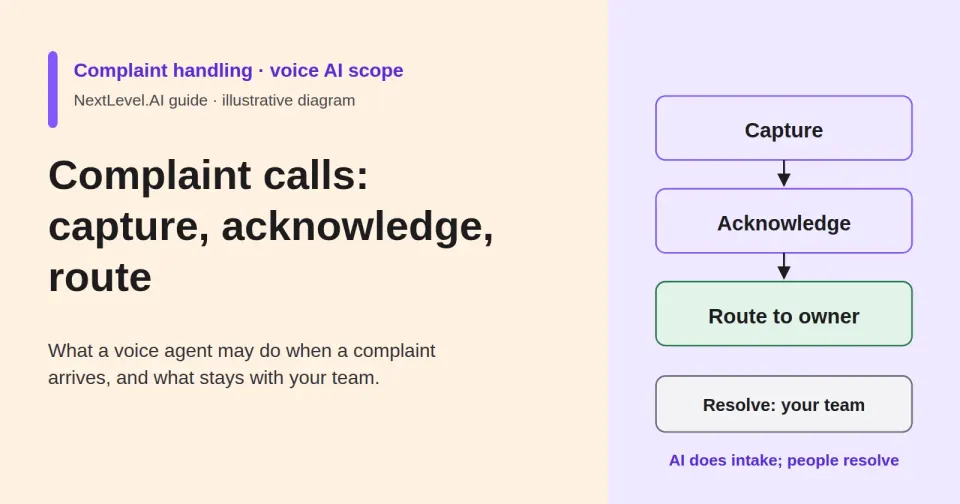
Specify complaint intake for a voice agent: recognise a complaint, take a minimum record, say only what is safe, route it to an owner. Not legal advice.
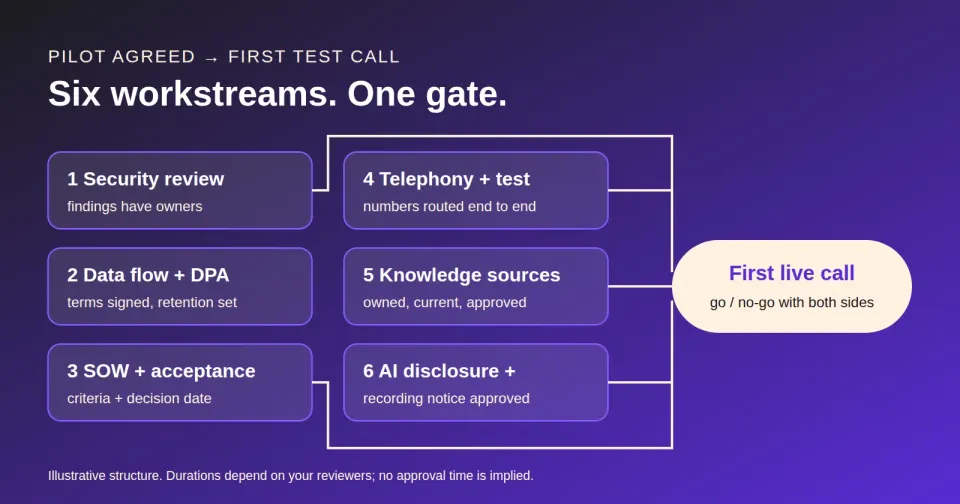
Six workstreams sit between pilot agreed and first test call. Assign owners on both sides, run test numbers in parallel and track one open-items register.
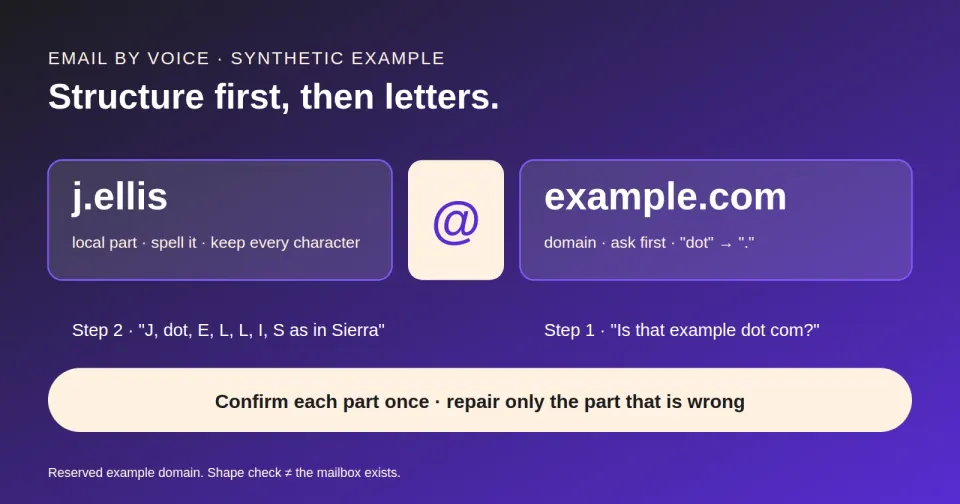
Capture emails, US ZIP Codes and UK postcodes by voice: structure first, shape checks, chunked read-back, a two-attempt limit and a 20-item test set.
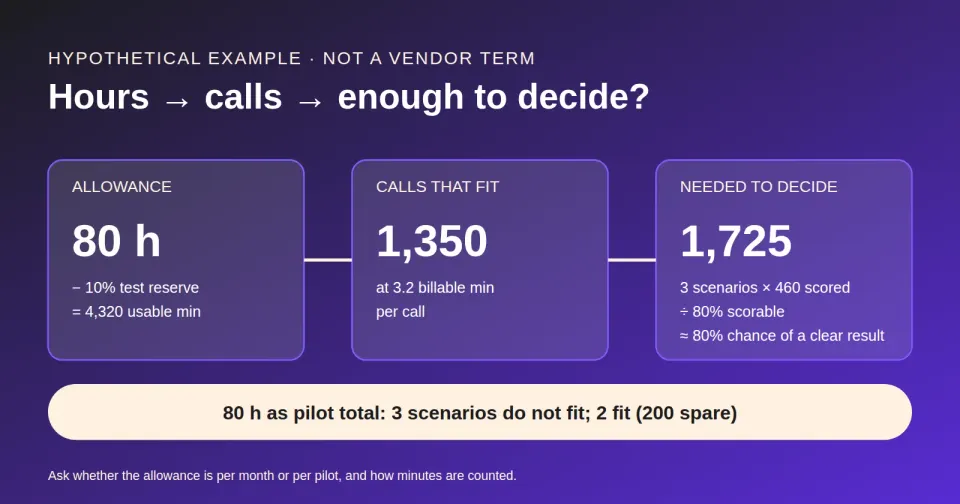
Convert a pilot voice-hour allowance into calls, check how minutes are counted, size scored calls per scenario, and see when the cap is too small.
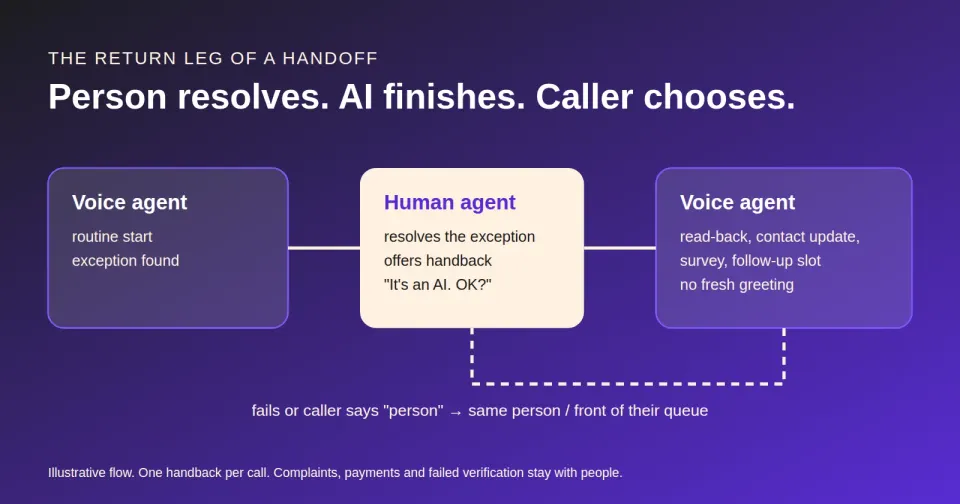
Which finishing tasks a human agent may hand back to the voice agent, the context it needs, how to tell the caller, and how to stop loops.
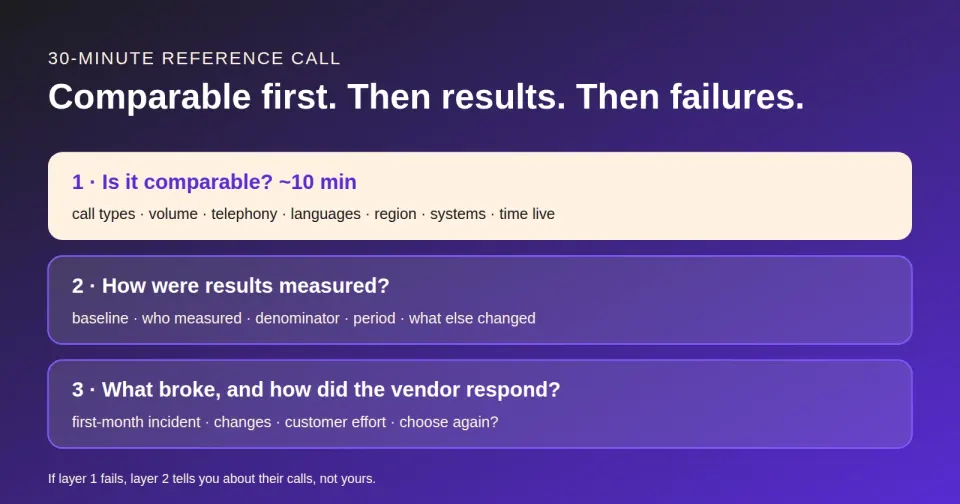
Run a 30-minute reference call: check comparability first, then how results were measured and what broke. Record answers as confirmed, stated or unknown.
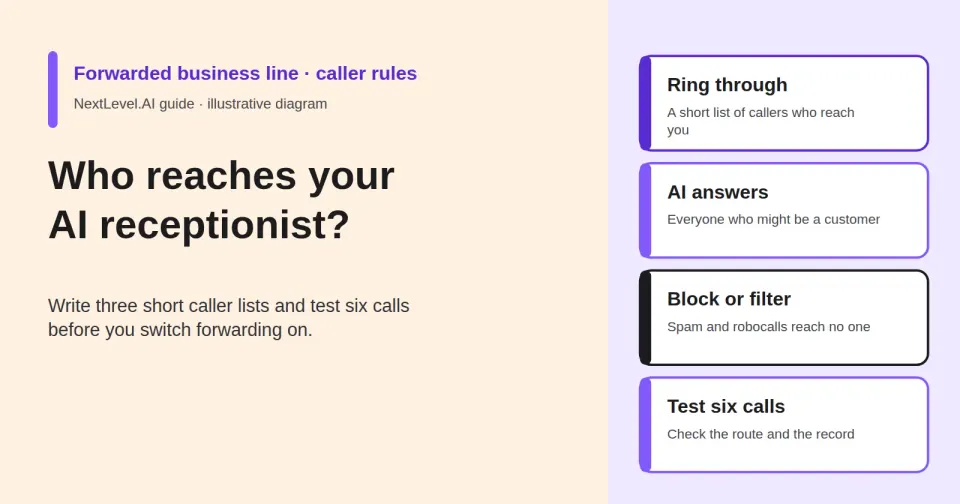
Forwarding your business line to an AI receptionist? Write three caller lists (ring through, AI answers, block) and test six calls before you switch on.
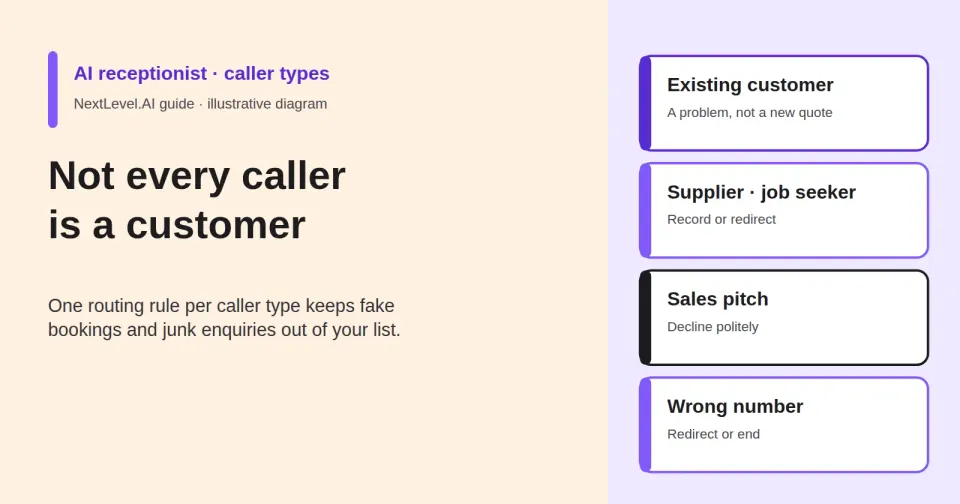
Suppliers, job seekers, sales pitches and wrong numbers: give your AI receptionist one routing rule per caller type, with a routing table and six tests.
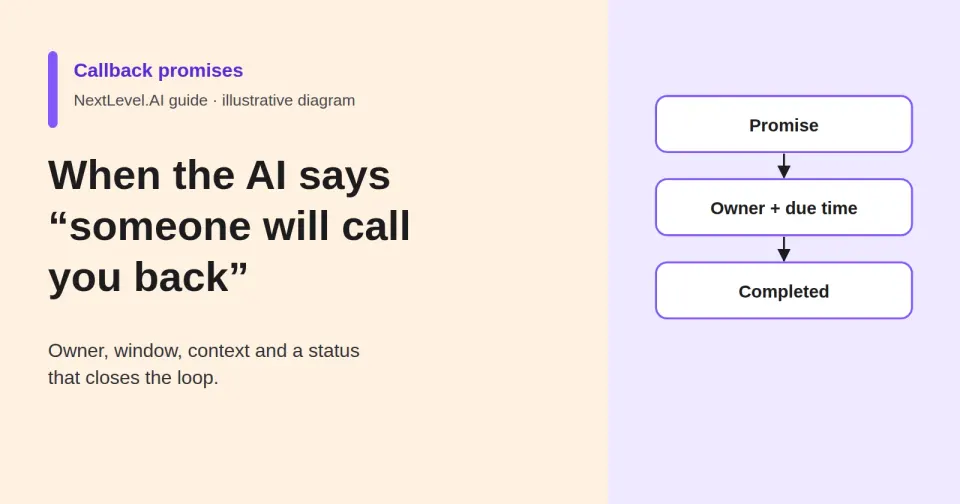
When your voice agent promises a callback, make it happen: what the AI may promise, who owns it, by when, what context goes with it, and a weekly check.
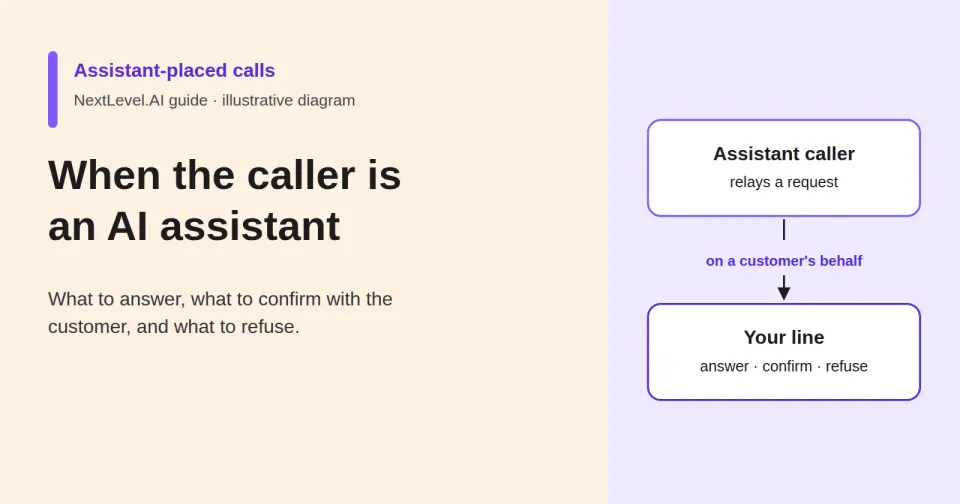
Google now places automated calls to US businesses for customers. What to answer, what to confirm with the customer, what to refuse, plus four test calls.
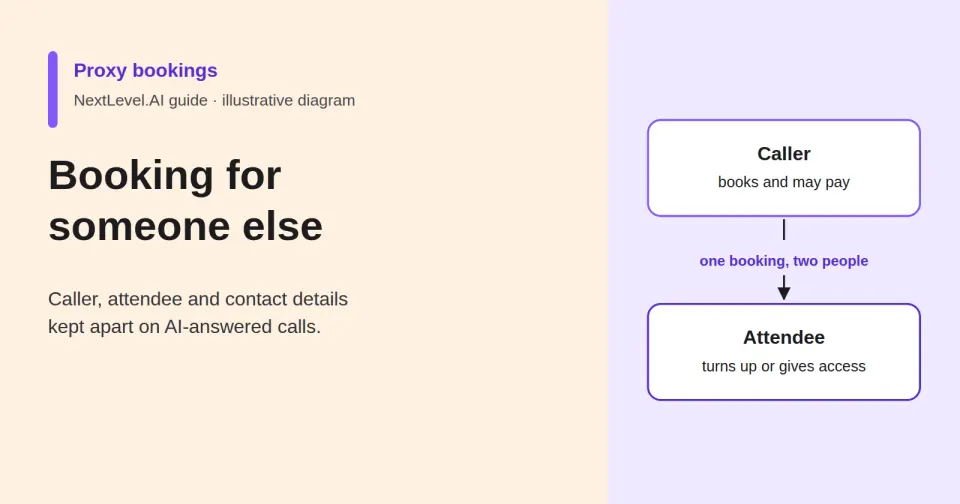
Caller, attendee and confirmation contact: the fields and change rules a service business needs when someone books for a parent, tenant or boss by phone.
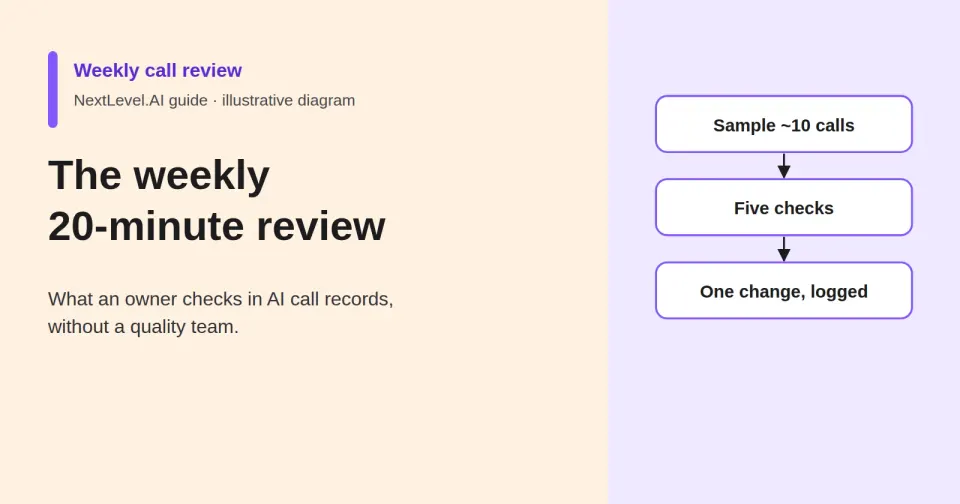
A fixed weekly routine for owner-operators: which AI call records to open, five checks in order of cost, one logged change, and when to ask for help.
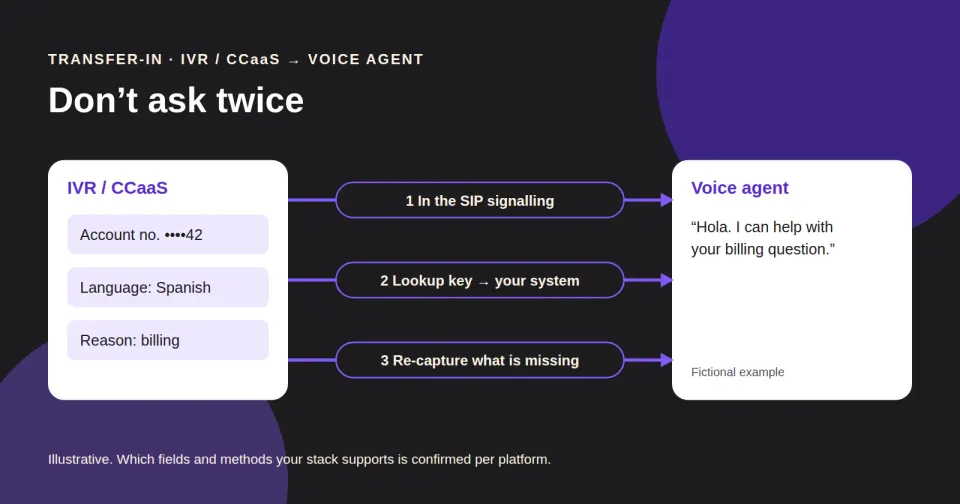
Which IVR data to pass to a voice agent, how it travels (SIP UUI header, lookup key or re-capture), what to trust, and five transfer-in tests.
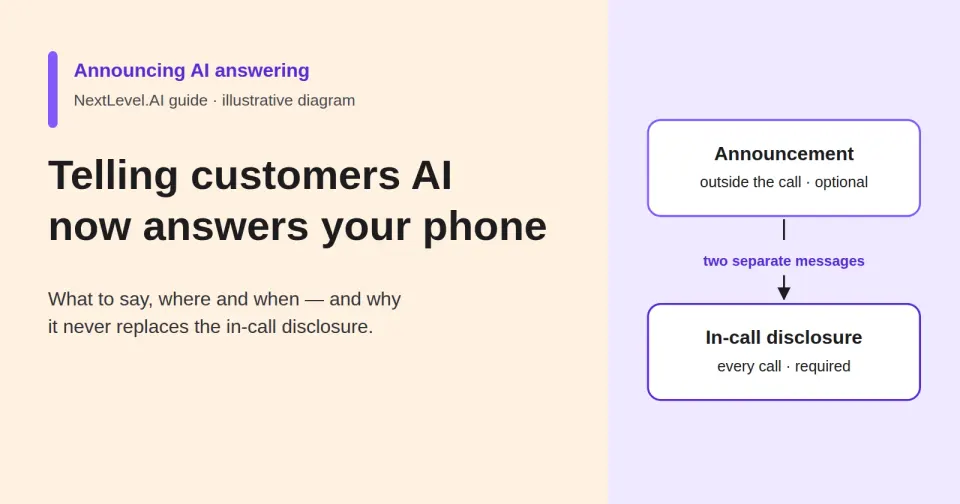
Should you announce that AI answers your phone? A decision guide, fill-in lines for website, voicemail, email and staff, and a timing plan for launch.
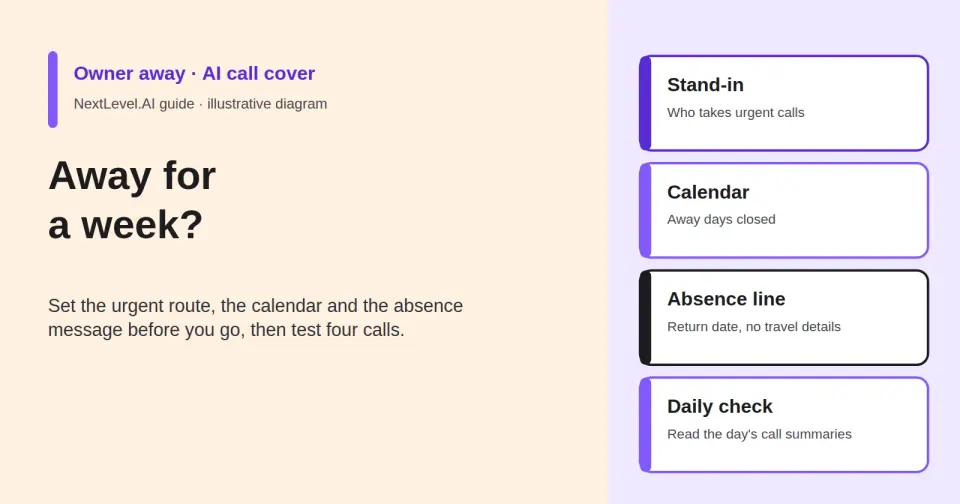
Going away? Plan AI call cover: a stand-in for urgent calls, closed booking dates, an absence message and four test calls to make before you leave.
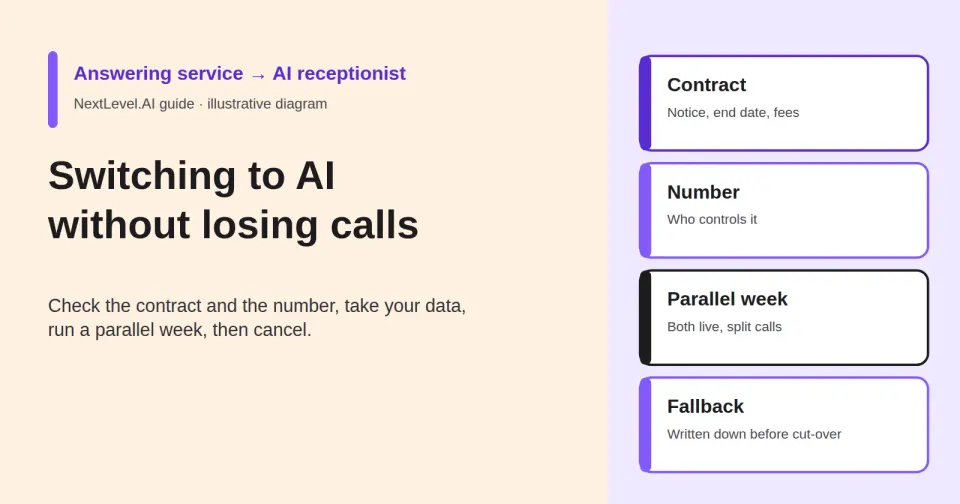
Leaving a human answering service for AI? Check notice terms and who controls your number, take your data, run a parallel week, then cancel.
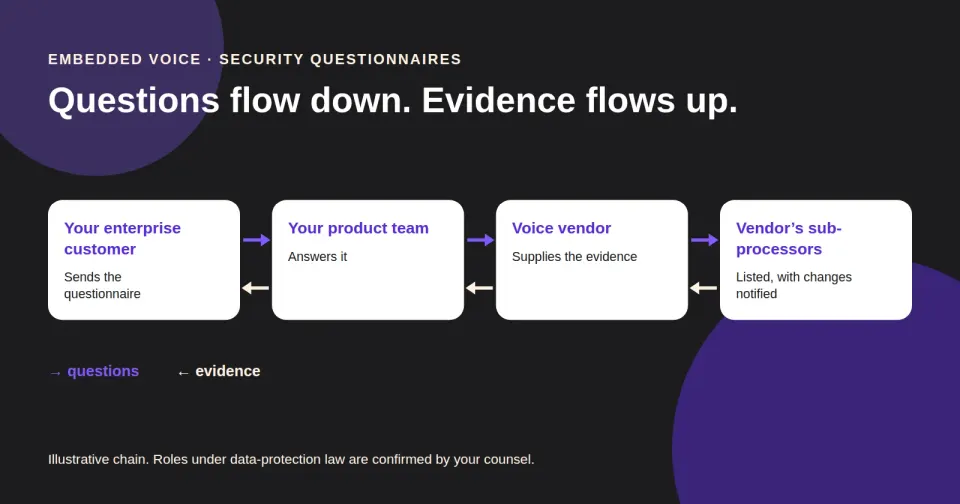
What enterprise customers ask about an embedded voice vendor, the evidence you need from it, and how to answer data, sub-processor and uptime questions.
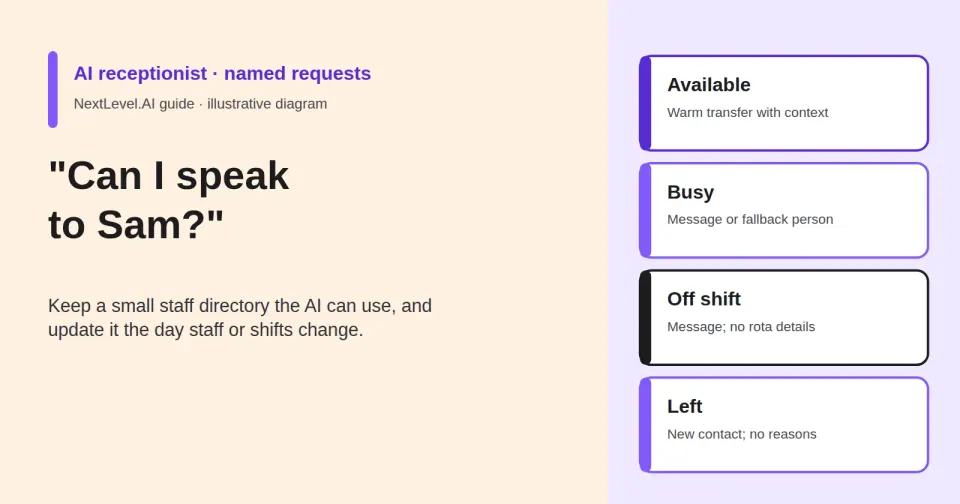
Callers ask for a person by name. Keep a small staff directory your AI receptionist can use, handle busy, off-shift and leaver cases, and test five calls.
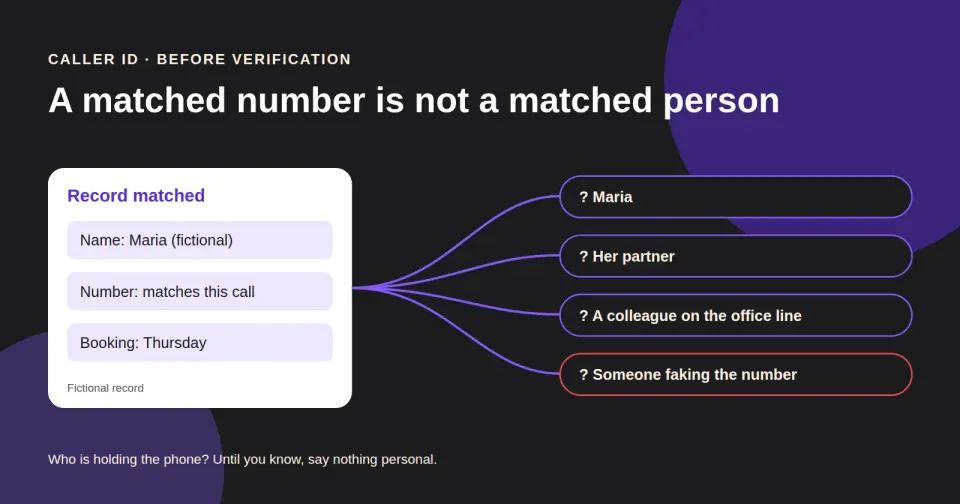
A caller-ID match is not a verified caller. Use a four-level disclosure ladder, safe greeting wording and seven test calls before you personalise.
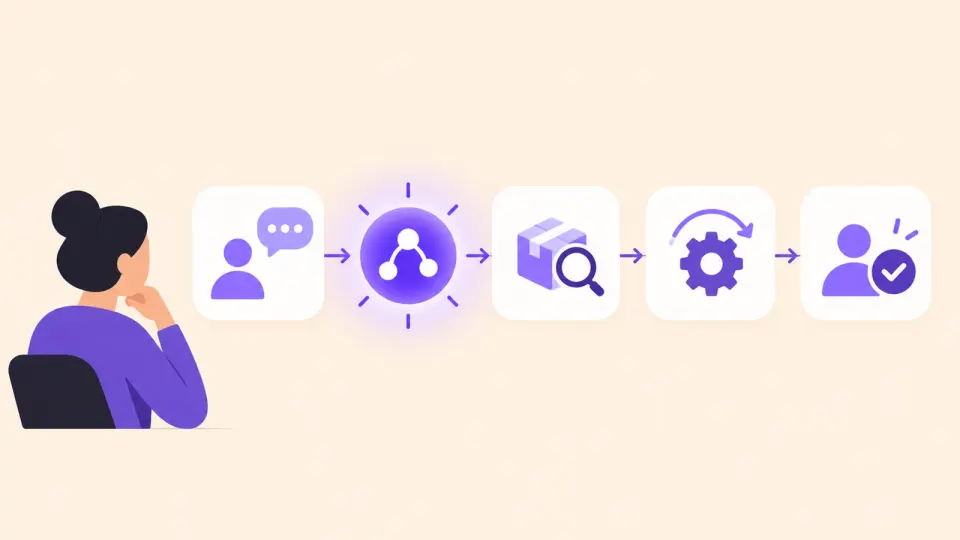
Compare Sierra, NiCE Cognigy and Fin with Decagon on support actions, confirmation, workflow ownership and commercial scope. Includes a synthetic example.
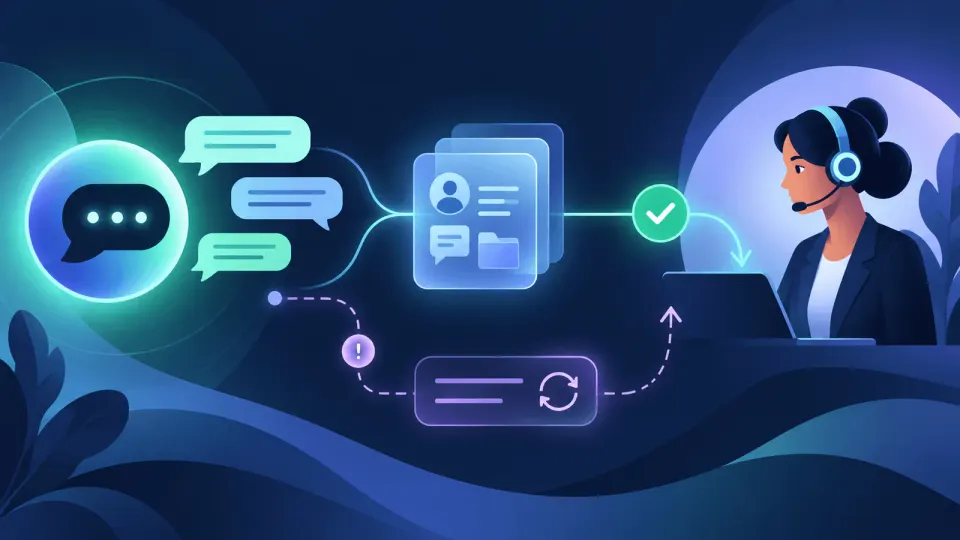
Compare Decagon, NiCE Cognigy and Fin with Sierra on cross-channel case continuity, human handoffs and outcome terms. Includes a synthetic case trace.
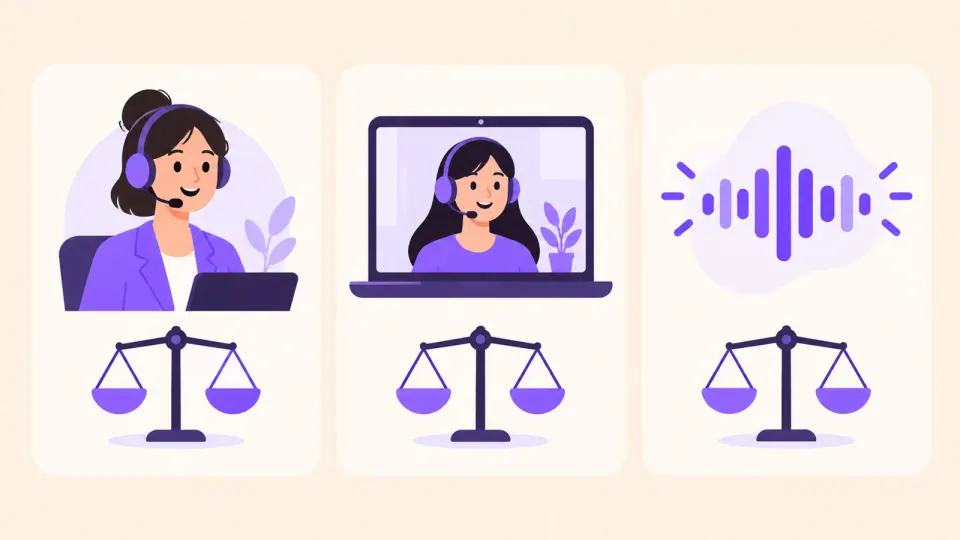
Separate address, mail and workspace services from phone answering. Compare package inclusions, responsibilities and the evidence still needed.
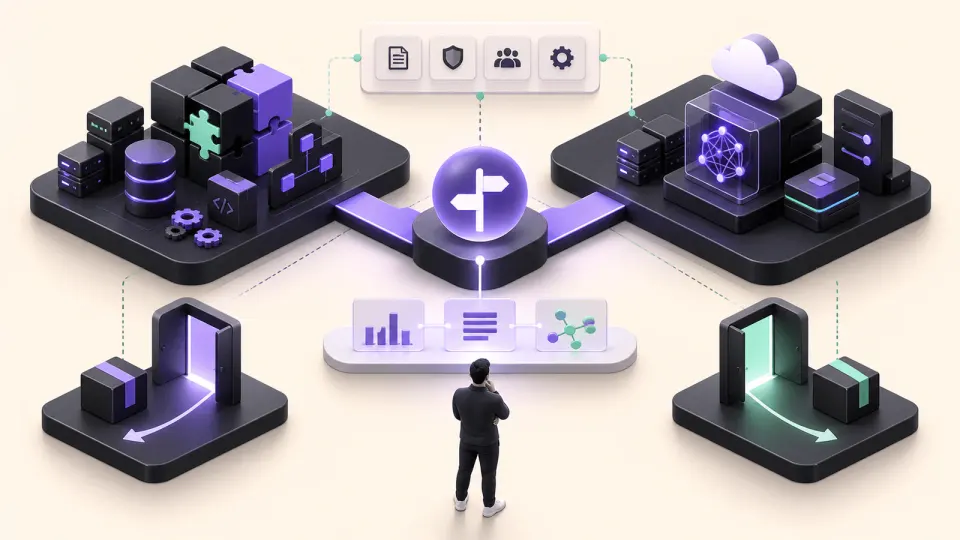
Map a customer-facing voice feature across UI, access, data and release boundaries. Decide what to build, embed or defer without assuming vendor support.
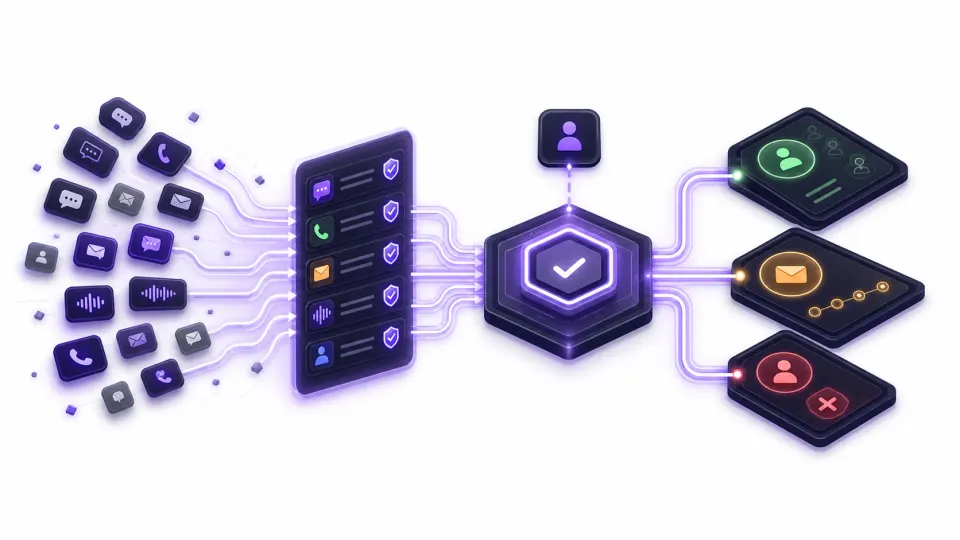
Define an inquiry cohort, link bookings once and separate qualified, active and attended outcomes. Check reschedules, unknowns and mismatched records.
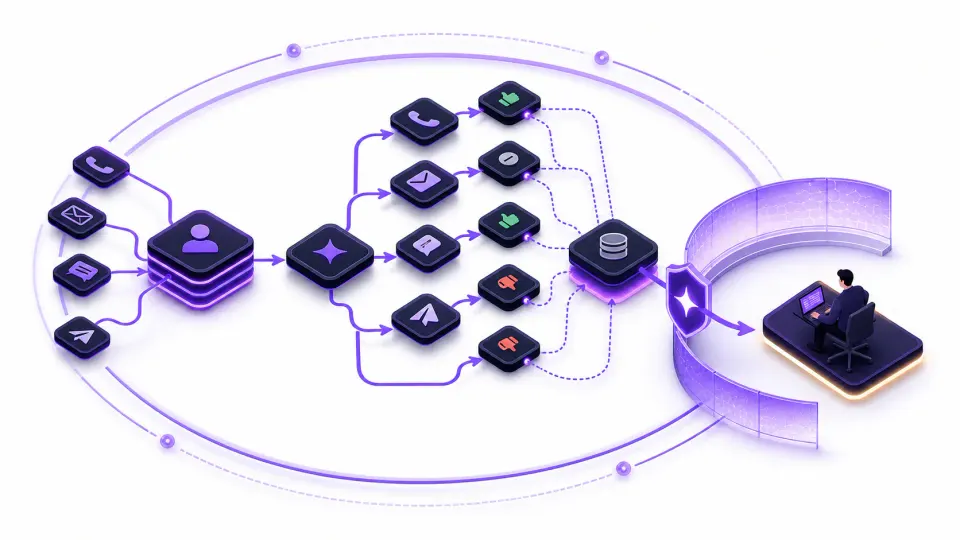
Evaluating 11x alternatives for inbound qualification and booking? Separate published claims, untested behavior and missing evidence before switching.
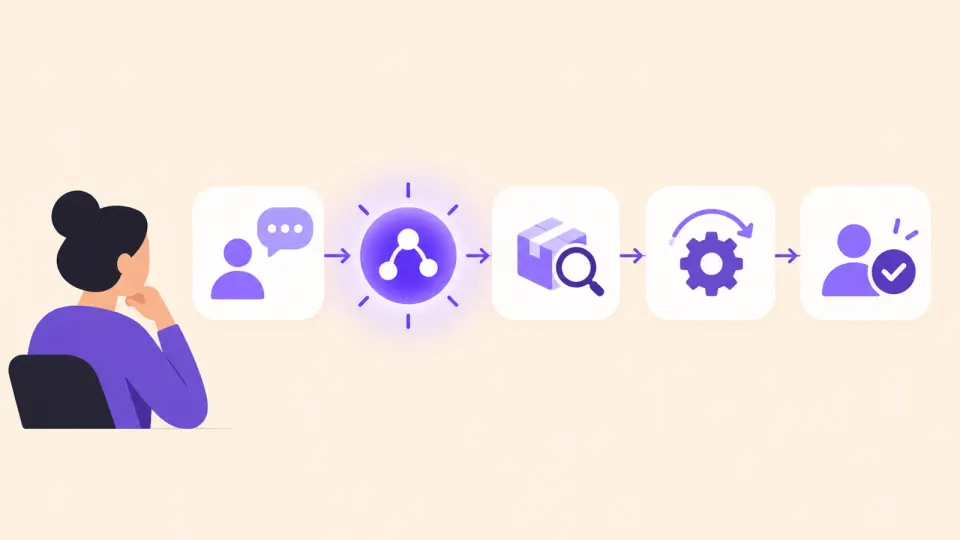
Link order-status contacts to source events, distinguish repeat workload from unique orders, and choose an answer, data repair or human-owned exception.
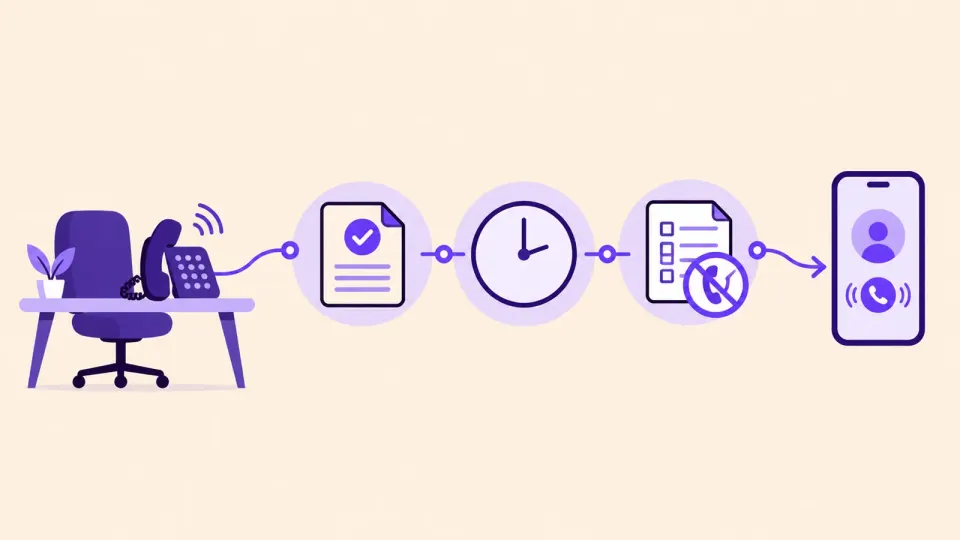
TCPA compliance for AI calls, explained: consent, caller identification, opt-outs, calling hours, DNC lists and state rules for AI outbound campaigns.
What the FCC ruling on AI-generated voices in robocalls means for businesses: consent, caller identification, the deepfake fines and the pending AI rule.
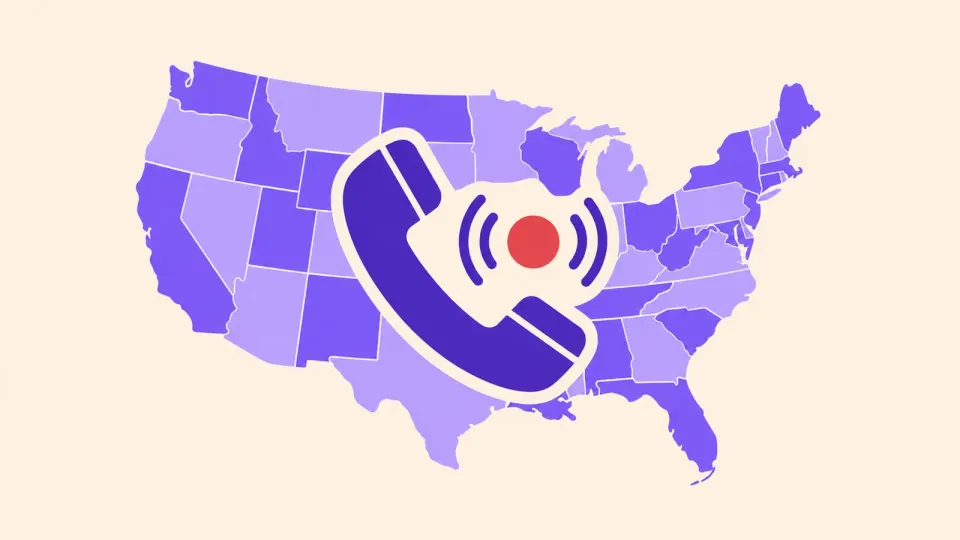
Call recording laws by state, explained for businesses using AI phone agents: one-party vs all-party consent, interstate calls and the AI vendor question.

What do missed calls really cost a small business? See what the research measured, which stats to skip, and a formula to work out your own number.
Compare refreshed answering tariffs using 50, 150 and 500 calls. See billing units, overage, unique callers, credit reloads and terms missing from a full quote.
Separate phone coverage from onsite reception, map duties and exceptions, and compare AI-first, human-first and hybrid routes without assumed staffing savings.
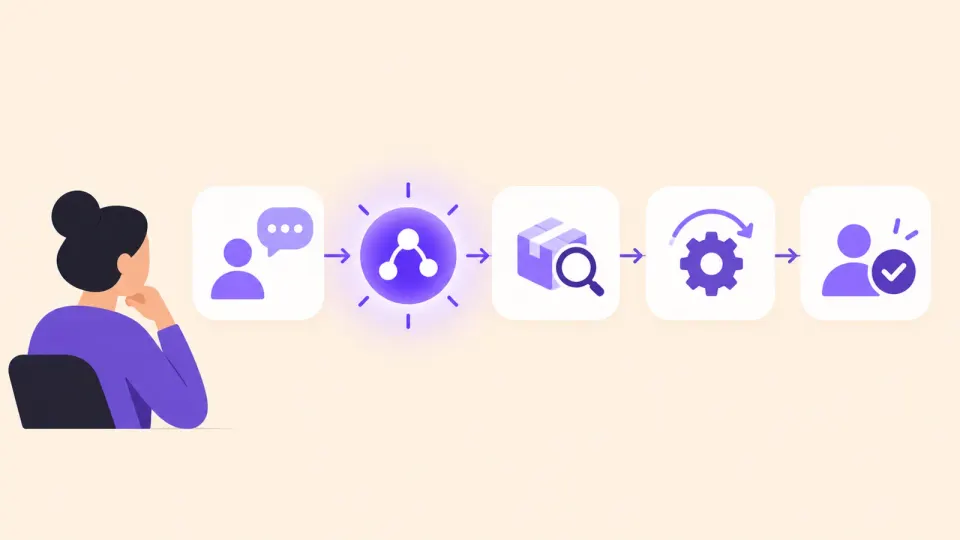
Agentic AI in customer service, explained: how it differs from chatbots and IVR, realistic use cases, guardrails, failure modes and what forecasts say.
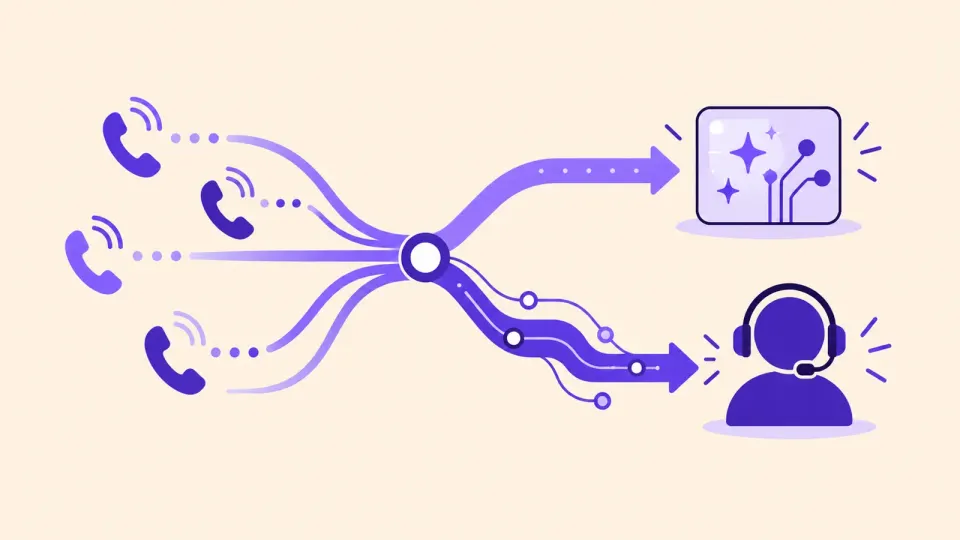
Call deflection done right: define deflection, containment and resolution, score which calls to automate first, and keep a clear path to a person.
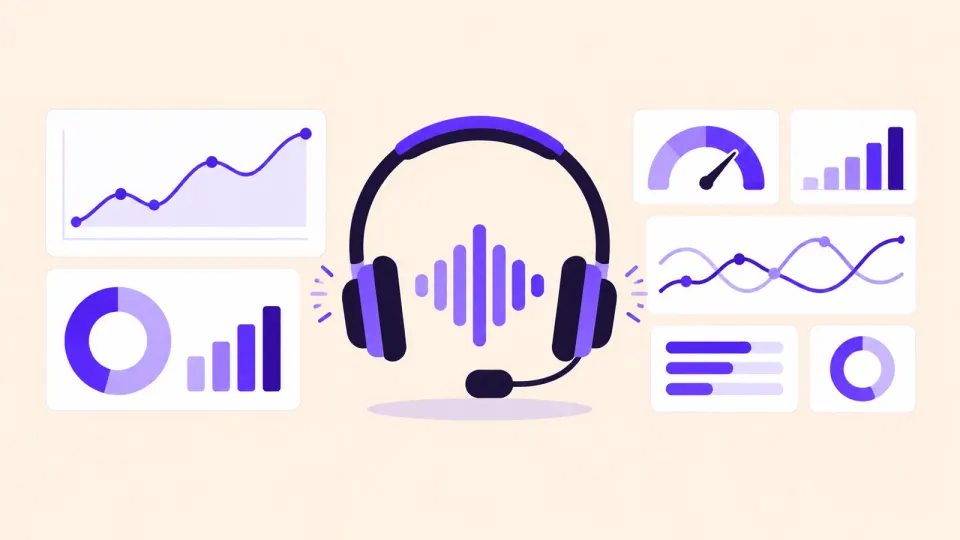
Contact center KPIs for AI agents: which metrics to keep, how to measure containment vs resolution, transfers, errors and cost per resolved contact.

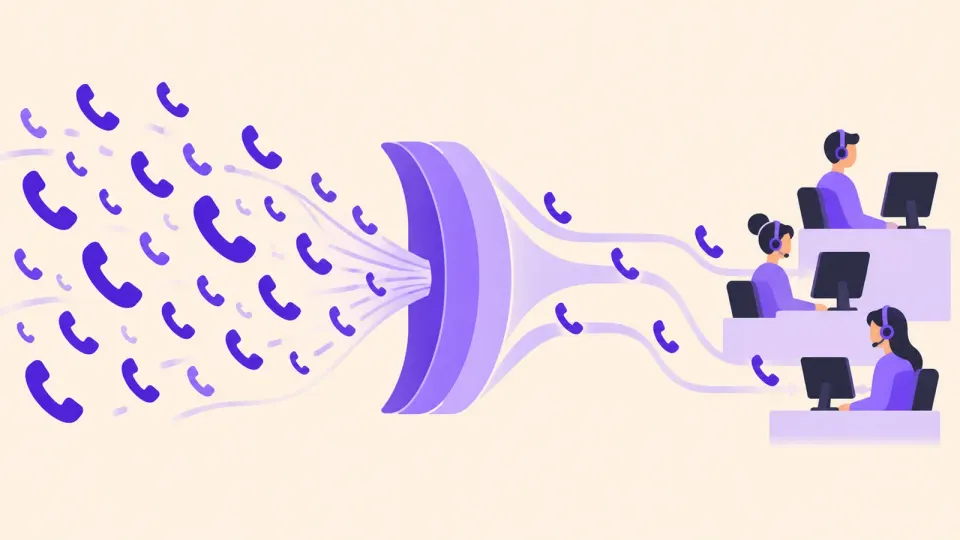
How to handle high call volume and seasonal peaks: size staff with Erlang C, compare overflow, callbacks and AI agents, and prepare a pre-peak plan.
A copy-ready conversational AI RFP template: voice, telephony, security, BAA, DPA, pilot and pricing questions, plus a scoring rubric with pass/fail gates.
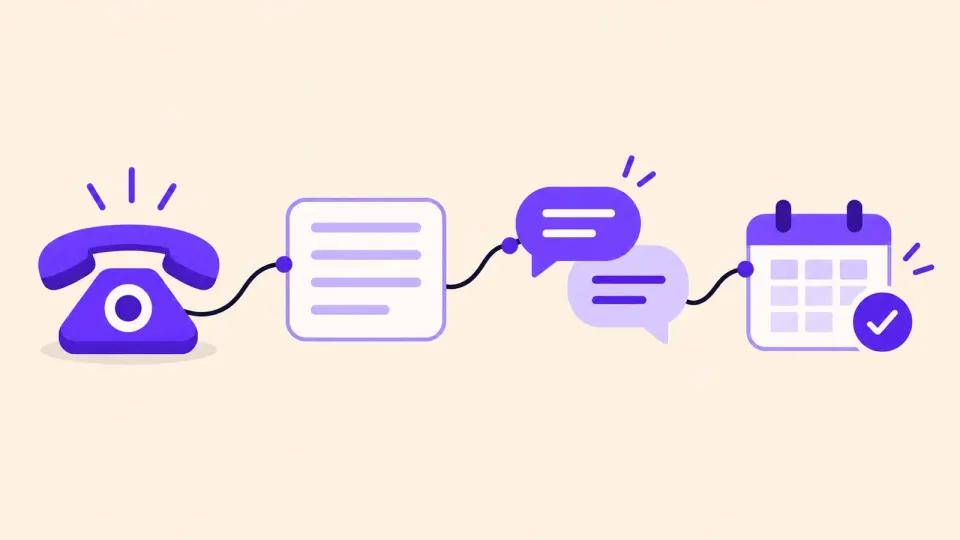
Copy-ready AI receptionist script templates for greetings, disclosure, booking, after-hours, urgent calls, transfers and voicemail, plus industry variants.
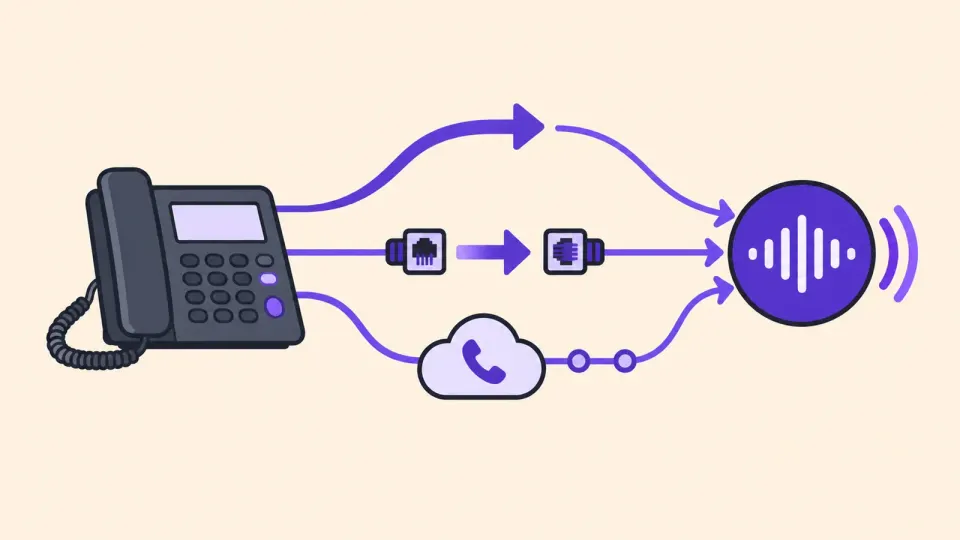
Connect your business phone number to an AI agent with call forwarding, porting or SIP. Compare the risks, check verified codes and follow a safe rollout.
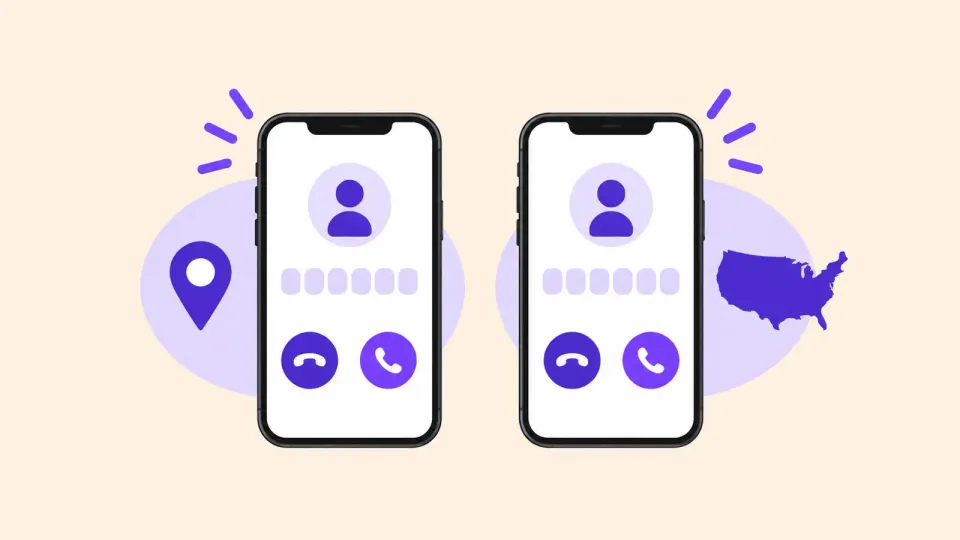
Local vs toll-free numbers for AI agents: who pays, what drives answer rates, STIR/SHAKEN, caller name display, 10DLC vs toll-free SMS rules and costs.
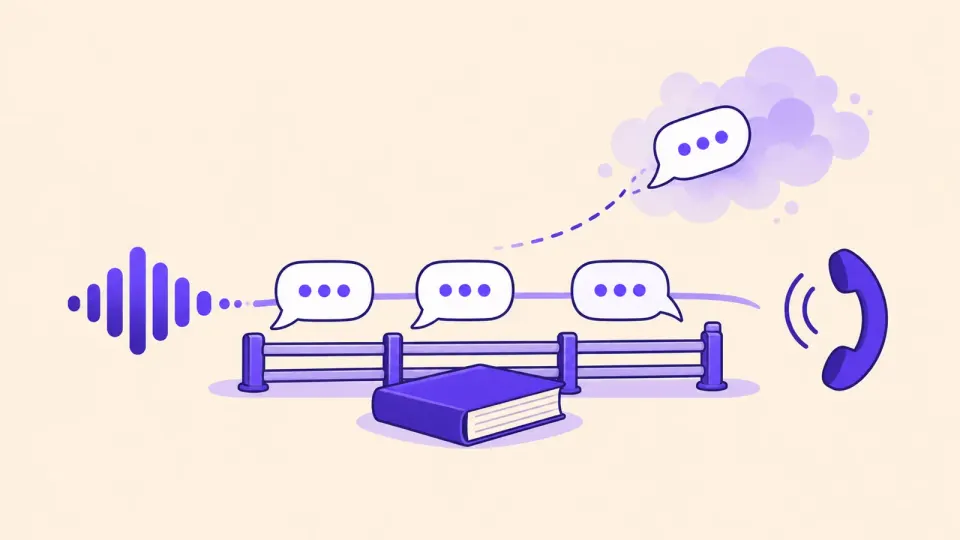
Why AI hallucinations in voice agents happen, why they are riskier on the phone, and the controls, read-backs, tests and monitoring that keep them bounded.
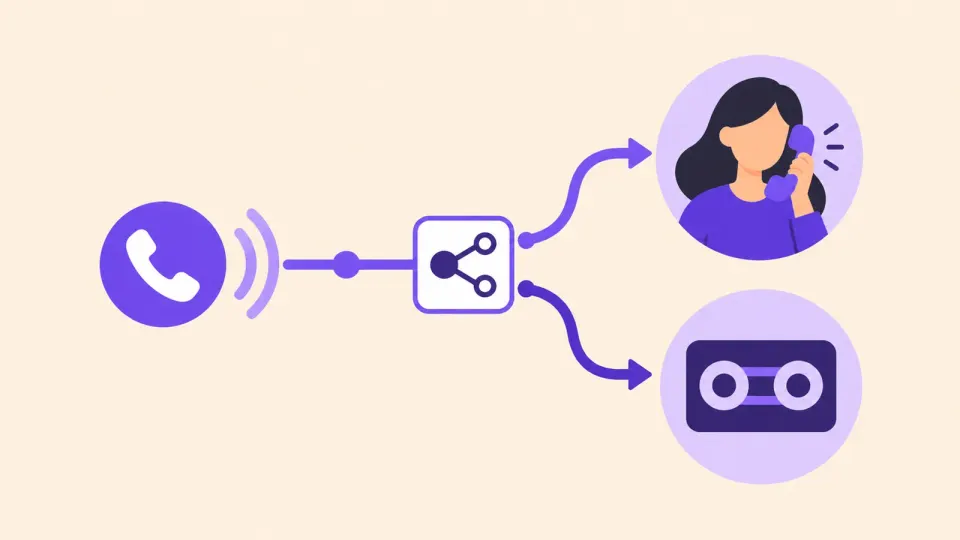
How answering machine detection for AI calls works, why it misfires, how the 3% and 2-second abandonment rules apply, and what to ask before you dial.

Compare autonomy, state, tools and permissions to decide when a chatbot is enough and when you need an agent that finishes the work. See both in one platform.

Reopen conversations with dormant leads by defining eligibility, recovering context, segmenting by stall reason and auditing records before any outreach.

Evaluate a dental AI receptionist with a call map, minimal intake, deterministic booking, clinical limits and field-level integration proof before a pilot.
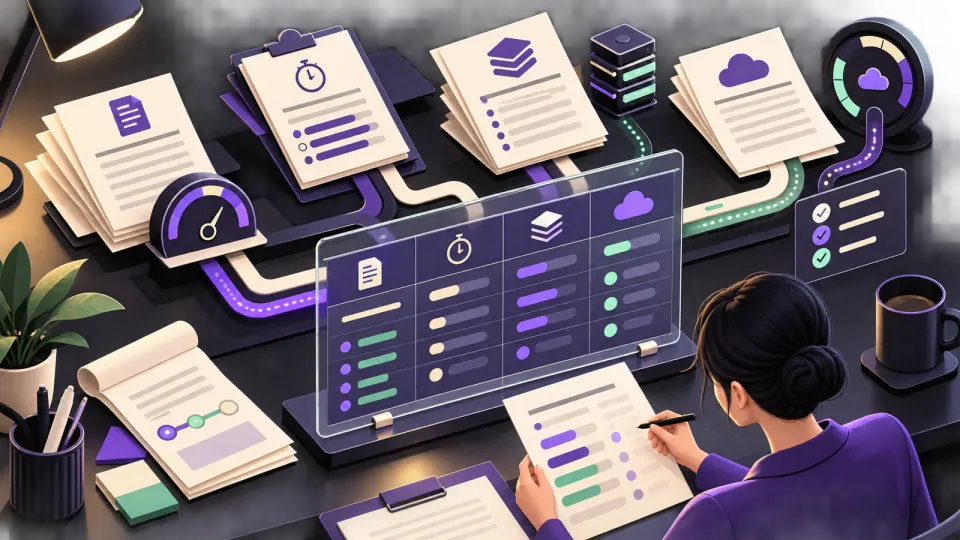
Compare the same sales workload across six cost buckets. Reproduce a filled year-one model, test minimums and overages, and keep unquoted integration costs unknown.
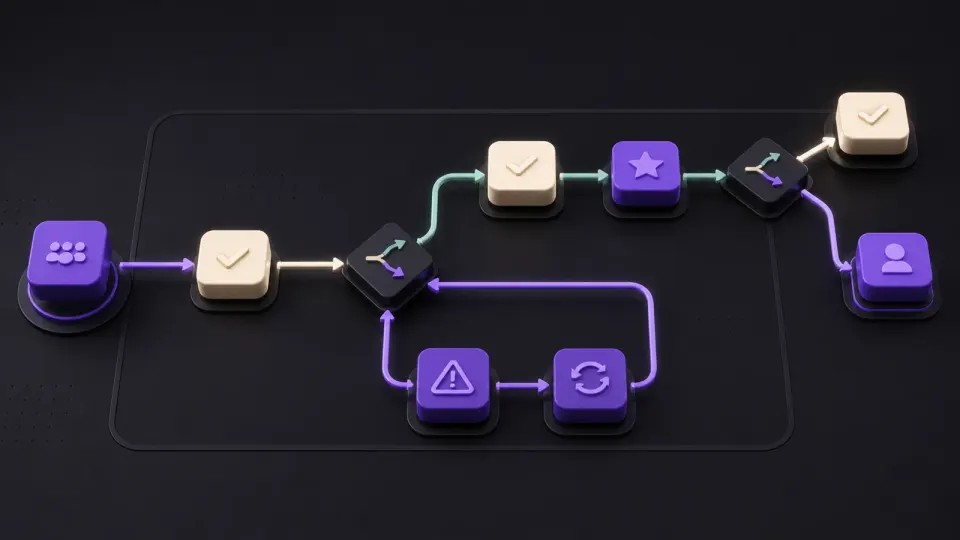
Design sales automation as states and transitions with contracts, deterministic logic and protected CRM records, so failures have owners. Talk to our team.
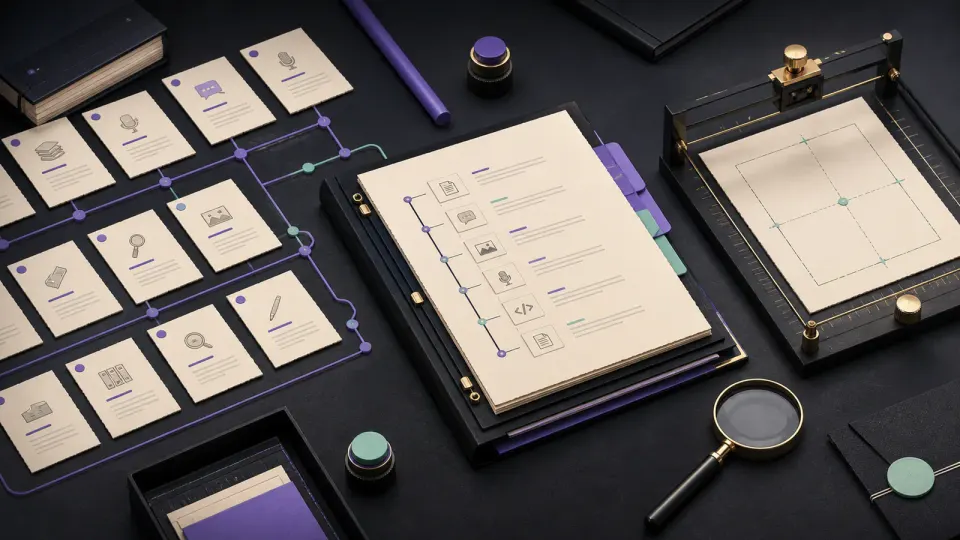
Get source-checked AI sales numbers on adoption, reported productivity and prospecting, with notes on what each figure really measures. Read before you cite.

Pick AI sales tools by the constraint they remove: seven categories, authority matched to cost of error, and proof over feature labels. Compare our approach.

Design legal intake as an administrative corridor: limit early disclosure, route conflict-sensitive calls and book consultations around the clock. Talk to us.

A practical checklist for testing ASR, language selection and code-switching per locale before launch. NextLevel agents speak 30 languages; hear them live.
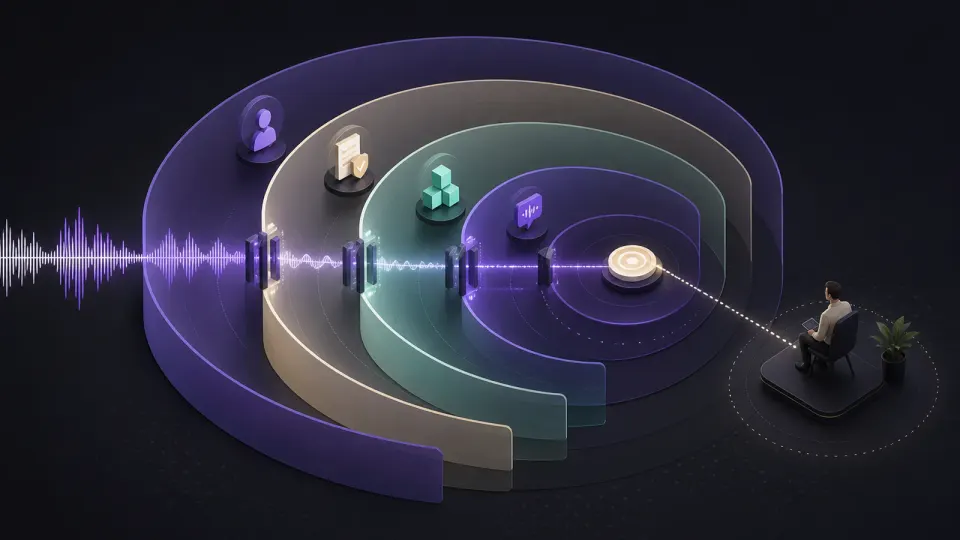
Threat-model the voice path, map data, separate voice from identity and enforce permissions outside the prompt. NextLevel is ISO 27001 certified.

Separate assistance, recommendations, confirmation and bounded action in one support request. Map human ownership, final records and unresolved exceptions.
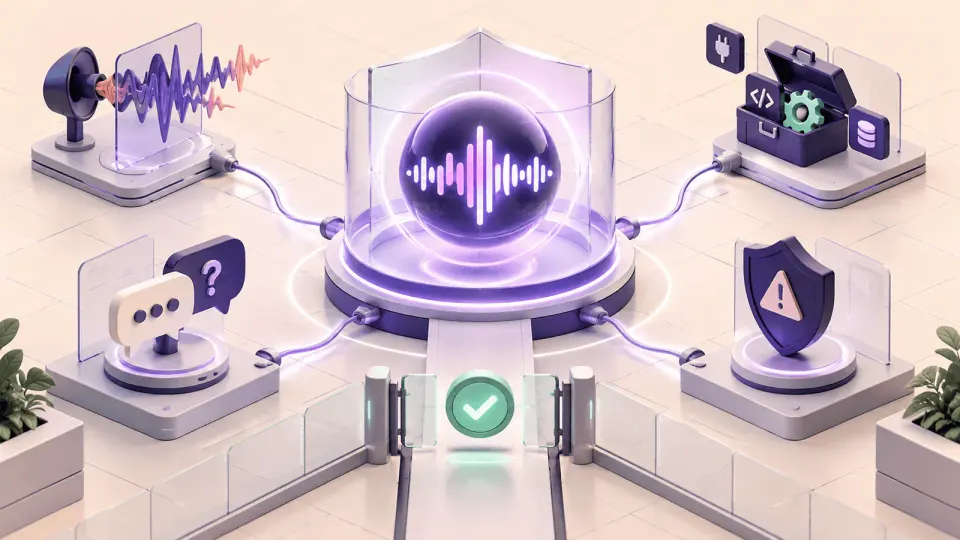
Build a threat model and adversarial test corpus that turn red-team findings into operating controls before callers reach your agent. Discuss your use case.
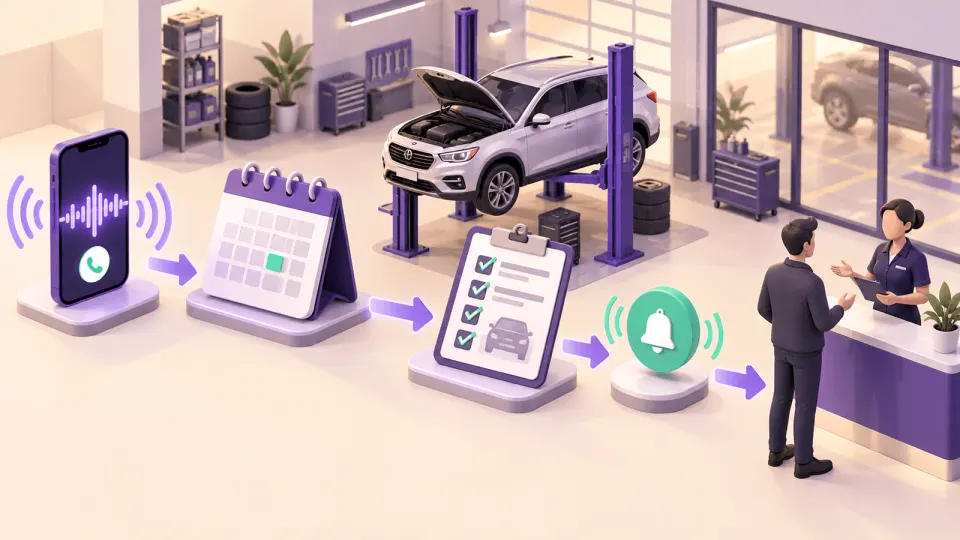
See how auto repair shops can use voice agents for service scheduling, status updates and recall campaigns, with intent maps and vehicle context. Hear a demo.
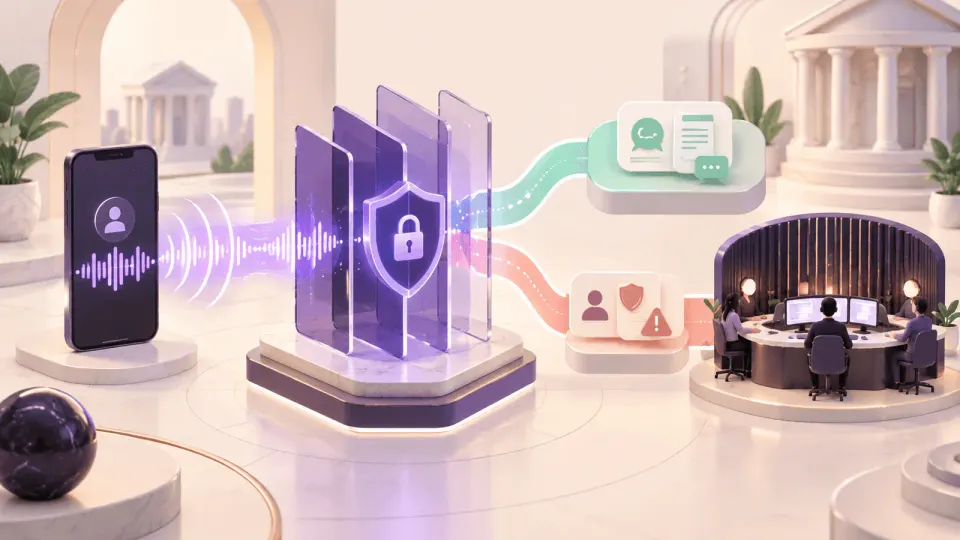
Plan banking customer service automation with a service taxonomy, identity boundaries and human control points. ISO 27001 certified and SOC 2 Type 1. Ask us.
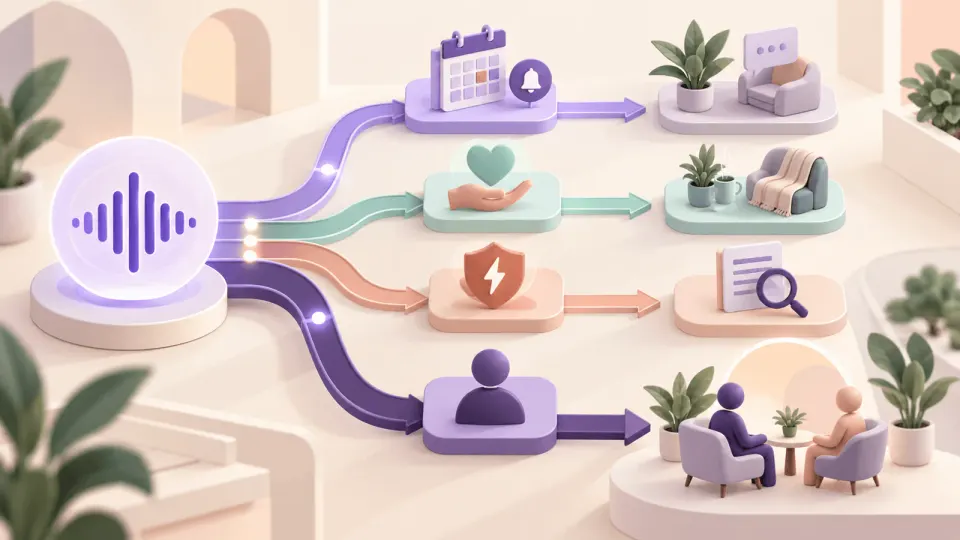
Learn how voice agents can handle payment reminders and hardship conversations with identity, disclosure and human escalation built in. Request a demo.
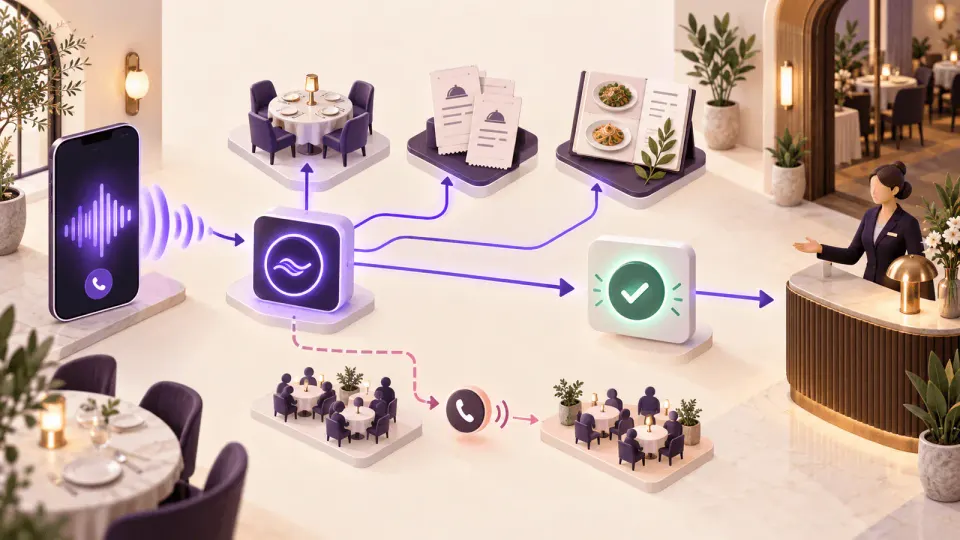
Plan restaurant phone handling around location-specific sources, confirmed reservations, pending requests and staff routes. Includes a fictional Friday call ledger.
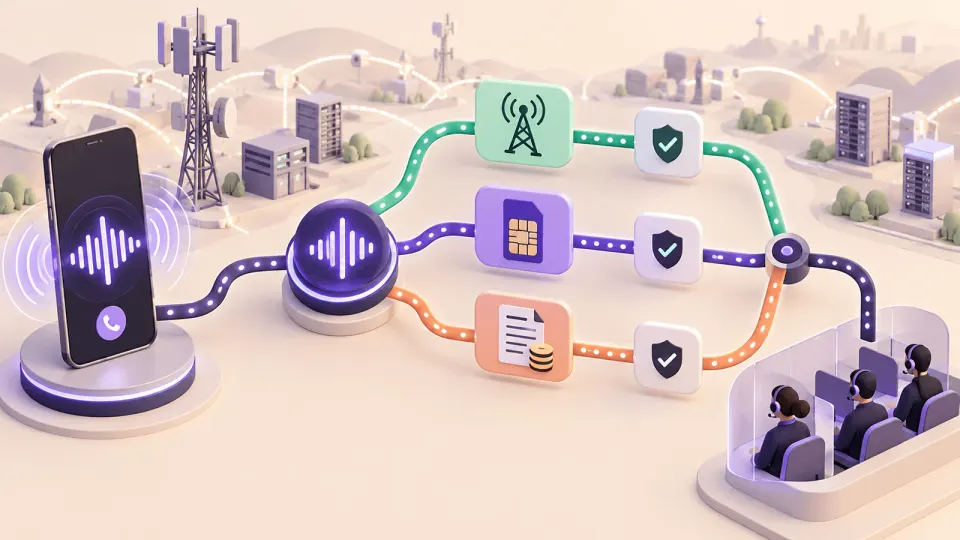
Learn how telecom teams can automate service issue calls and plan requests with intent and data tiers, structured intake and clear escalation. Book a demo.

Plan voice agents for admissions, enrollment and student support with audience-based intents and authoritative sources, in 30 languages. Get a prototype.
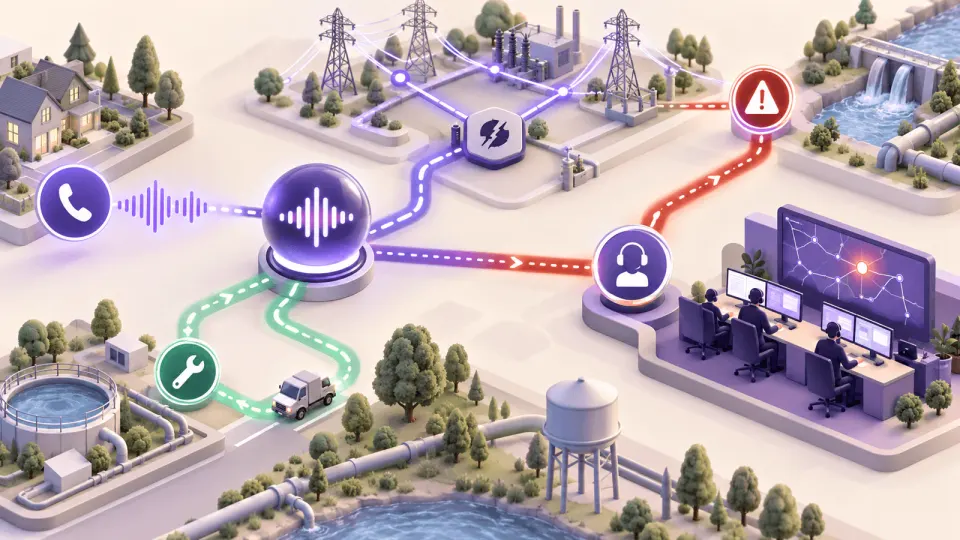
Learn how utilities can route outage and service-request calls with voice agents, classify intent by risk and keep emergency routing safe. Talk to our team.
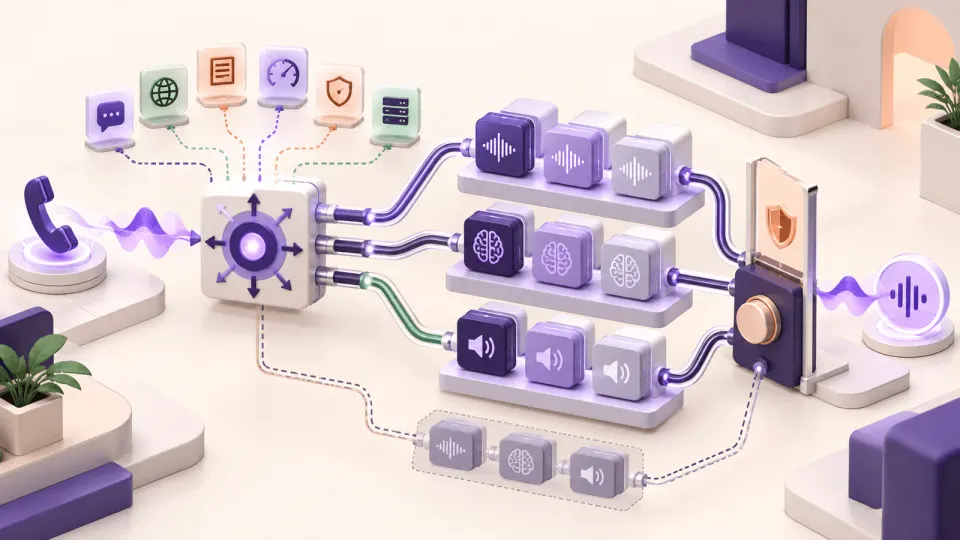
Learn to classify calls and evaluate candidate speech, language and voice models so each conversation uses the right stack. Hear how our agents sound.
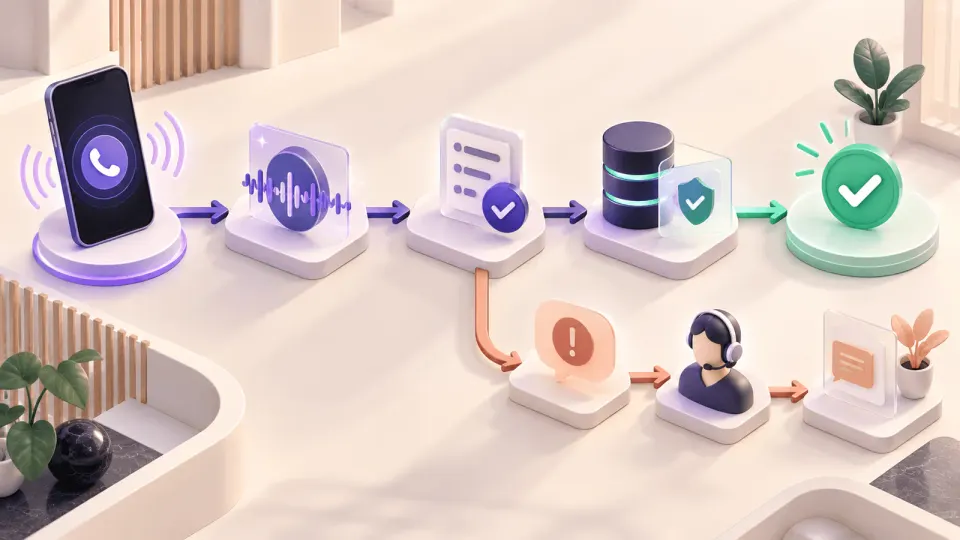
Define a resolution contract, denominator, observation window and audit so first call resolution reflects work actually solved. Discuss your call metrics.
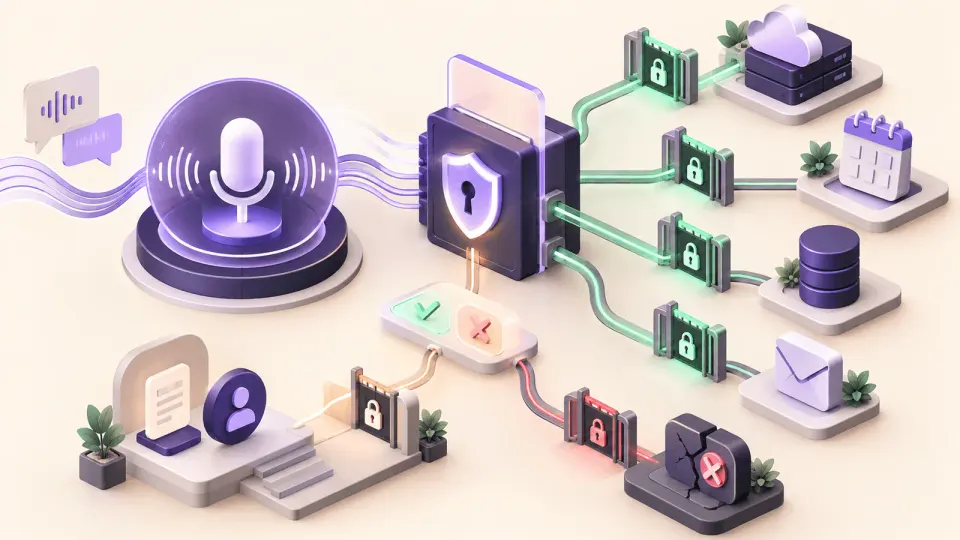
Learn how to set trust boundaries, tool contracts and authorization rules so a voice agent can act through MCP without overreach. Get a tailored prototype.
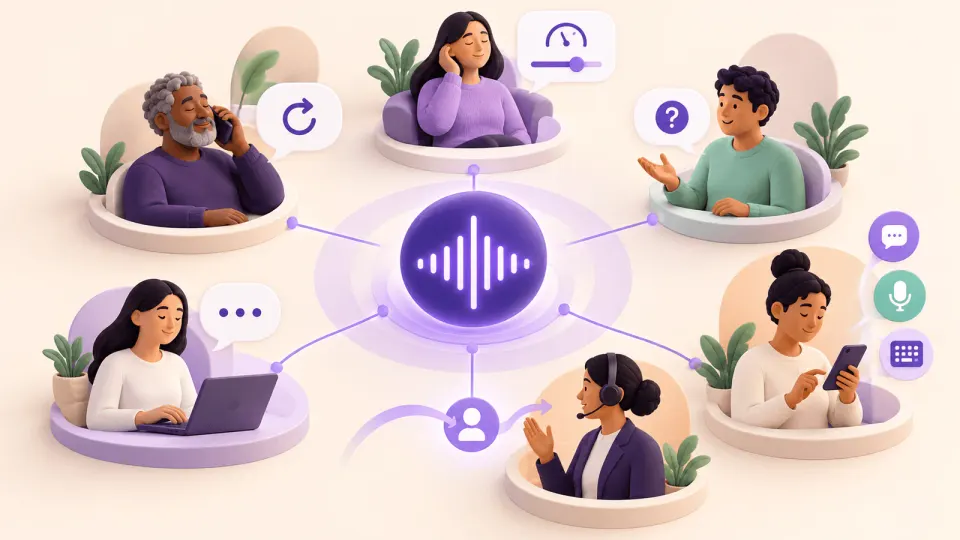
Build user-needs maps, inclusive conversation design and alternate paths so more people can complete a call with an AI agent. Talk to us about your callers.
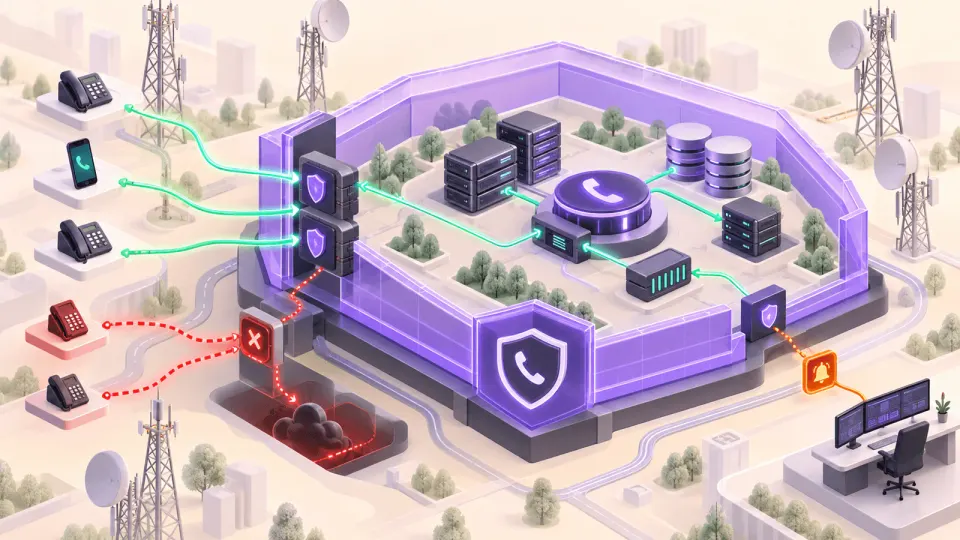
Map exposure, add preventive controls, detect abuse early and contain and recover when SIP trunks or phone numbers are misused. Ask how we protect your lines.

Inventory dependencies, rehearse exports, validate the target and plan cutover so switching voice platforms stays safe. Book a migration call with our team.
Bland AI, LiveKit, NextLevel, Retell AI and Vapi for Asterisk: how calls connect, transfer back to queues, prices and concurrency, checked October 2026.
Asterisk vs FreeSWITCH for AI voice agents: audio streaming hooks, call control APIs, transfers, licences and release support, from docs checked Oct 2026.

Compare Bland with six alternatives by documented scope, telephony, actions and ownership. Use one synthetic acceptance case without untested rankings.
Compare documented workspace, subaccount, capacity and billing models for BPO voice AI. Includes vendor evidence requests and a synthetic two-account exercise.
Compare how six AI voice platforms write call results to Salesforce, HubSpot and other CRMs: connectors, retries, duplicates, prices and concurrency.
Deepgram, AssemblyAI and Speechmatics compared for voice-agent STT: streaming models, turn detection, list prices per hour, limits and on-prem options.
ElevenLabs Agents (ElevenAgents) vs Vapi: bundled vs bring-your-own speech stack, per-minute pricing, concurrency, transfers, testing and HIPAA costs.
ElevenLabs, Cartesia and Deepgram Aura-2 compared for voice agents: list prices, latency claims, languages, concurrency and barge-in, as of October 2026.
How Bland AI, Cognigy, NextLevel, Retell AI and Vapi handle failover, plus Twilio, Telnyx, Amazon Connect and Genesys: SLAs, prices and a failover drill.
Genesys Cloud CX vs NICE CXone compared: list prices, license models, AI tokens vs sessions, WFM/QM tiers, telephony, BYOC and compliance, October 2026.
LiveKit vs Pipecat vs Daily for voice agents: architecture, hosting, SIP and phone support, per-minute prices and compliance, checked October 6, 2026.
Compare 8 AI voice agent platforms for multi-location businesses: branch routing, local hours, handoff, pricing models and compliance, as of October 2026.
Open-source vs proprietary TTS for voice agents: model licences, per-character prices, latency claims, voice cloning consent and on-prem options compared.
OpenAI vs Anthropic vs Gemini for phone voice agents: native speech APIs, tool calling, SIP, session limits and published prices, checked October 2026.
Compare six AI voice agent platforms for overflow and after-hours calls: business-hours routing, capacity limits, transfers and prices, checked Oct 2026.
Parloa vs Replicant for enterprise contact centers: build model, pricing approach, integrations, languages, testing and compliance claims, checked Oct 2026

Shortlist enterprise conversational AI options by decision boundary, ownership and evidence, not feature counts. Get a tailored voice agent prototype to test.
PolyAI vs Cognigy: how pricing, deployment, telephony, speech models, handoff, testing and compliance differ, with vendor facts checked October 2026.
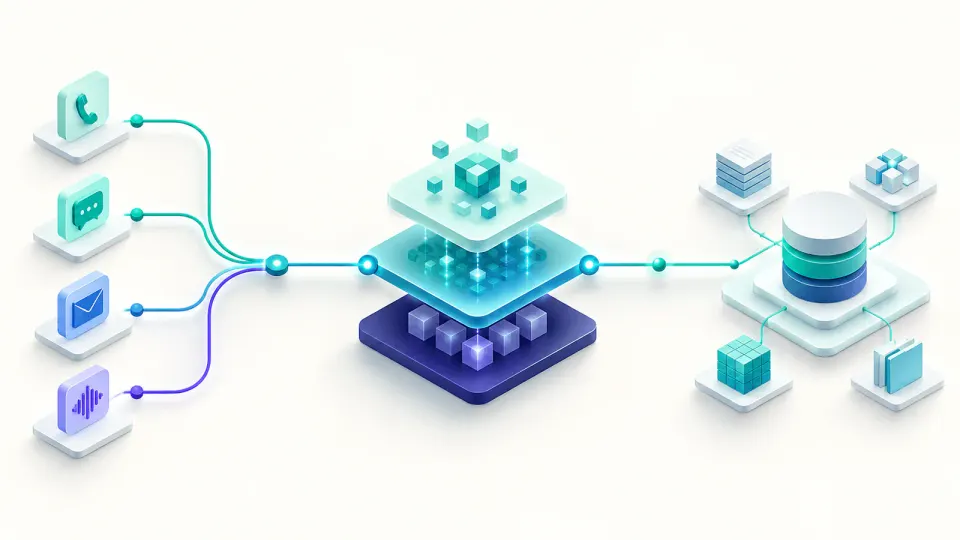
Map the operating surface you need to replace, then shortlist platforms by fit, evidence and decision sequence. Want to skip the build? Book a NextLevel demo.
Retell AI vs PolyAI: published per-minute rates vs bundled enterprise pricing, own models vs model choice, telephony, transfers and compliance compared.
Retell AI vs Synthflow: pay-as-you-go rates vs $30,000 enterprise contracts, plus telephony, transfers, testing and compliance, checked October 2026.
Retell AI vs Vapi vs Bland AI compared on published per-minute prices, concurrency, own-carrier SIP, transfers and compliance claims. Checked Oct 2026.
Self-hosted vs managed speech-to-text for voice agents: published API prices, container licences, GPU needs, data controls and ops work. Checked Oct 2026.
Compare six voice AI and carrier platforms on bring-your-own-carrier SIP: auth, TLS/SRTP, codecs, DTMF, transfers, per-minute cost and concurrency.
Speech-to-speech or STT-LLM-TTS? Compare latency, tool calling, transcripts, scripted speech, voice choice and published unit prices, checked Oct 2026.

Shortlist replacements by how much building, control and evidence your team needs, from no-code tools to developer APIs. Or get a managed agent in 2 weeks.
Synthflow vs Bland AI compared: pricing model, telephony and SIP, warm transfer, testing, compliance and limits, from each vendor's own pages, Oct 2026.
Talkdesk vs Five9 compared: seat pricing and minimums, AI agents, human handoff, telephony, AI governance and compliance, from vendor pages, Oct 2026.
Compare the built-in testing tools in Bland AI, Cognigy, Retell AI, Synthflow and Vapi: simulations, text vs voice, release gates, call scoring and costs.
Twilio vs Telnyx vs Bandwidth for AI voice agents: US per-minute rates, media streaming, SIP trunking, CPS limits, numbers and network, checked Oct 2026.
Decide between managed services and composable developer platforms, then shortlist options by stack fit and evidence. Get a prototype in 2 days.
Vapi vs Bland AI compared: per-minute pricing, what each rate includes, concurrency and daily caps, model choice, warm transfer, testing and deployment.
Compare voice AI observability tools by layer: Twilio Voice Insights, Retell, Vapi, Cekura, Coval, Hamming, Roark, Cognigy and Genesys, with prices.
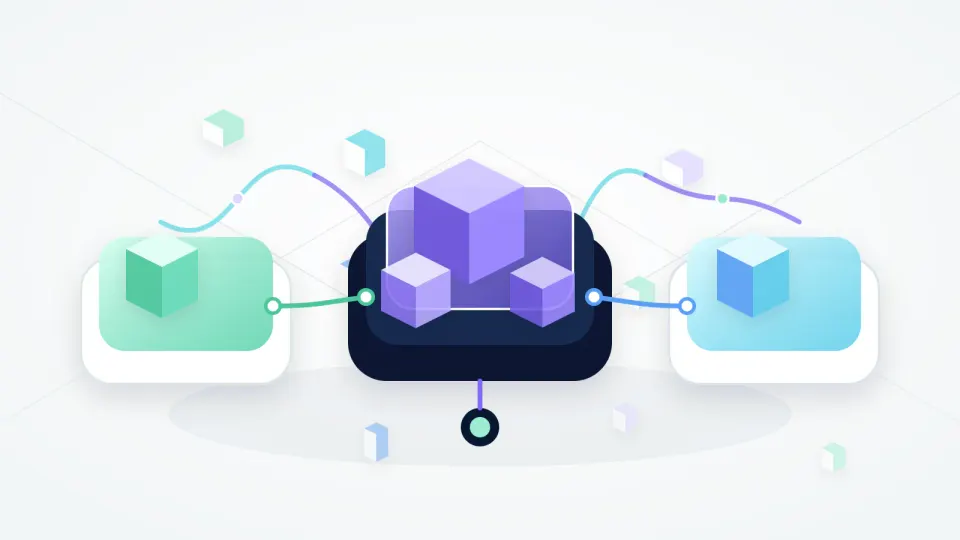
How Bland AI, Cognigy, NextLevel, Retell AI, Synthflow and Vapi hand callers to humans: transfer modes, context, no-answer fallback, limits and pricing.
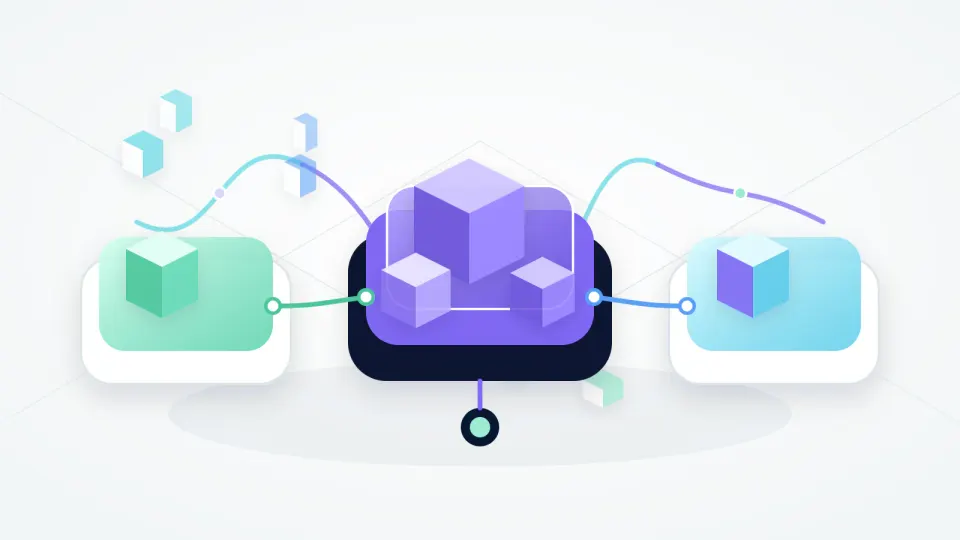
WebRTC vs SIP for AI voice agents: endpoints, encryption, codecs and audio quality, NAT, call control and real per-minute costs, with a pilot test plan.
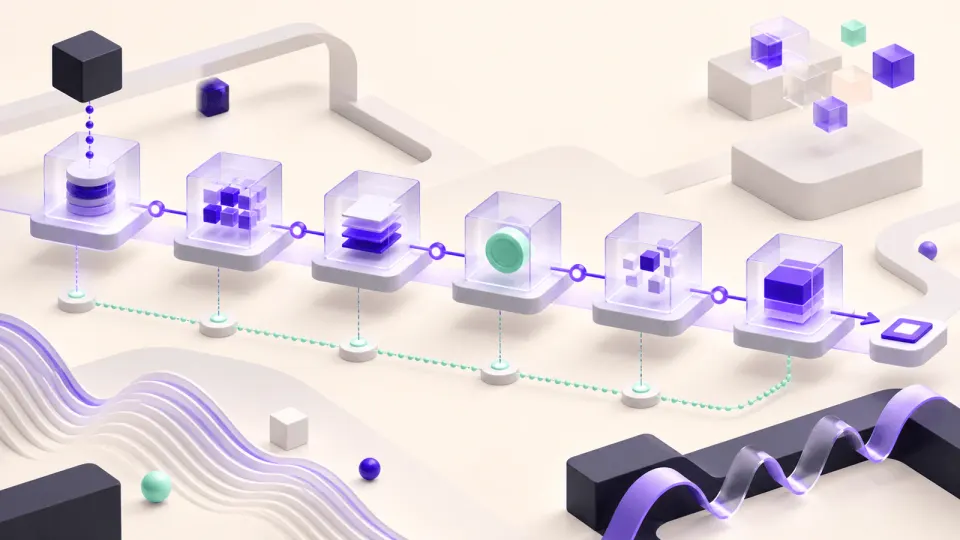
Learn what an AI agent audit trail should record, from inputs and actions to changes and approvals, so every automated decision can be traced and reviewed.
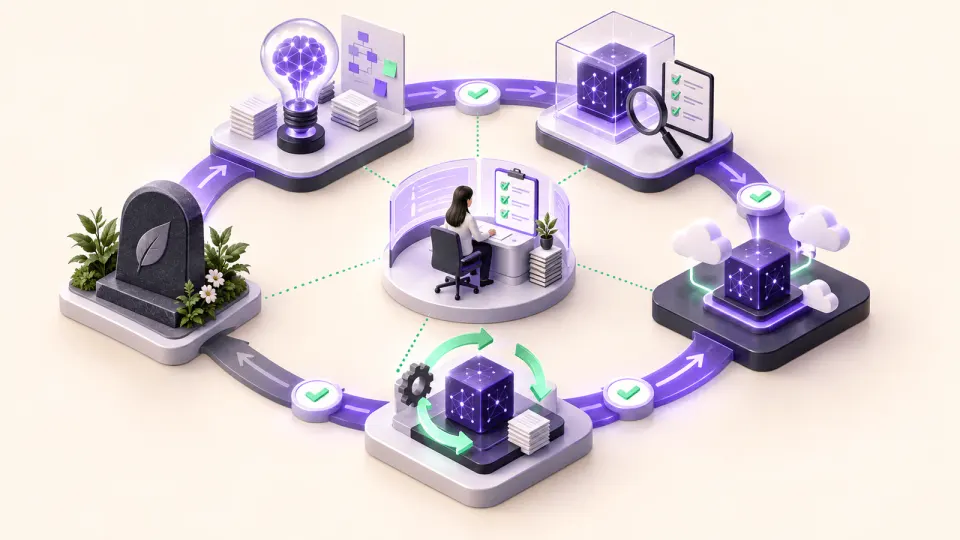
Follow a practical lifecycle for AI agents: design, launch, operate and retire, with owners, controls and failure testing at each stage. Plan your next agent.
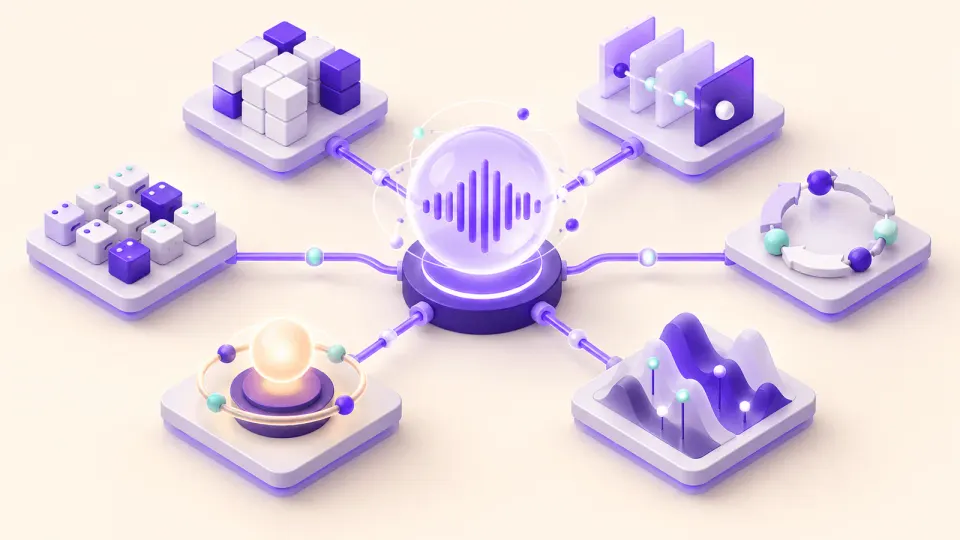
Understand which capabilities an enterprise needs to manage AI agents at scale, including scope limits, approval gates, ownership and quality measurement.
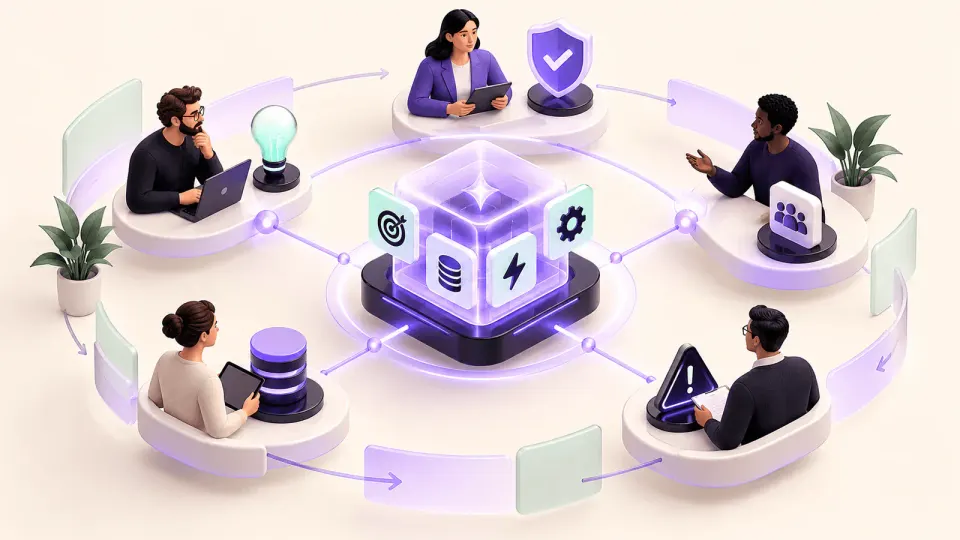
Set up roles, ownership and review cadences so revenue teams can run AI agents with clear boundaries, accountable owners and measurable business outcomes.
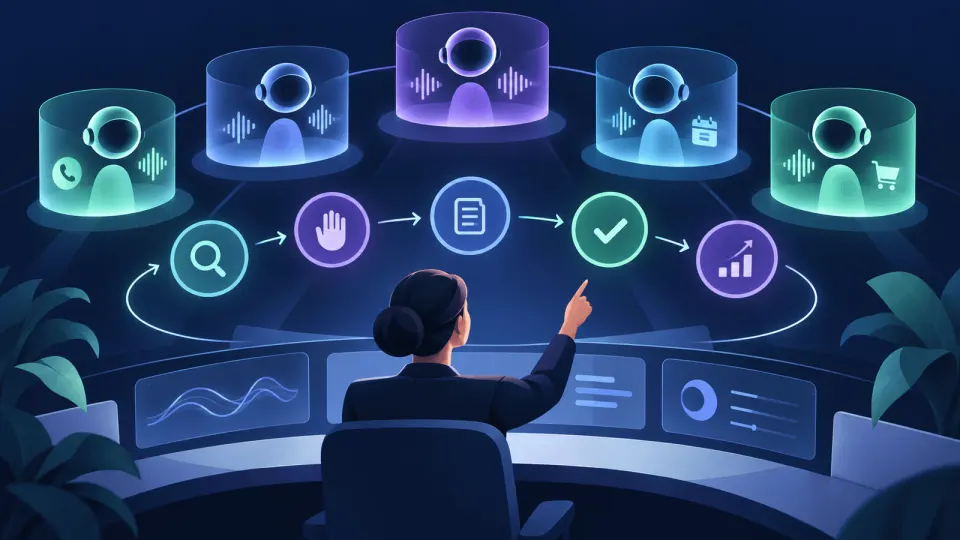
Define what an AI agent supervisor does, how it differs from routine QA, which triggers call for intervention and what context the person needs to step in.
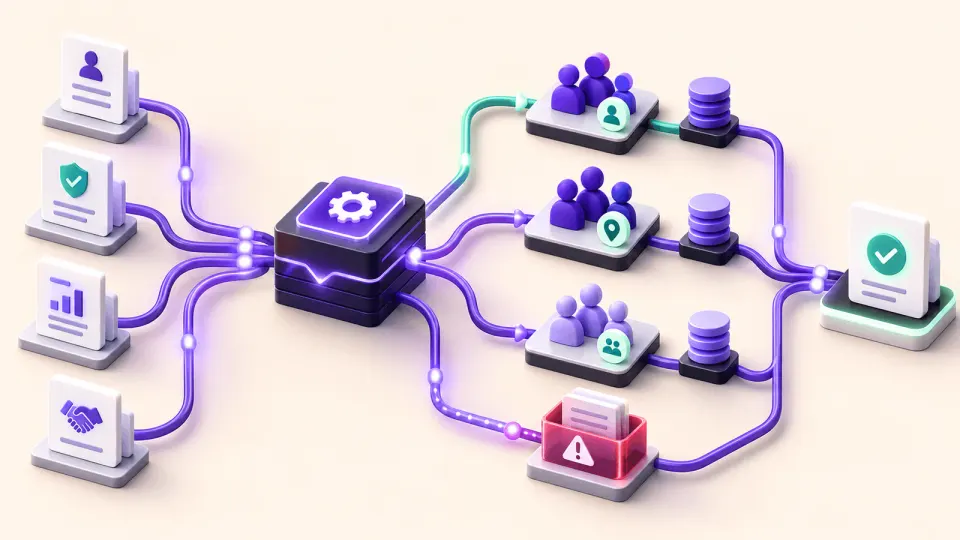
Build lead routing that moves qualified leads to accountable owners, with clear inputs, approval gates, exception testing and outcome metrics per decision.
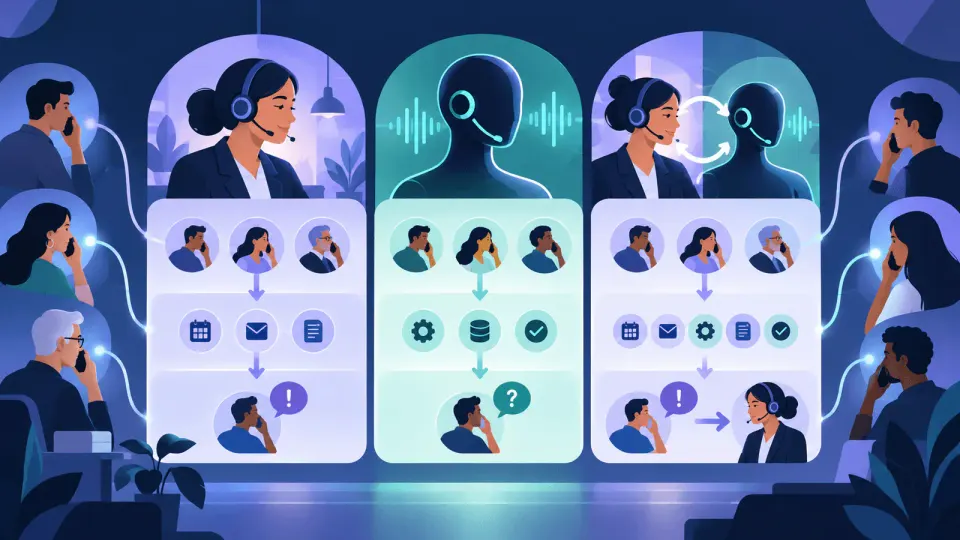
Compare human answering and configured AI on equal tasks. Use a matched brief for messages, calendar authority, unavailable staff, exceptions and operating owners.

Plan the shift to blended human and AI sales teams with defined boundaries, accountable owners, approval gates and adoption metrics your reps can trust.
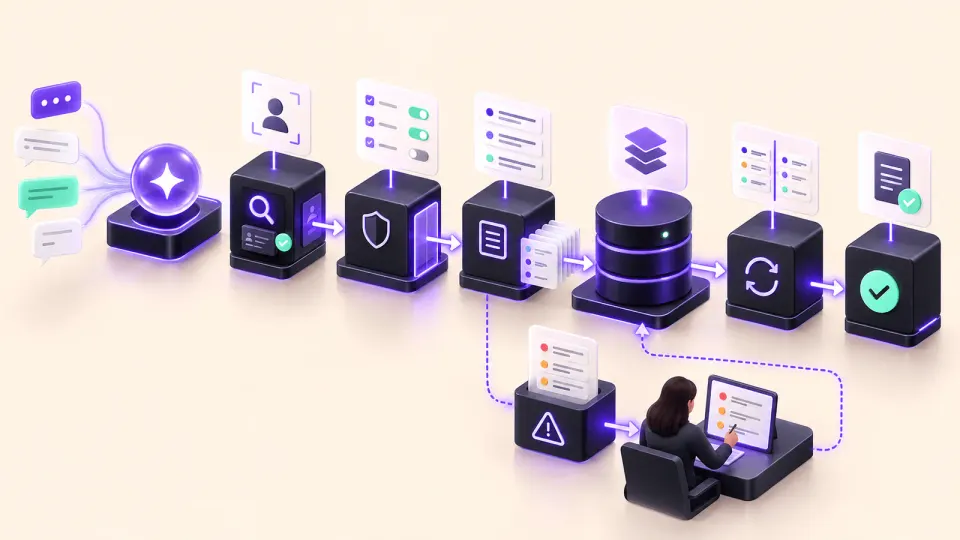
Specify data contracts, field permissions and write-back rules so an AI sales agent updates your CRM accurately, with exceptions tested before going live.
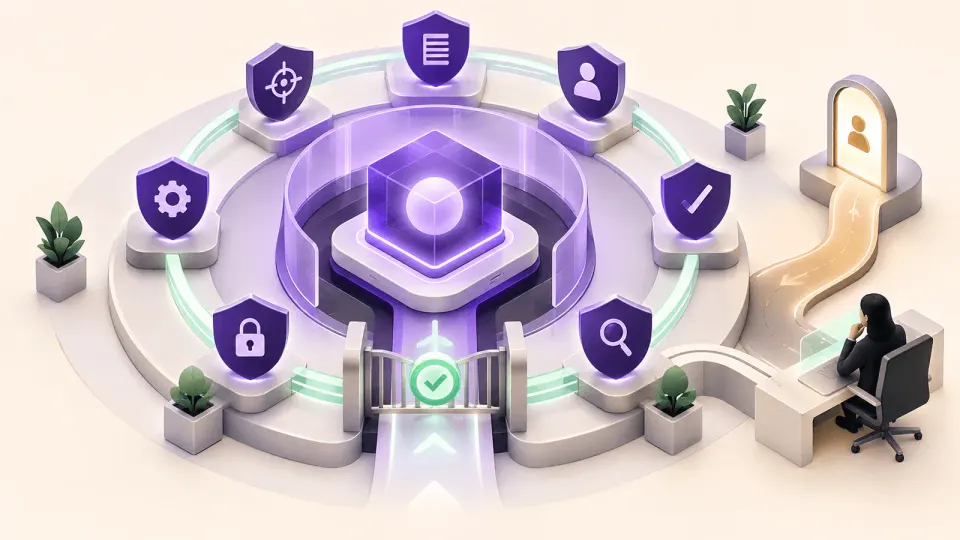
Set policies, permissions and change control for AI sales agents, from scope and authority to proof of action and escalation paths to a responsible person.
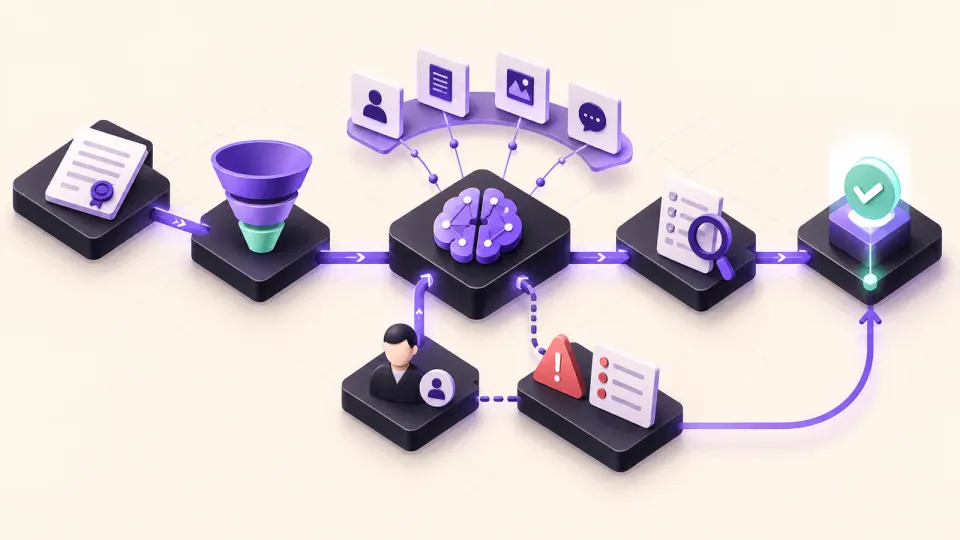
Build a scorecard that tracks whether AI sales agents complete verified actions with clear owners, not just natural-sounding calls. Measure what matters.

Learn how to set a baseline, count full costs, attribute benefits honestly and design a pilot that can prove or disprove value, with a worked example.

Test vendors on real workflows with a seven-gate acceptance sequence, representative test sets and scoring for action accuracy, CRM write-back and escalation.
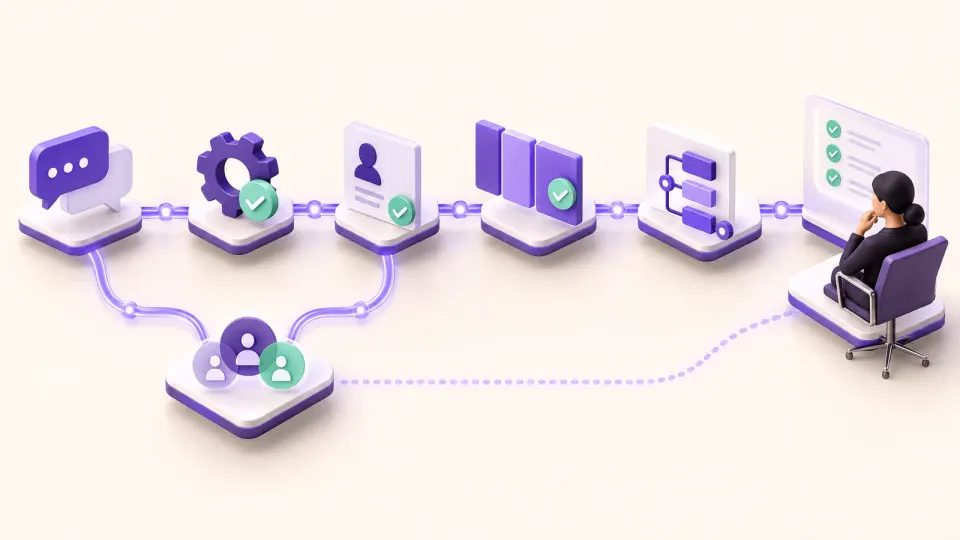
See which jobs belong to an AI sales agent and which to a sales engagement platform, with workflow owners, controls and failure tests. Book a demo with us.
Map how AI conversations and actions connect to pipeline with clear evidence, owners and controls, so credit is verifiable. See how our agents log outcomes.
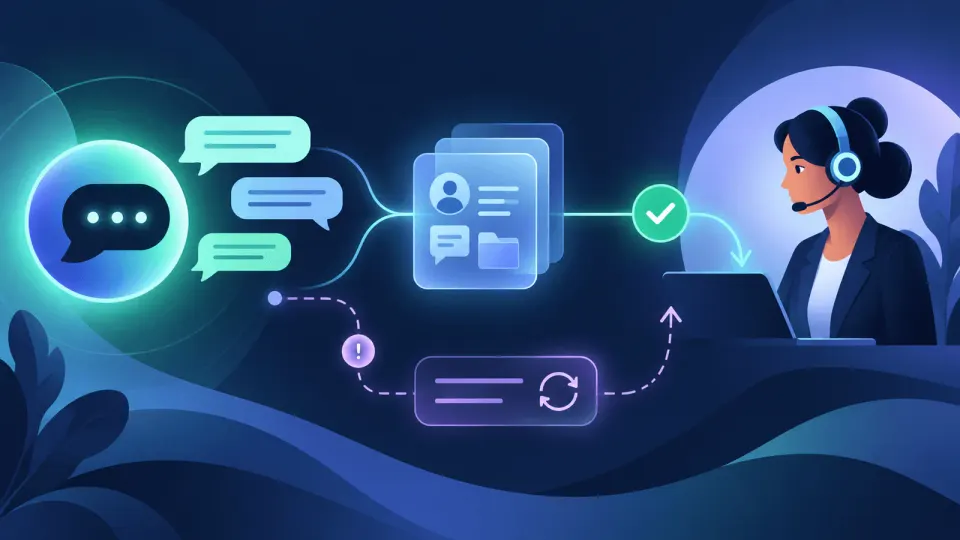
Design handoffs where the right person gets the conversation and the work: explicit triggers, compact context payloads and recovery paths. See human handoff.
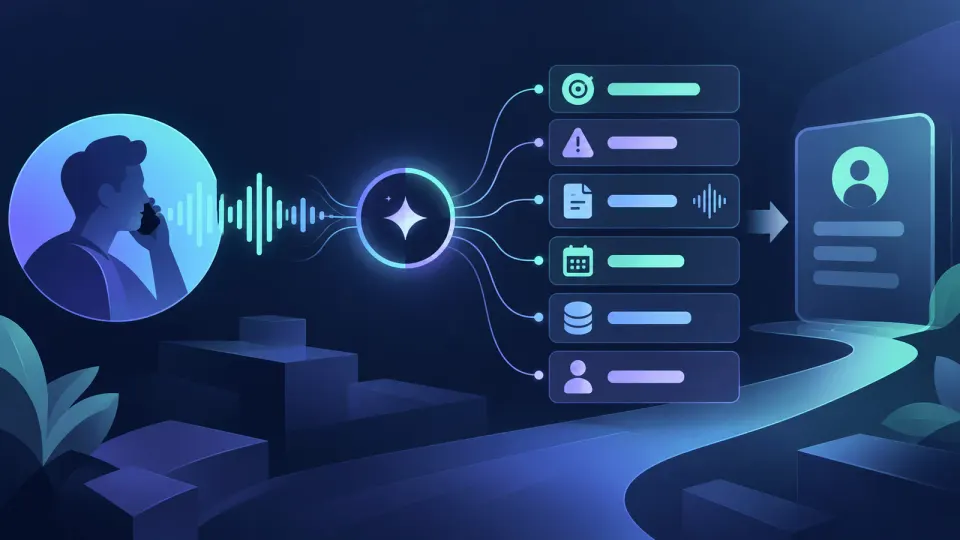
Turn every AI call into reliable workflow state with a disposition taxonomy that separates outcome from reason and uses observable rules. Book a walkthrough.
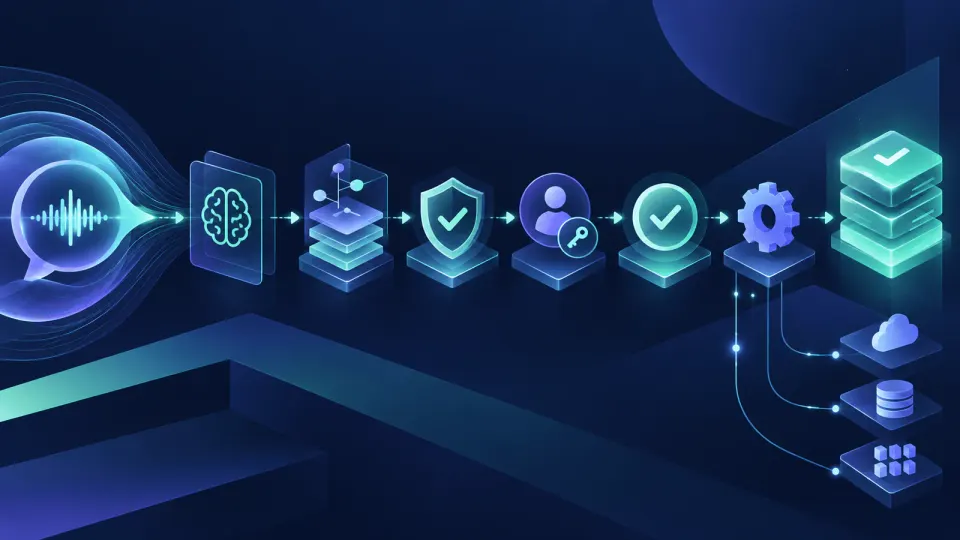
Learn to let voice agents look up records, check availability and create bookings through bounded tool contracts, schema validation and recovery. Try a demo.
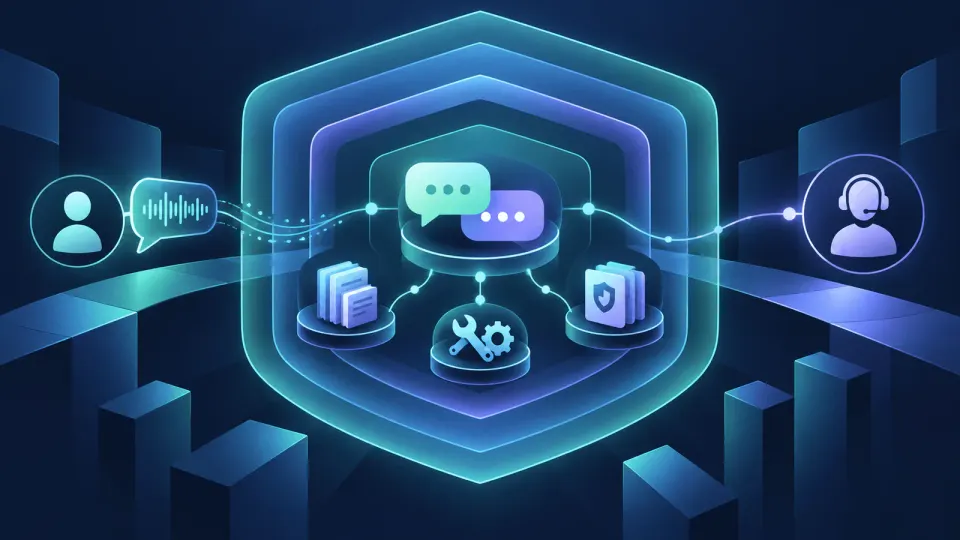
Map risk first, then bound what a live voice agent may hear, infer, say and do, with validation and graceful exits for callers. See our guardrails in action.

Move from spoken demo to controlled workflow: define the job and stop conditions, test, plan human handoff and launch. Go live in about 2 weeks with our team.
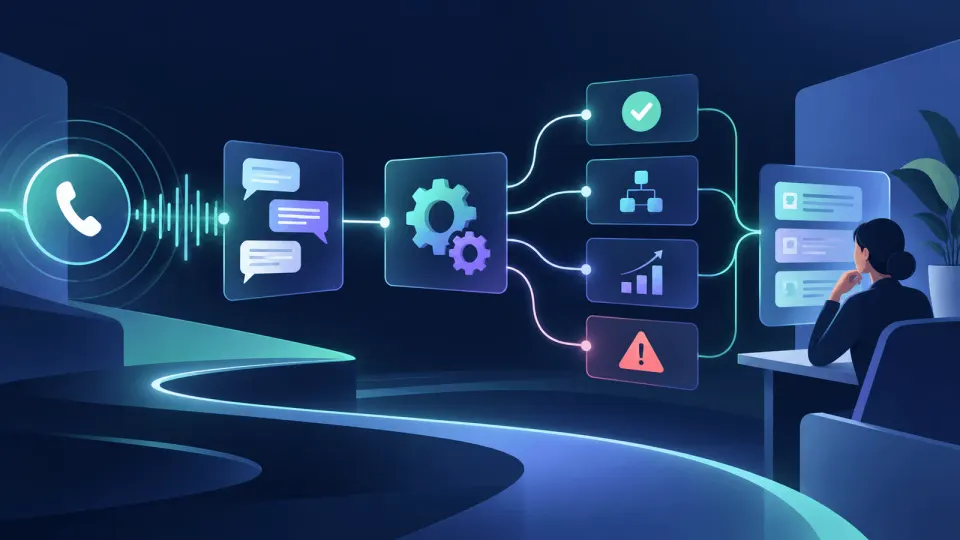
Track whether live calls are healthy, correct and owned, not just up: define health, instrument the call path, and alert on drift. Ask how we monitor agents.
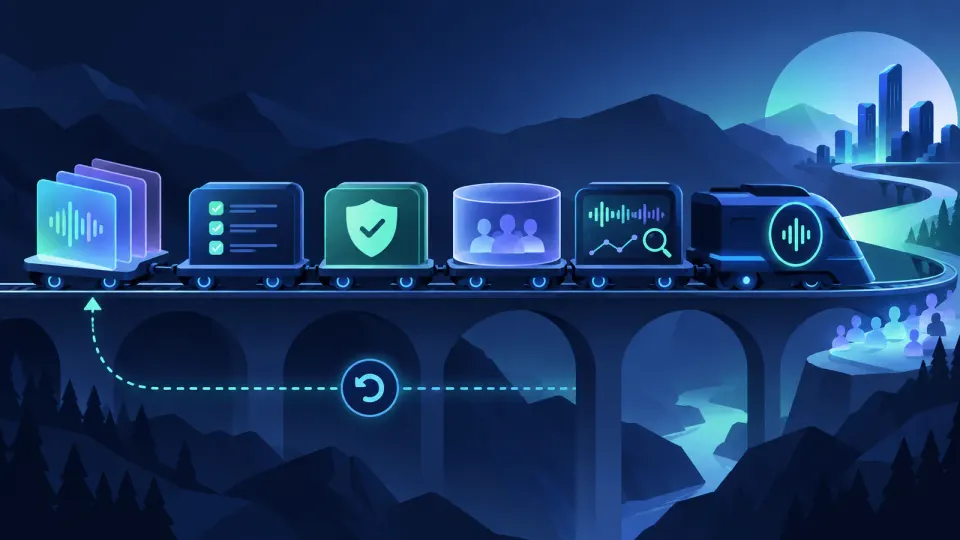
Treat prompt, model and tool changes as customer-facing releases: define release units, classify risk, run canary tests and roll back safely. Talk to us.
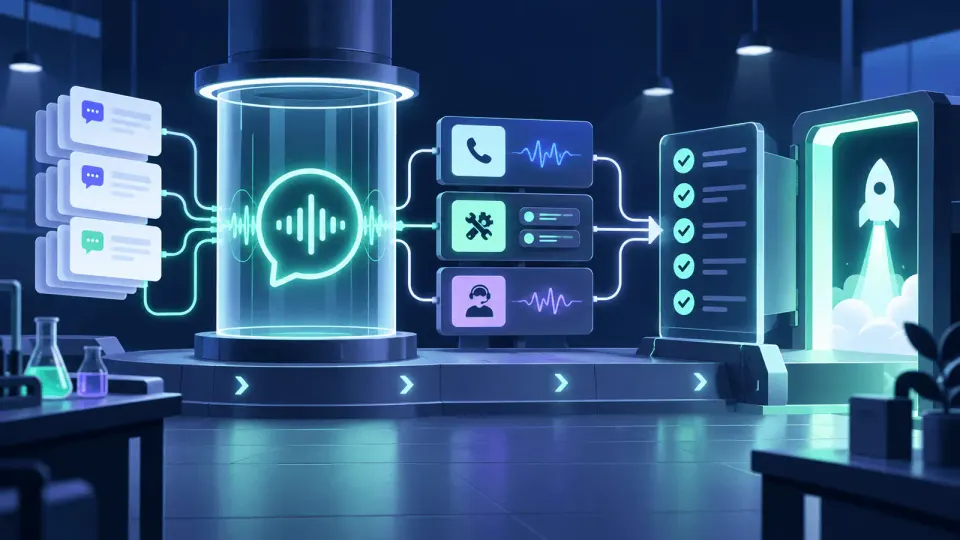
Prove more than natural speech: build layered test suites, simulate edge cases and gate releases on regressions so agents follow your rules. Get a prototype.
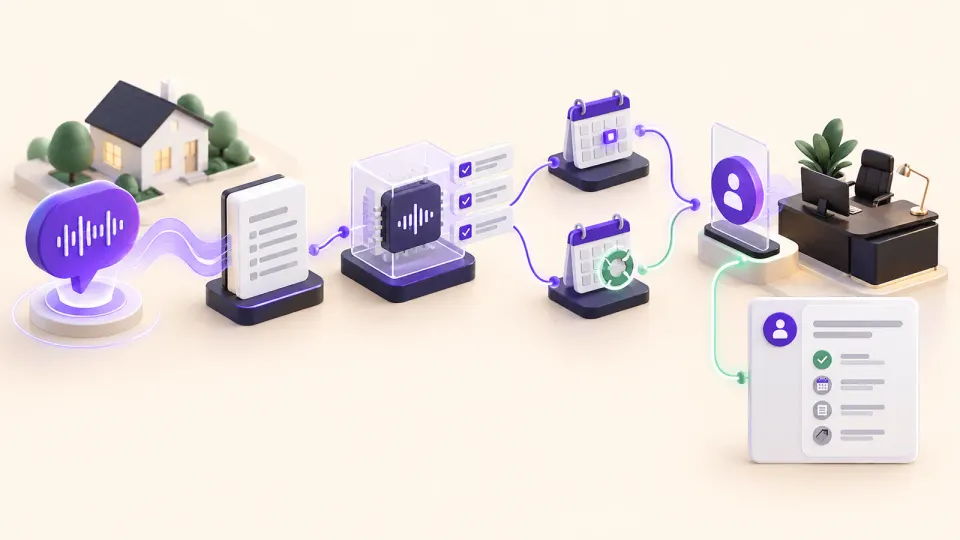
Set up voice agents that run mortgage intake and qualification, then hand off to licensed brokers with verified outcomes and clear owners. Request a demo.

Reduce spam flags and missed calls in AI outbound programs by defining the job, owners, controls and failure tests behind caller ID. Ask about outbound.
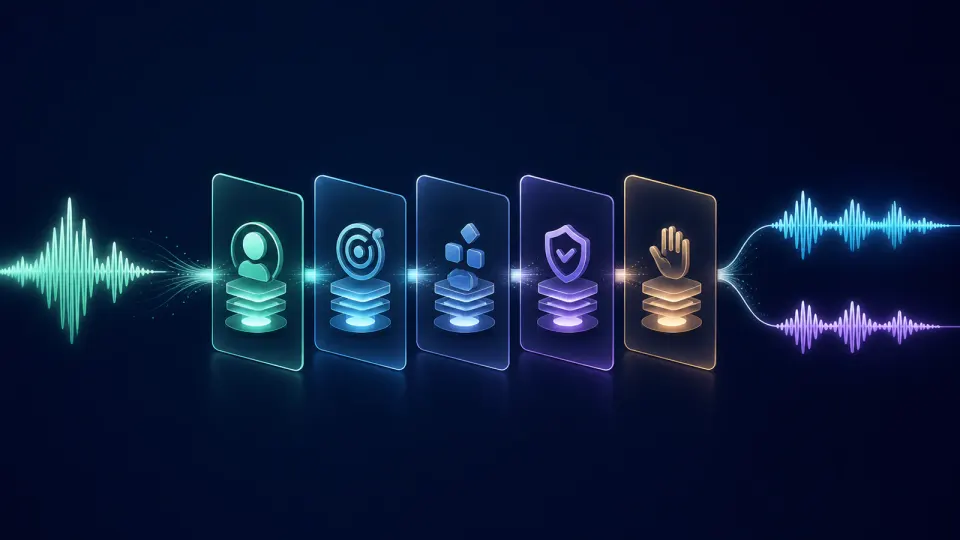
Learn what makes a voice-agent prompt different, what it can and cannot enforce, and how to build modular, testable instructions. Get a tailored prototype.
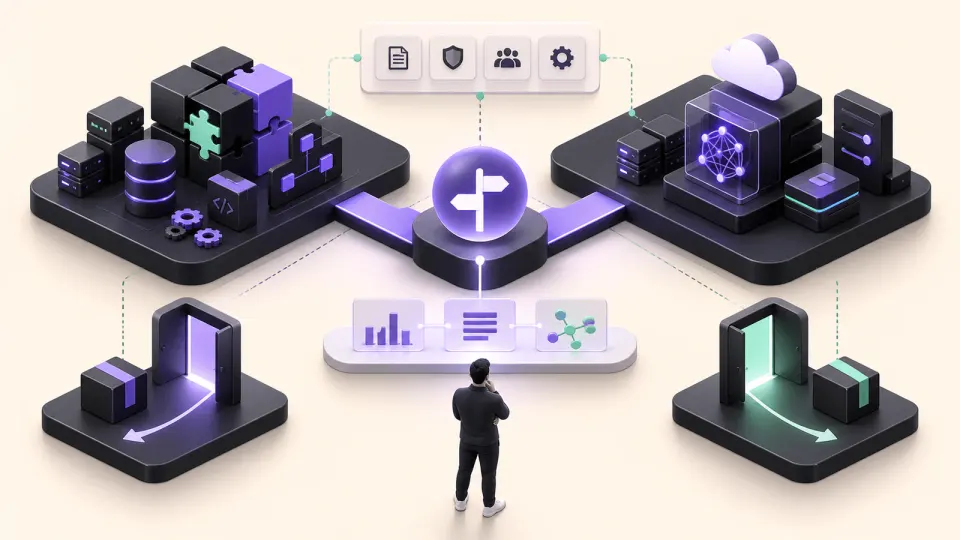
Use a decision framework covering workflow owners, inputs and evidence, approval gates and exception tests to choose build or buy. Compare with a prototype.
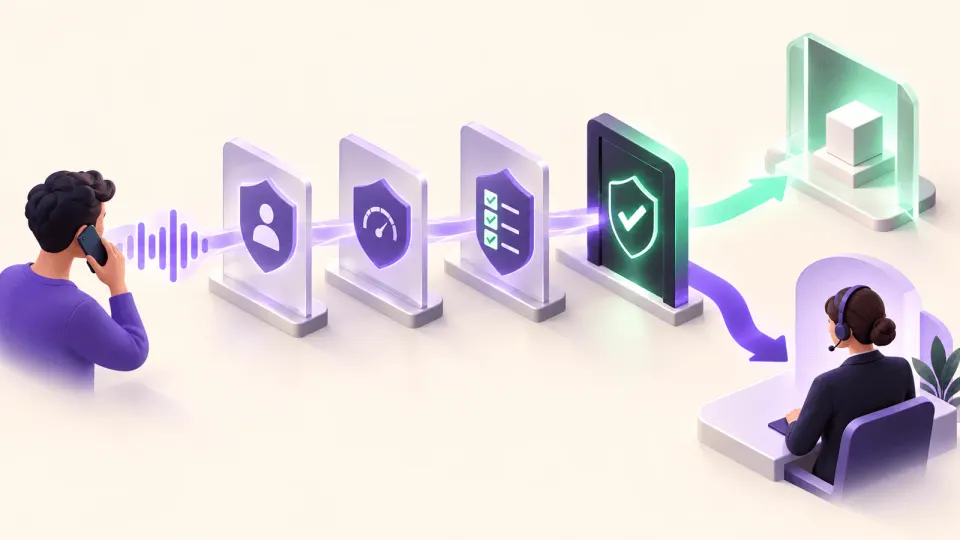
Learn how voice agents can verify caller identity before taking account actions, with clear controls, owners and exception paths. HIPAA and GDPR compliant.
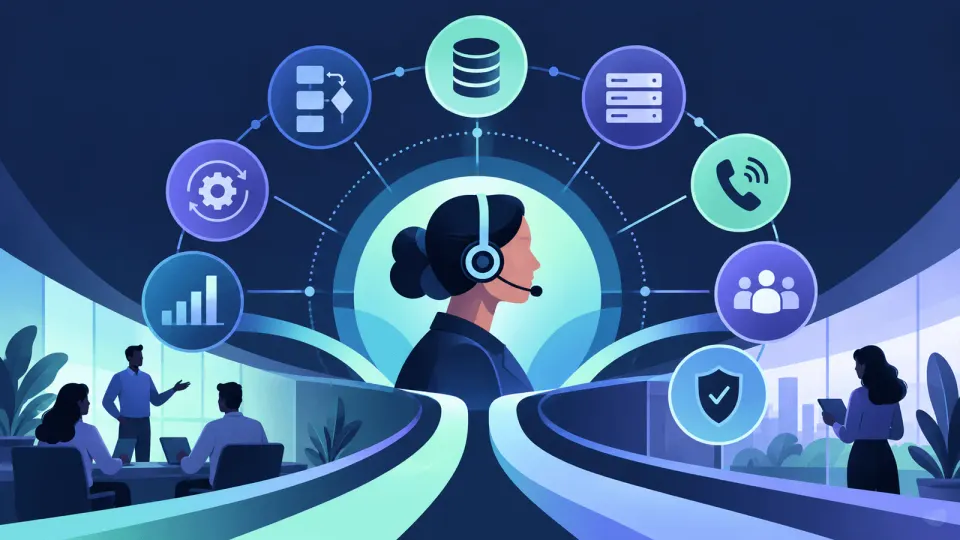
Compare three contact center AI candidates, identify hard stops and define one bounded first workflow with a filled synthetic readiness sheet.
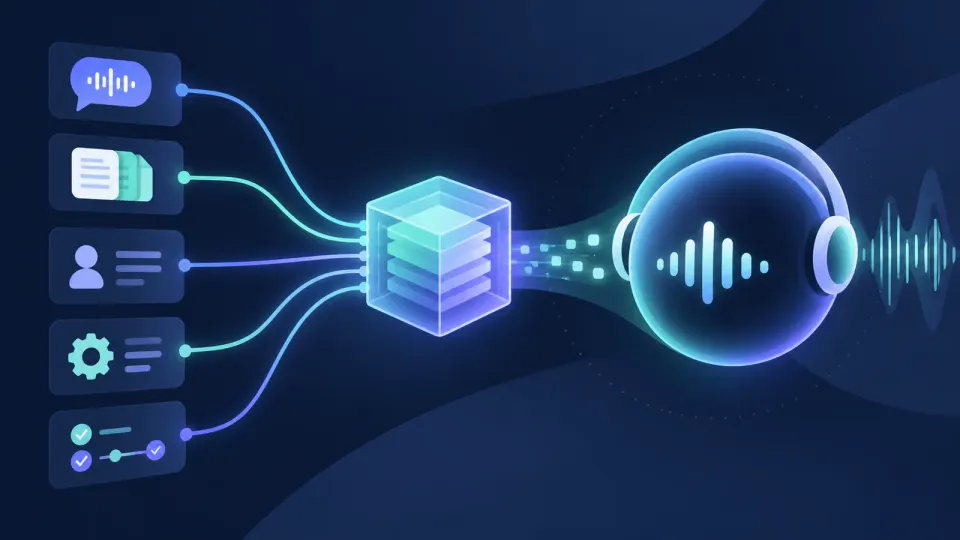
Give each turn the right evidence with structured context packets, narrow retrieval, source freshness and compact conversation state. See it in a live demo.
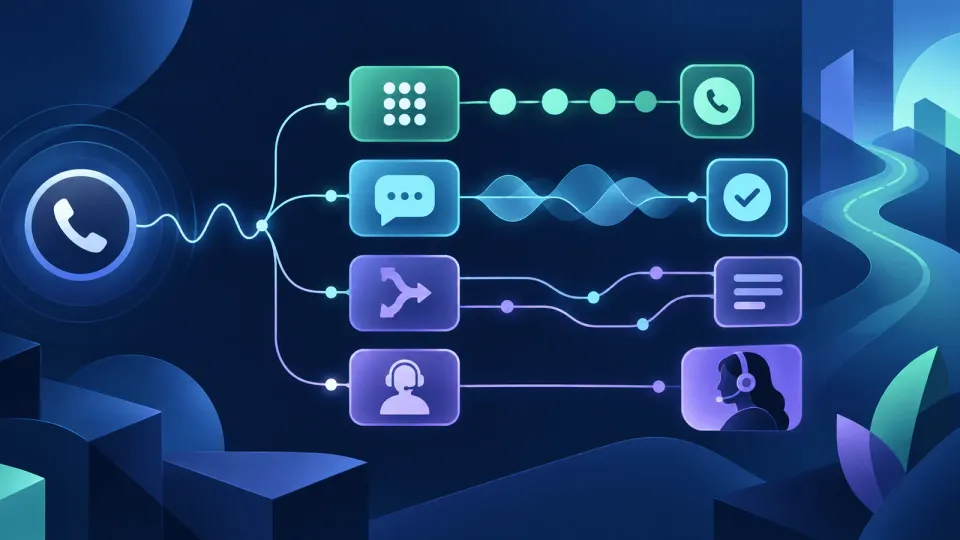
Compare deterministic IVR menus with conversational AI task by task, including hybrid flows, caller effort and accessibility. Hear a conversational agent.
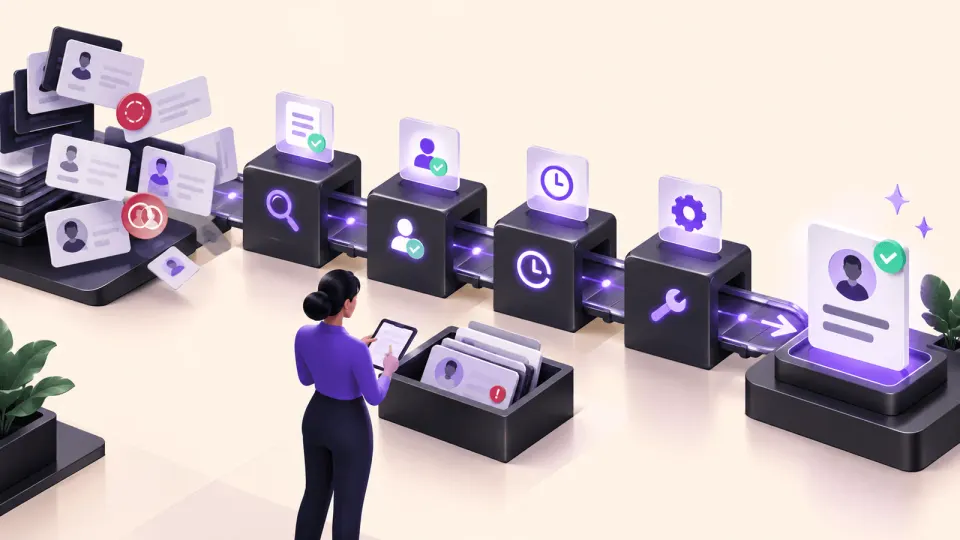
Check whether your CRM records can support AI sales agents: fields, owners, evidence and controls that keep actions verifiable. See our CRM integrations.
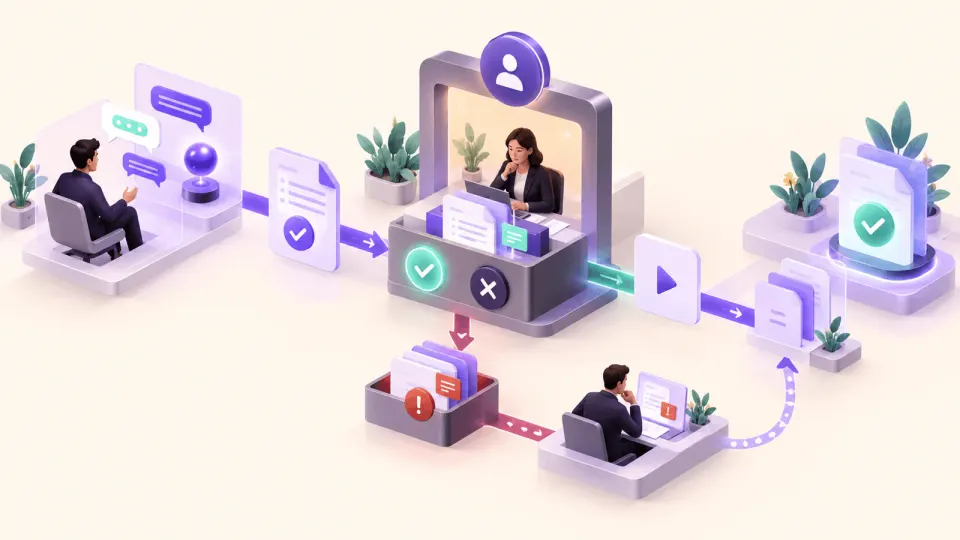
Design approval gates and exception queues so AI sales agents act only where allowed and people own the edge cases. Explore human handoff in our agents.
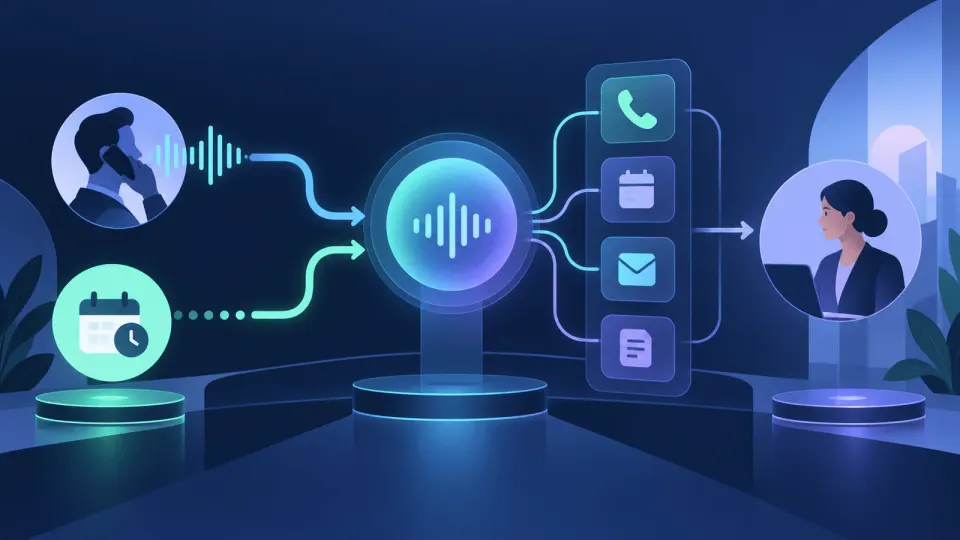
See how inbound and outbound voice agents differ in triggers, openings, qualification, booking, handoff and metrics. Outbound phone agents from $500/mo.
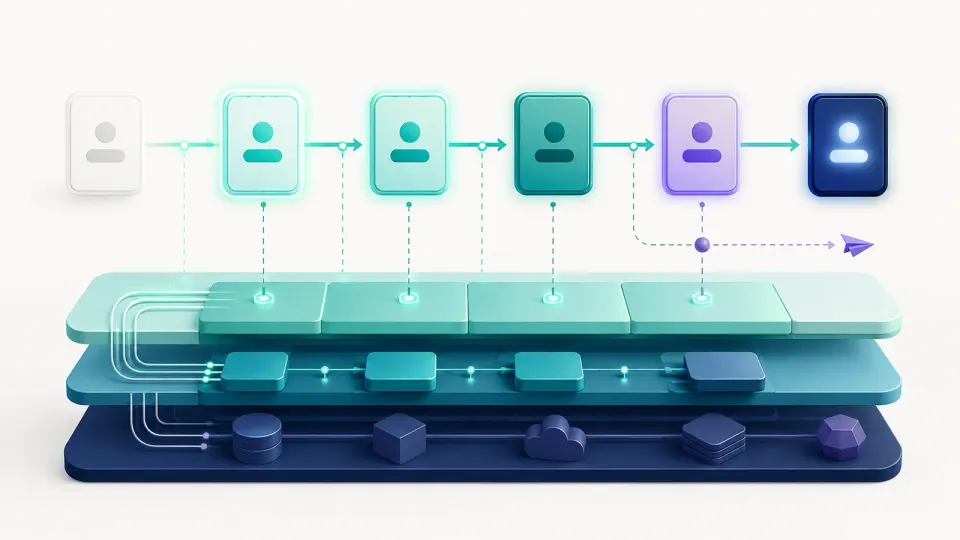
Map the lead lifecycle, data model and ownership rules before picking lead management software, and see where AI helps or adds risk. Explore AI lead calls.
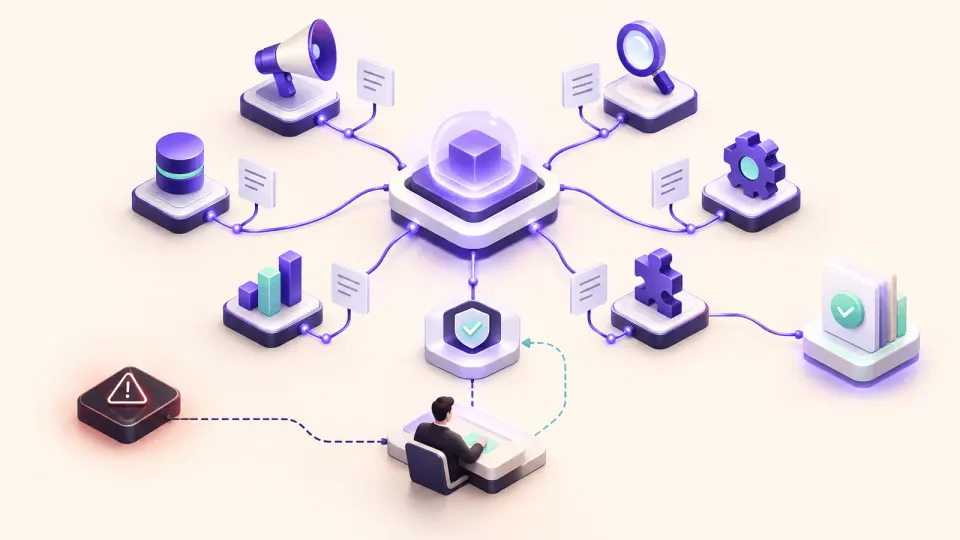
See how specialist sales agents split work, pass shared context and keep owners accountable at every handoff. Ask about voice agents for your pipeline.

Decide between assembling your own voice components and buying an integrated platform, with clear owners, controls and exit paths. Get a prototype fast.

Score candidate agent jobs on business value, risk and data readiness so the first launch is one you can verify and own. Get a scoped prototype in 2 days.

Learn how trusted customer signals become policy-bound actions across marketing, sales and success, and why projects stall. Add voice agents that act on them.
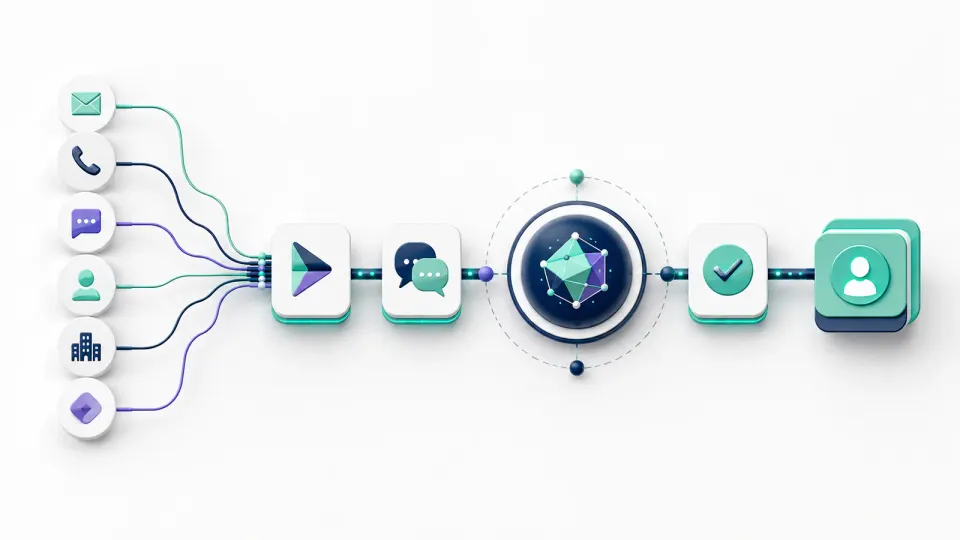
Explore how sales engagement tools differ from CRM and orchestration, which capabilities matter and where AI shifts the work. Add outbound voice from $500/mo.
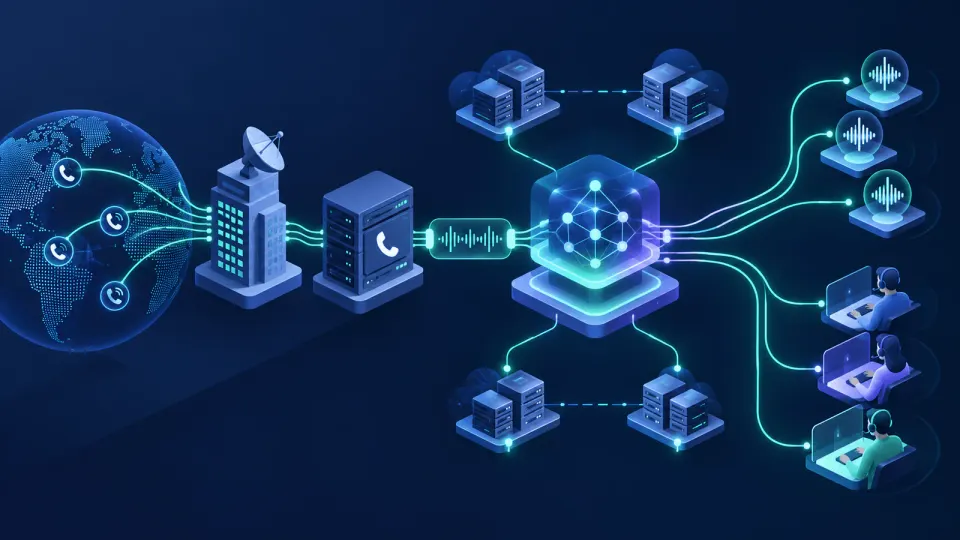
Plan the signaling path, media path, SIP bridge placement and failover so calls reach your agent reliably. Go live in about 2 weeks with a managed setup.
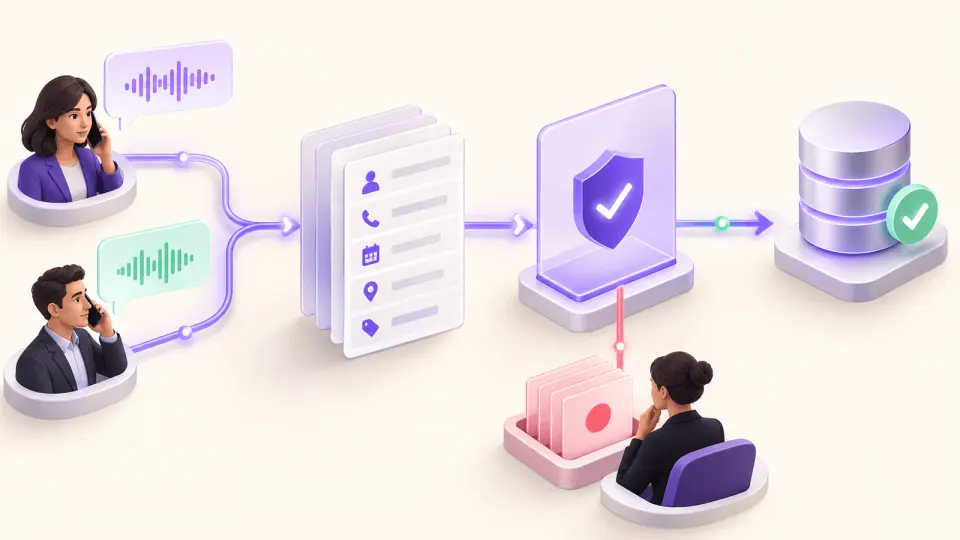
Learn how schemas, validation and owners turn sales conversations into CRM fields your team can trust and act on. NextLevel agents sync calls to your CRM.
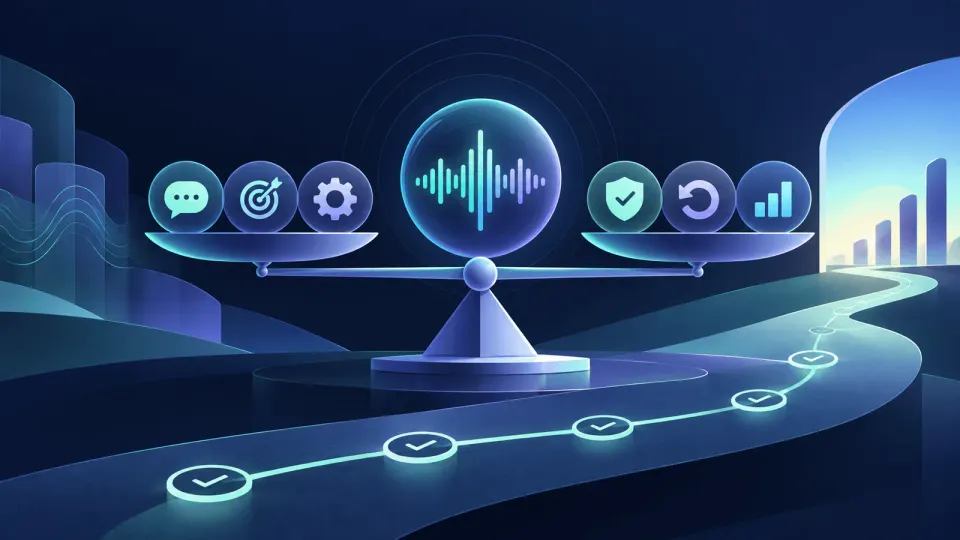
Measure whether an agent finished the right job safely, from speech and understanding to dialogue repair and final business state. Bring your calls to a demo.
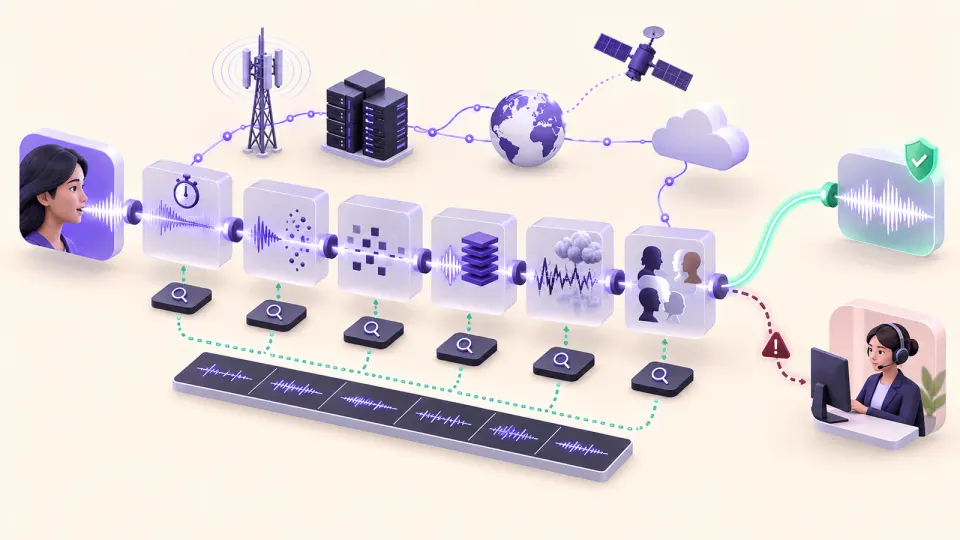
Diagnose the network, codec, background noise and accent issues that degrade calls, and assign owners to fix them. Hear a NextLevel agent on a call.

Design call flows that disclose the AI, capture consent and route uncertain cases to people, with checks and owners. Our agents are HIPAA and GDPR compliant.
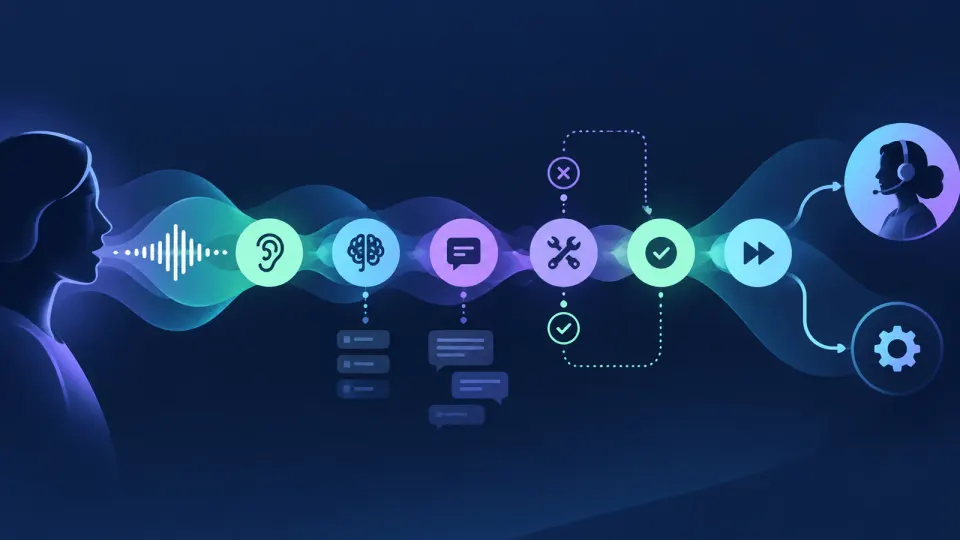
Tune silence and barge-in, write prompts for decisions, use a repair ladder and confirm actions in precise language. Hear these patterns in a live agent call.
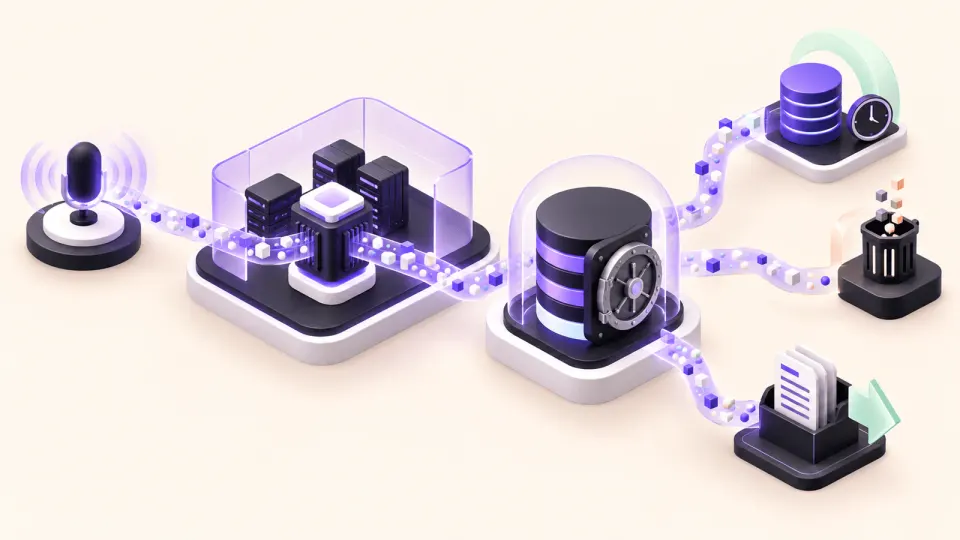
Map audio, transcripts, logs and CRM copies. Use a synthetic procurement register to request configuration-specific residency, retention and deletion evidence.

Map failure domains, detect health by caller impact and route to alternate models, regions or a human queue without losing context. Book a resilience review.

Set a severity matrix, triage early signals, contain harmful behavior and reconcile business state after an agent misfires. Ask how we handle incidents.
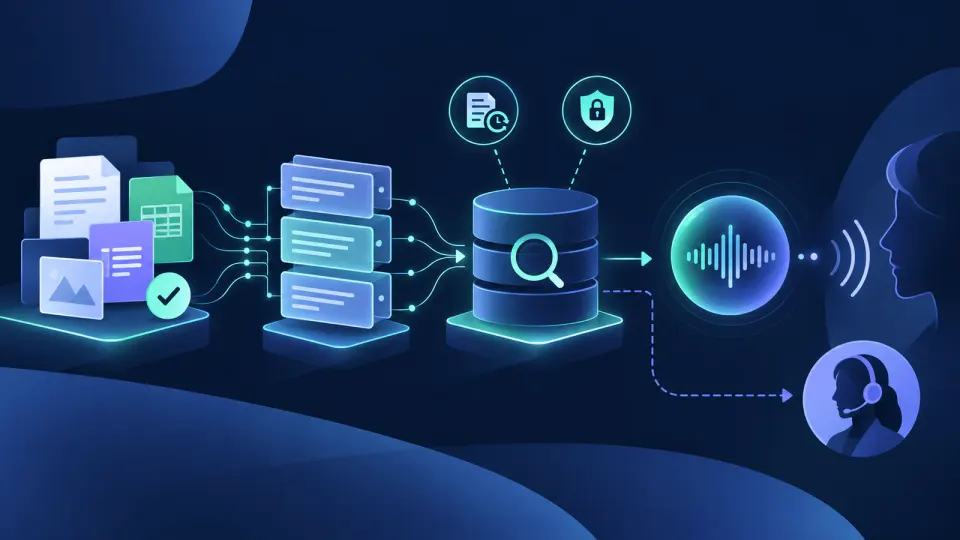
Register approved sources, write for spoken retrieval, chunk and tag for real queries and test with a golden-query set. Get a prototype built on your content.

Define a latency metric contract, decompose the response path, build a budget and report tail behavior, not just averages. Hear how fast our agents respond.
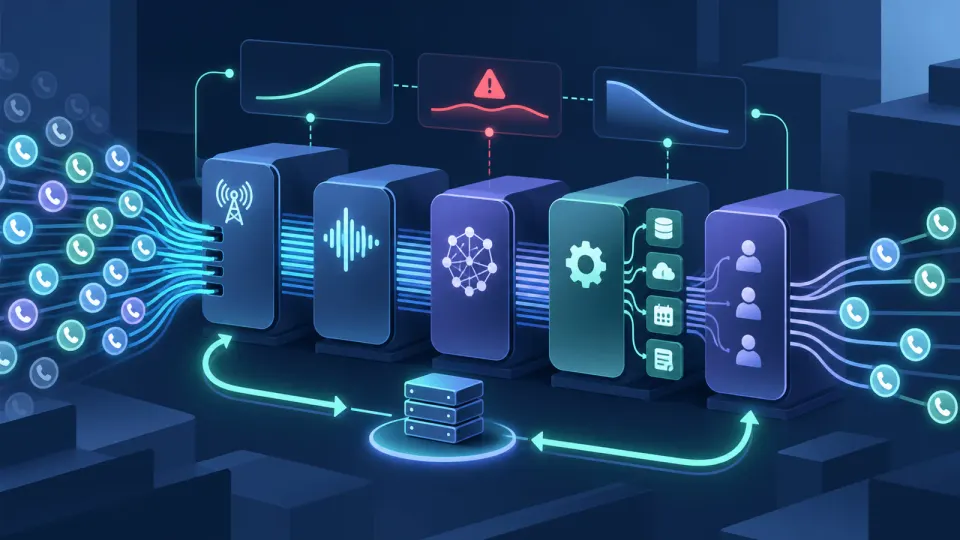
Model real traffic, inventory shared quotas, run ramp, spike and soak tests and define graceful degradation before peak season. Ask about scaling your calls.
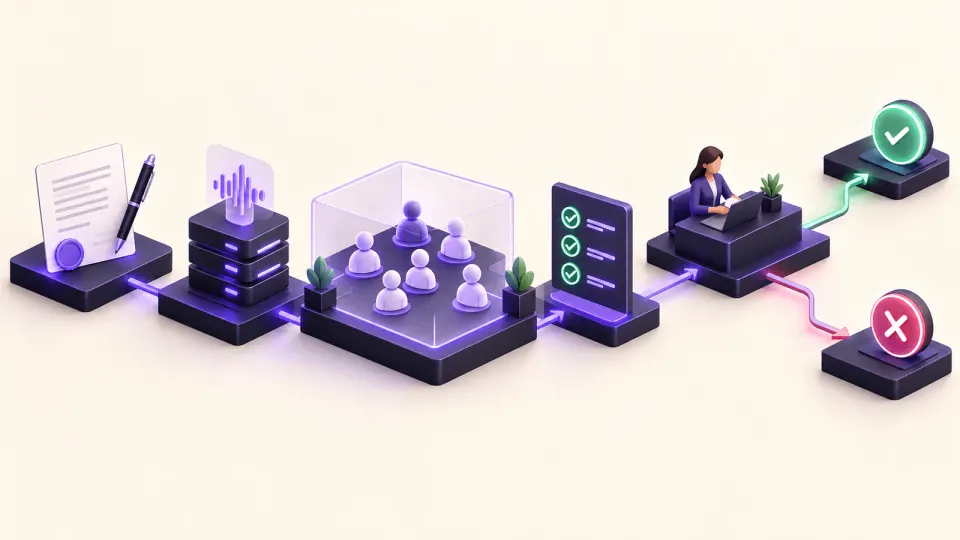
Scope one business job, set inputs, controls, evidence and exit criteria, then judge the pilot on outcomes instead of demo polish. Start with a prototype.
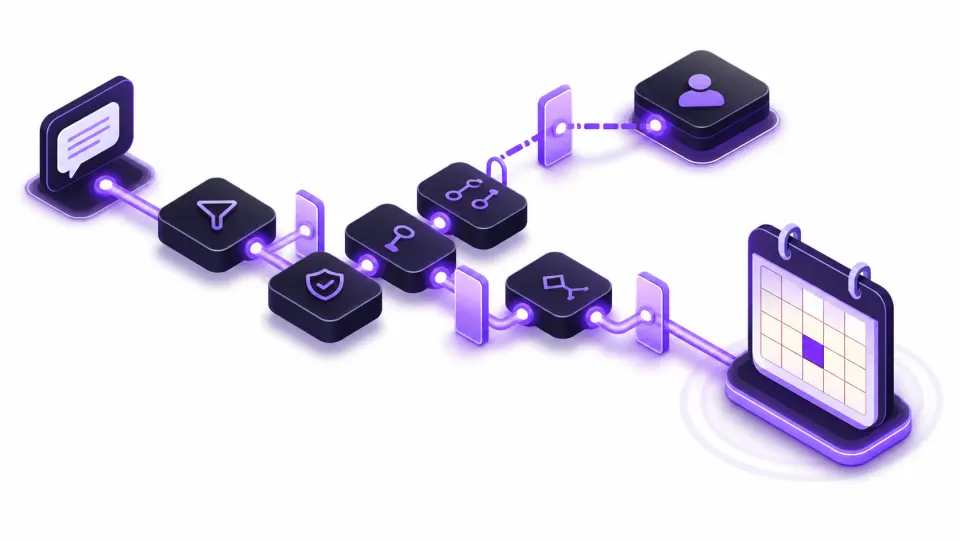
Test sales qualification, routing, timezones, retries, rescheduling and cancellation. Includes an eight-case calendar sheet with explicit pending states.

Map a seven-step workflow that takes dealership inquiries to booked showroom visits, keeps inventory facts accurate and splits work between AI, BDC and sales.

Explore seven practical AI use cases for real estate agents, a worked inquiry workflow, tool selection tips and a 30-day pilot plan with human boundaries.
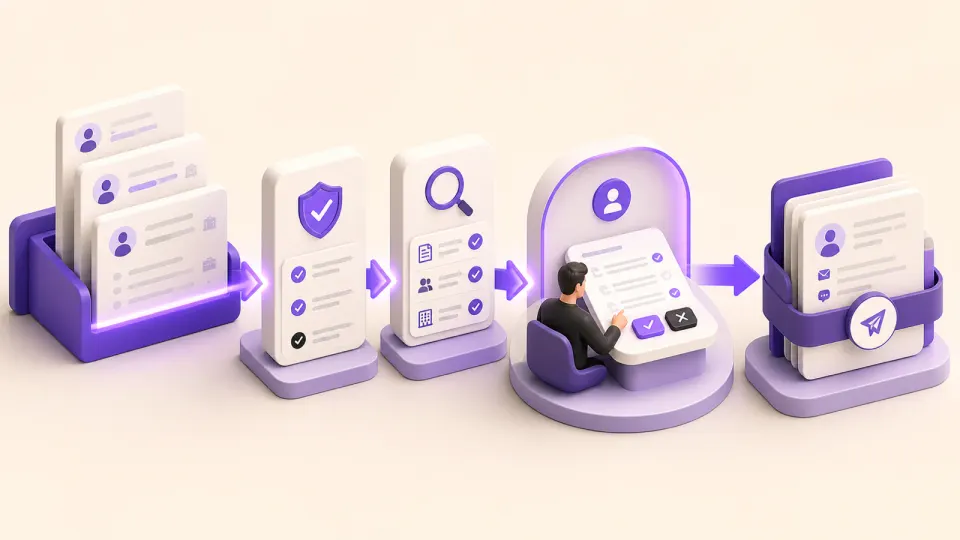
Walk through a seven-stage AI prospecting workflow, which tasks stay human, the main tool types and how data quality and suppression protect deliverability.
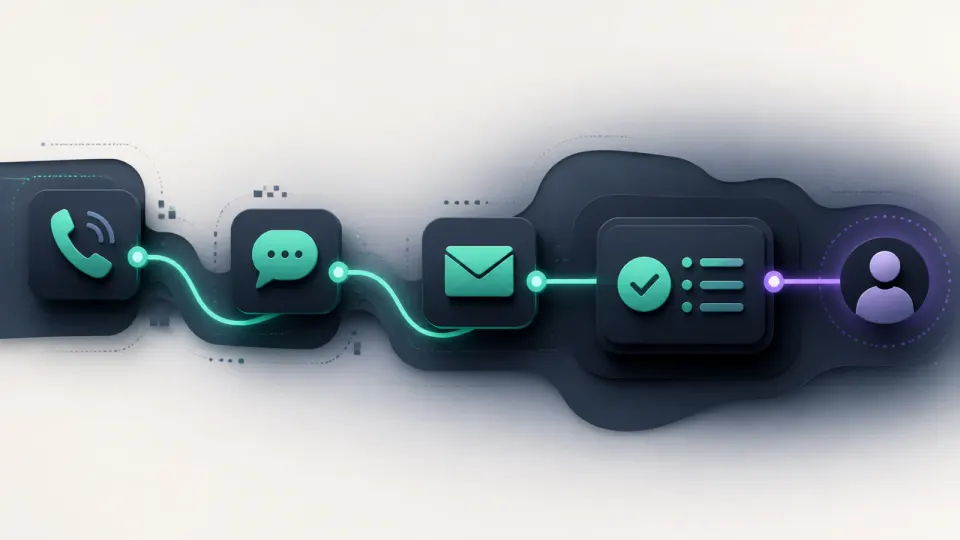
Design lead follow-up around a state model, callbacks, cancellations and handoff branches so every touch builds on verified context instead of spam cadences.

Learn how stateful nurturing differs from drip sequences, how to model lead state, read replies honestly and pick the next approved action on each channel.
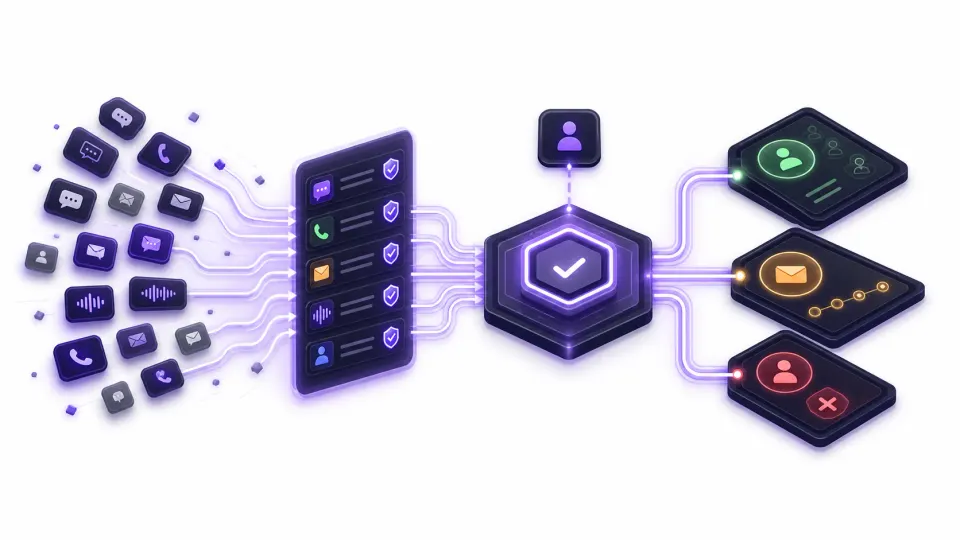
Define what qualified means, compare lead scoring with conversational qualification and set routing, handoff and CRM recording rules. Try a qualifying agent.
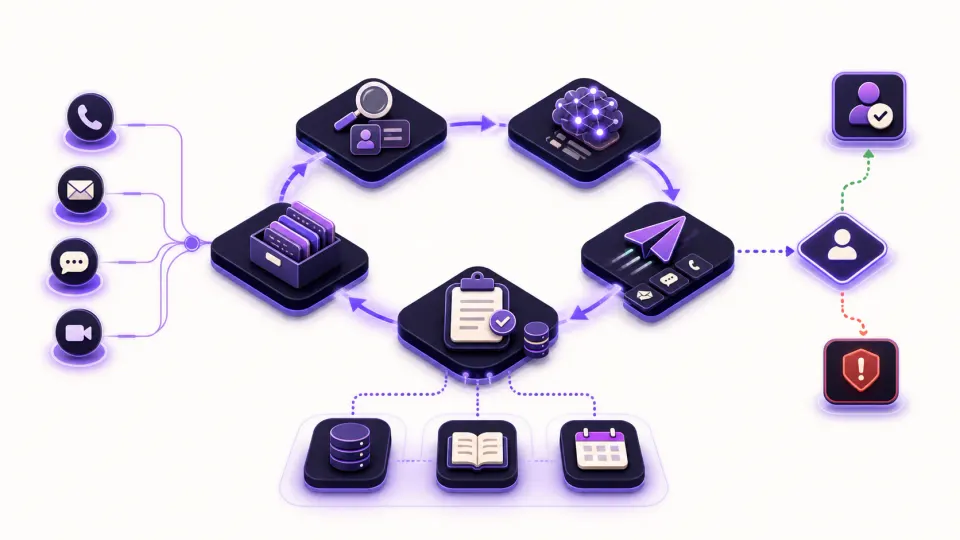
Dial, follow up, qualify, and book meetings across phone, SMS, WhatsApp, and email with CRM write-back and human handoff. Outbound plans from $500/mo.
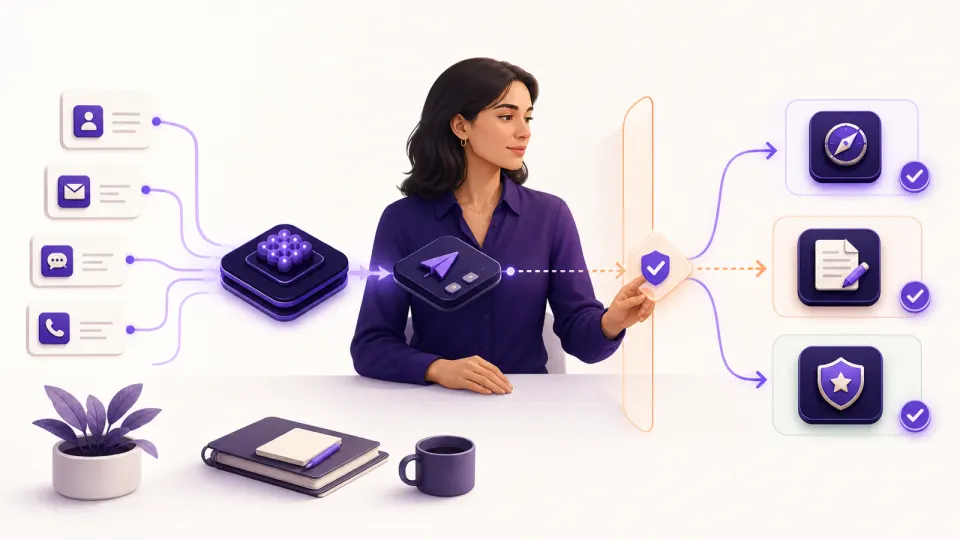
Understand what an AI sales assistant drafts or automates in a rep's day, the main software types, and the point where you need an agent. Explore our agents.
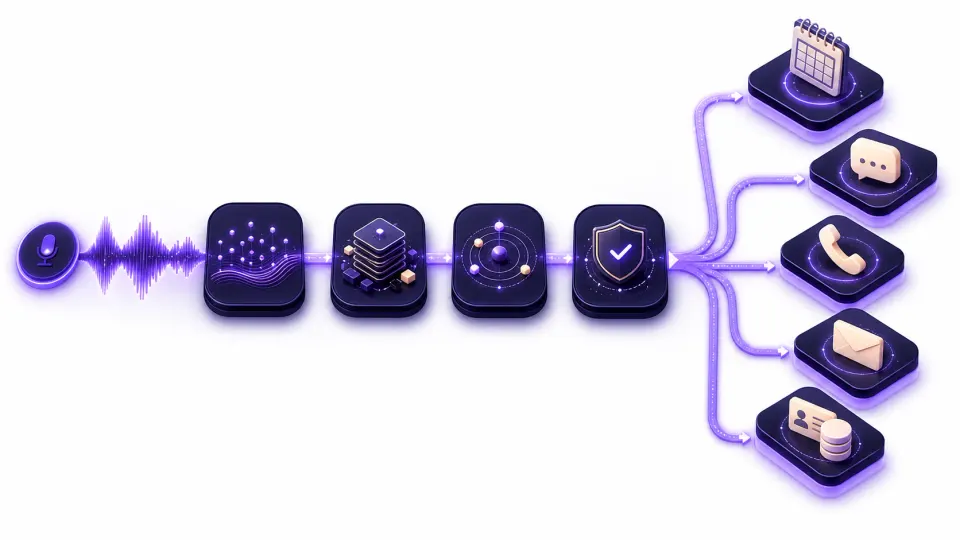
Learn where AI helps before, during and after a sales call, how autonomous voice agents qualify leads, and how meetings get booked. Hear a sales call live.
See how a real estate voice agent handles lead calls, collects approved details and books showings, and how it differs from an ISA or chatbot. Hear a demo.
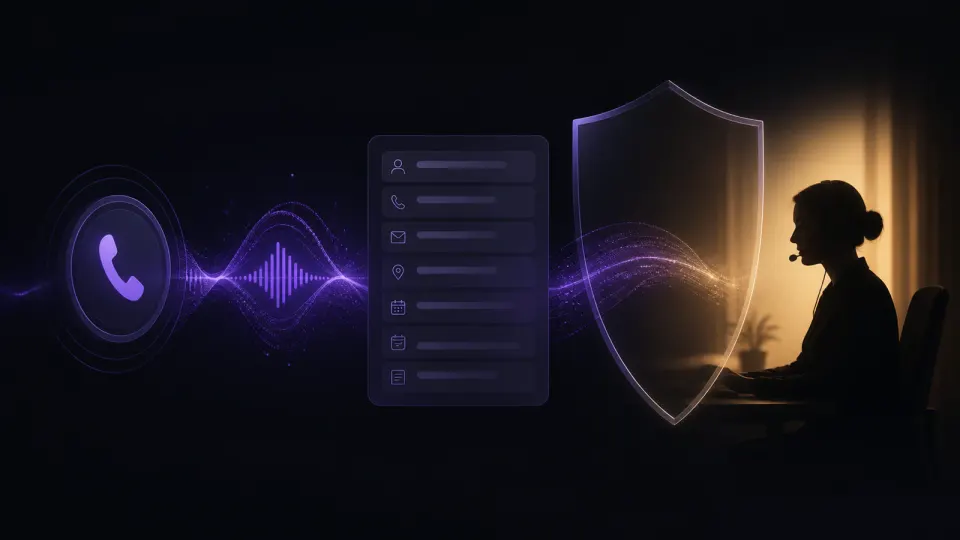
See eight bounded insurance use cases for voice agents, from quote intake to qualification, and why decision authority stays with licensed staff. Book a demo.

Pick a coaching platform by the coaching job it supports: platform categories, an evidence standard, a capability rubric and a proof of concept. Learn more.

Understand how call evidence becomes structured signals, where those signals mislead, and how teams should use them. Pair insight with agents that log to CRM.
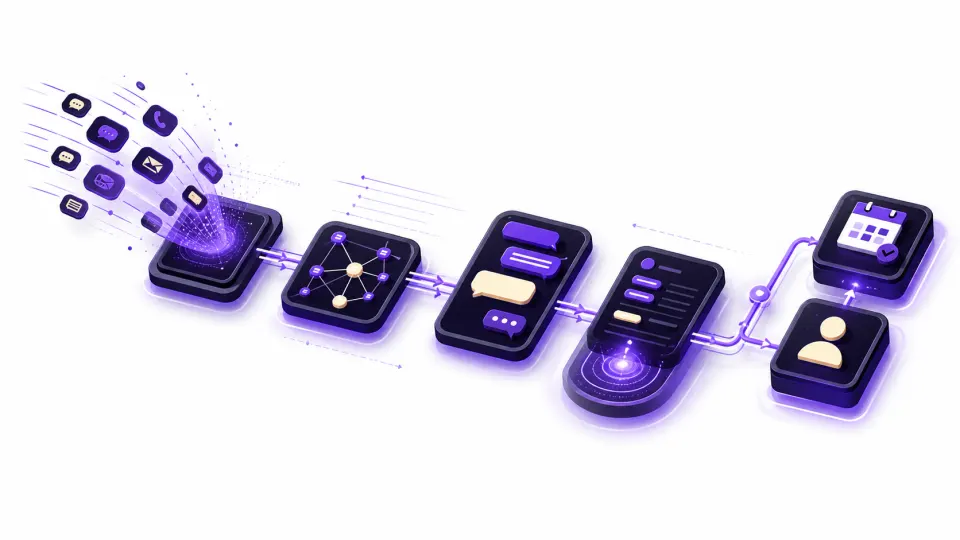
Define four response clocks, calculate a synthetic lead cohort and keep duplicates, no-response records and missing timestamps visible in your dashboard.
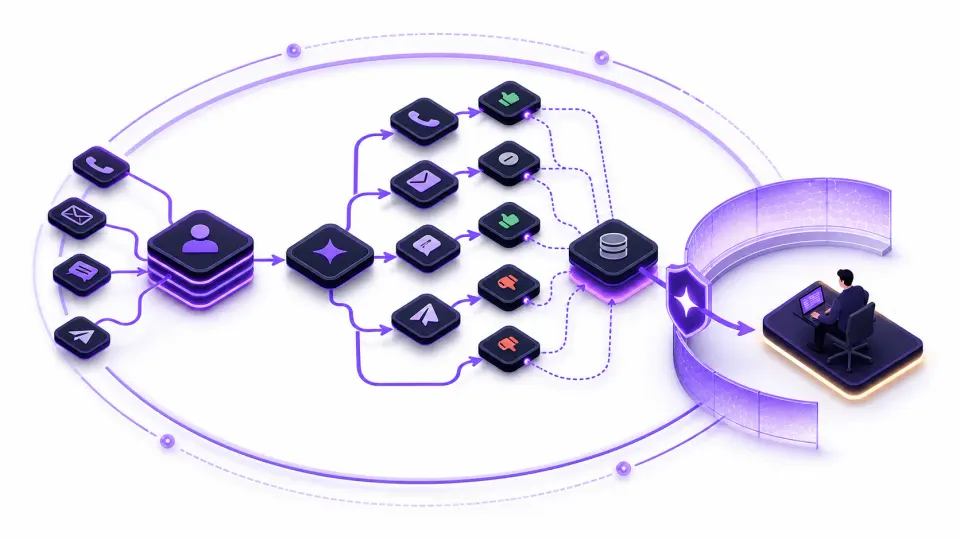
Learn how an AI sales development rep holds conversations, qualifies prospects, works alongside humans and takes bounded next steps. Hear an agent live.

Where AI voice agents actually help HR teams today across recruiting, onboarding, and always-on employee support, based on real adoption data.

Practical ways insurers can balance PHI security with easy member experiences, modernize legacy systems and pick a CX stack. Our agents are HIPAA compliant.

Separate proven HR AI from hype across recruitment, onboarding, workforce analytics and employee support, plus a vendor checklist before you buy.

Sourced market data and real uses of voice AI for scheduling, triage, documentation and mental health support, plus a look at who builds these tools.

What the evidence from healthcare, finance and manufacturing says about AI and people, what AI still can't do and how teams can prepare for the partnership.
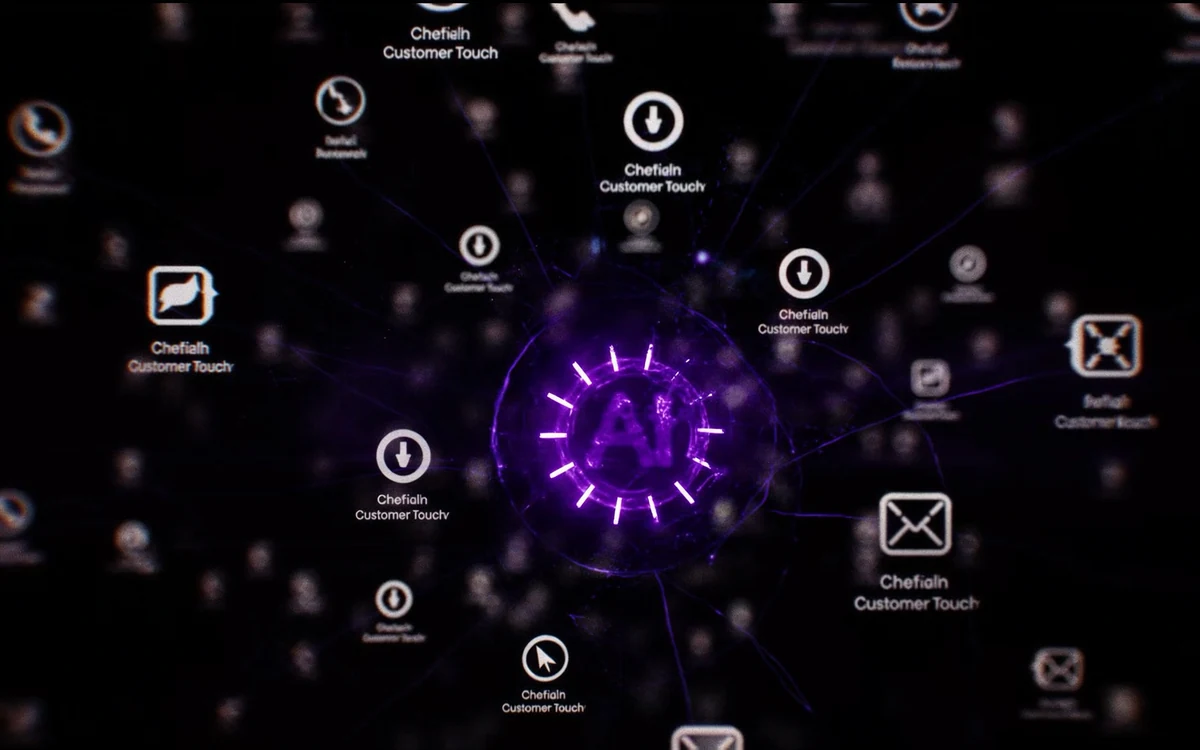
What AI-driven customer engagement really means across channels, what adoption data shows and two real deployment patterns. Talk to an agent in 30 languages.

Fact-checked examples from JetBlue, American Airlines, Singapore Airlines and Delta, plus how to choose AI agents for travel support. See the evidence.

How AI IVR swaps menu trees for natural language routing, how accurate call routing really is and where it works across industries. Try a live voice agent.
Verified evidence on AI underwriting copilots, document extraction, automation limits, and explainability rules, so insurers can start with confidence.

How to plan, launch, and measure an AI chatbot with voice using sourced IBM, Gartner, McKinsey, and Salesforce data, plus the common pitfalls to avoid.

How lenders, insurers, and collectors use conversational AI for collections, sales, and onboarding, plus the FDCPA and compliance rules you must follow.

See why the split is application versus capability, how generative models changed conversational systems, and where the old line between them still holds.

Sourced McKinsey, Deloitte, and Gartner data on where health insurers lose money, what automation saves, and how to calculate ROI and TCO before buying.

What Pfizer, Genentech, KFF and the Commonwealth Fund actually published on patient support and access gaps, with misquoted figures corrected and explained.

What AI adds to VoIP calling, how many concurrent calls it handles, which market numbers hold up and where businesses use it. Hear a voice agent live.

Learn how AI pre-intake calls collect patient details before the visit, what data gets captured, and the operational impact for clinics. Hear a sample call.

Inside modern AI phone calls: how they work, the security questions to ask, where they already succeed and how to evaluate vendors. Talk to a live agent now.

How AI contact center automation works, the main use cases, benefits and ROI, three real deployments, and steps to implement it, including no-code.

A buyer's guide to 16 enterprise voice AI platforms for contact centers, with a master scorecard, real cost economics and five costly mistakes to avoid.

Follow each step of a live voice agent turn, from speech-to-text to reasoning and speech output, and see where delay builds up. Hear a live demo of it.

Every working method to return an anonymous call, find out who is behind it, hide your own number and block unwanted callers, with honest limits on each.

Sourced research on insourcing, virtual and hybrid care, and real-time patient journey tracking, plus rollout advice. Ask how voice agents support patients.
How an AI voice agent handles latency, turn-taking and handoff, how it differs from IVR and chatbots, which features to check and platforms side by side.

How AI callers work, how they differ from auto-dialers and IVR, key features, TCPA and GDPR compliance, and whether to deploy inbound or outbound first.

A practical, no-hype look at how conversational AI works, how it differs from chatbots and generative AI, business use cases, benefits and how to pick a tool.

Build vs white label costs, earning potential, plan tiers, a launch playbook and platforms compared for agencies reselling AI voice under their own brand.

Ten sales call bots, including NextLevel.AI, Retell, Vapi and Bland, scored on voice quality, lead qualification and compliance. See your numbers first.

Prepare hours, booking rules, calendar access and human fallback for a small-business AI phone agent. Use a filled synthetic card before assisted setup.

Work out what a phone support team really costs, what AI voice agents save, vendor pricing models and the human tier to keep. Inbound plans from $49/mo.

Choose no-code or custom, then define the use case, write the system prompt, design flows, set up telephony and test. Or get a prototype in 2 days.

Weigh AI against human agents on cost per call, response speed and service quality, including where people still win. Use it to plan a blended support model.

A non-technical look at how voice agents hold live phone calls, how they differ from IVR and chatbots, what they cost and who uses them. Talk to our AI now.

Step-by-step plan to launch 24/7 AI booking at your clinic: prerequisites, calendar setup, reminders and edge cases, on a HIPAA compliant setup. Start here.
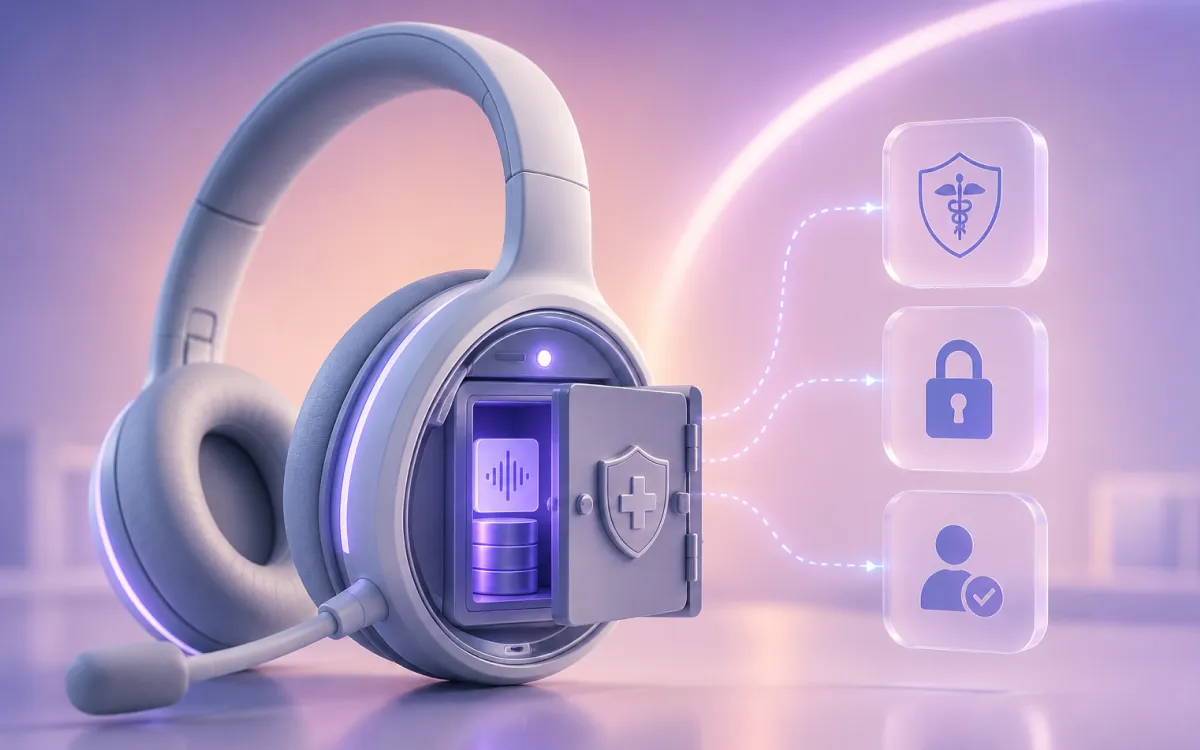
How clinics can deploy HIPAA-compliant AI voice agents with a signed BAA, encryption, and audit trails, and what to check before choosing a vendor.

Learn how AI voice agents qualify inbound and outbound real estate leads, what a qualification script covers and why speed to answer wins deals. Hear it live.

Use seven selection criteria, demo questions and red flags to choose a conversational AI vendor for your call center and run a fair comparison. Book a demo.

See how an AI receptionist writes contacts, call outcomes, and appointments to HubSpot, Salesforce, and other CRMs, plus what to check before you buy.

Learn which calls to automate first, how to set up an AI calling system, what it costs and which mistakes to avoid. Get a prototype in 2 days.

Why callers hang up, what abandoned calls cost by industry, how to benchmark your rate and how AI voice agents answer every call instantly, day or night.

Plan an AI-powered virtual call center: prerequisites, inbound versus outbound setup, metrics and how many agents you need. Get a tailored prototype.

Compare ten voice AI agents for contact centers on capabilities, pricing and fit, with our evaluation method explained. Then hear our agent live.

Learn what average handle time really measures, the two ways AI lowers it and how 15 voice agents compare on latency. Test a live NextLevel.AI agent today.
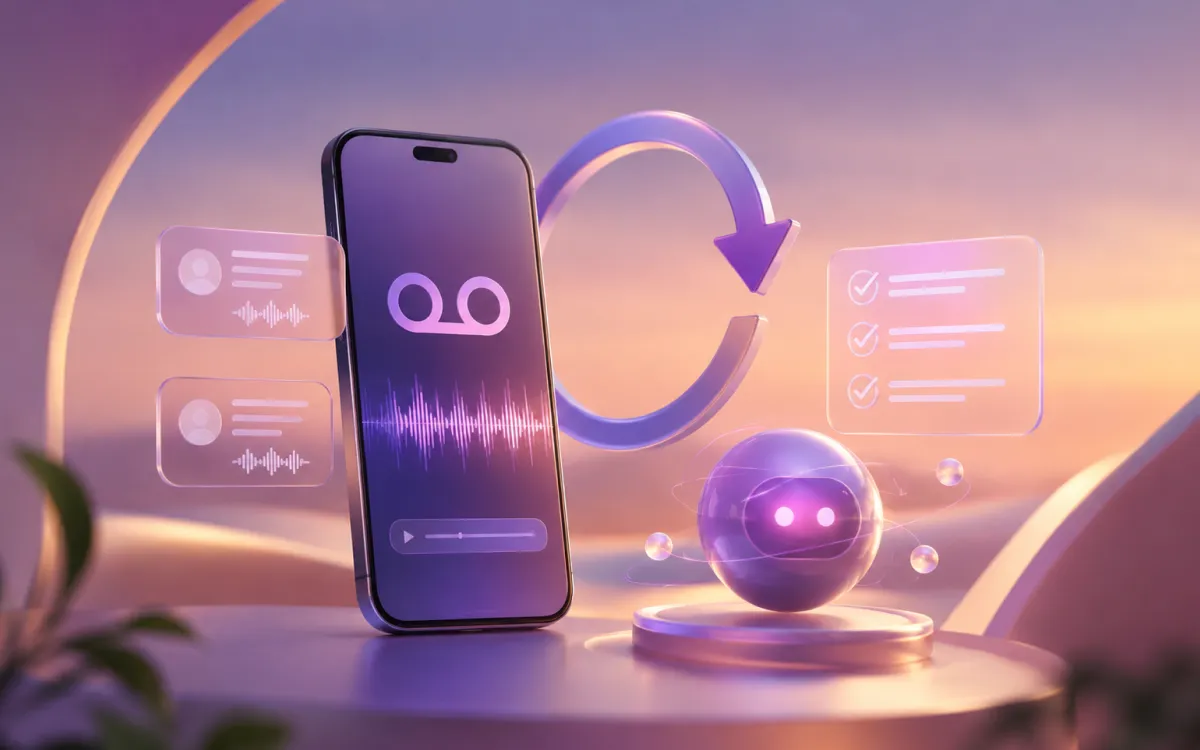
Ten practical AI voicemail drop tactics covering detection, message length, timing and compliance, so more of your prospects call you back. Read the guide.

Compare 15 call center voice AI options by product boundary and operating ownership. Turn automation claims into task-specific evidence requests.

Compare 15 receptionist options by AI, human and hybrid delivery. Use a filled evaluation sheet to check answers, bookings, transfers and ownership.

Fifteen support voice platforms scored on autonomous resolution, compliance, integrations and real cost, with a full comparison table and industry guidance.
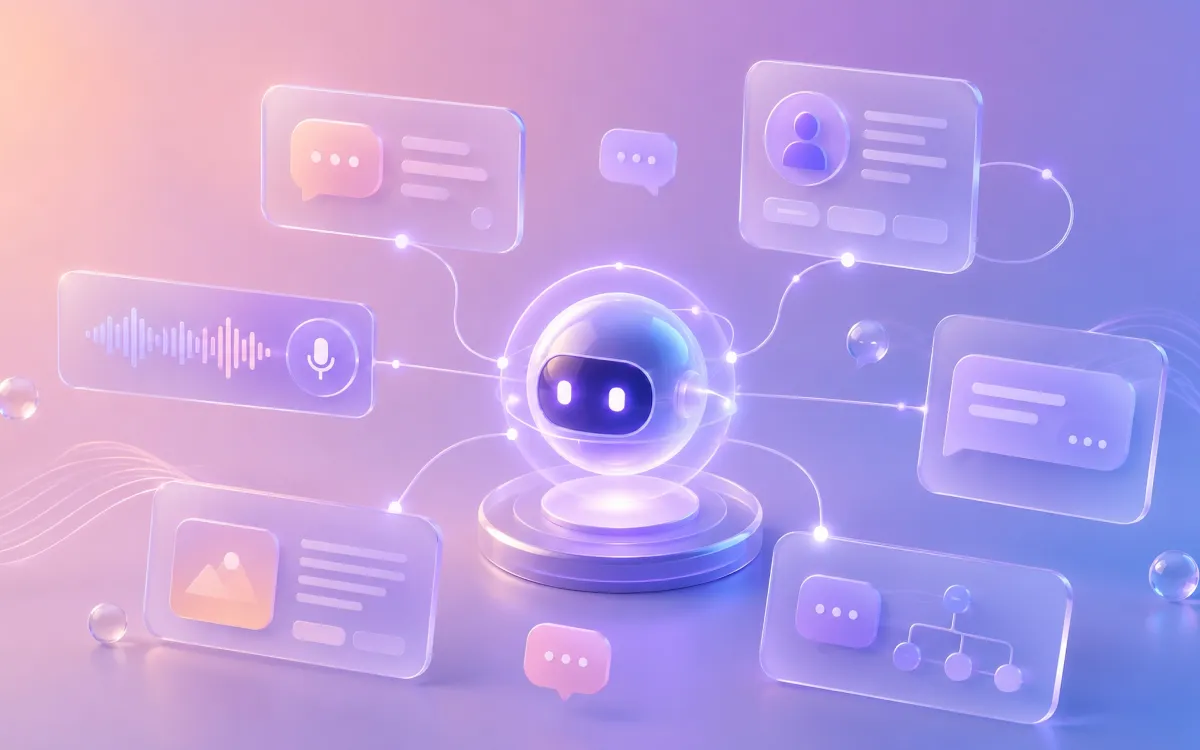
See how 15 conversational AI platforms compare on voice quality, integrations and pricing, and what changed in the market. Shortlist with confidence.

Clinical evidence on voice AI for diabetes, heart failure, COPD and mental health, with honest limits and where human clinicians stay in charge of decisions.

Evidence from McKinsey, Deloitte and Lemonade on AI in claims intake, fraud checks and service, without invented quotes or figures. See where it fits.

See the real cost of manual lead qualification, how voice AI agents qualify prospects in conversation, and how results compare with traditional workflows.

What research says about automated reminders and missed visits, how voice AI books and confirms patients from first call, and where it fits. Hear a demo.

Break down what drives voice AI agent cost, how per-minute, seat and white-label pricing models differ, and when an agent pays back. Plan your budget.

Five shifts in pharma patient services, from AI support as standard infrastructure to direct-to-patient models and predictive journey tracking, with tips.

Clear definitions of natural language processing, understanding, generation and large language models, plus tokenization, NER, sentiment and common mix-ups.

What voice AI for support is, what research shows, common use cases and how it changes your team's work, with human handoff. Inbound plans from $49/mo.

A practical look at the technology behind AI phone calls, the security essentials, industry use cases and how people and AI share the work. Try a demo call.

Fact-checked trends on how companies scale conversational agents, from Gartner, McKinsey and BCG sources, plus a practical way to measure return on voice AI.

Practical ways insurers can balance PHI security with seamless service, reach every demographic and modernize legacy systems. See a HIPAA-compliant agent.

Clear definitions of data science, big data, structured data, datasets, warehouses, and data fusion, with the 2.5 quintillion bytes claim fact-checked.

How voice AI agents handle refills, reminders and patient questions with context, what real deployments show, and where they fit in a care team. Hear a demo.

See how back office AI speeds revenue cycle work, eases compliance tasks and handles patient phone calls and scheduling for healthcare administrators.

Learn why the old rule-based vs AI-powered split has blurred, how chatbots differ from the technology behind them, and which one your business needs.

Why callers already expect less from the phone, how AI agents move past rigid scripts, and where customers still want a human. Hear an AI phone agent live.

The key questions leaders ask before committing to AI voice agents: evaluation, governance, adoption patterns by industry, and how to measure results.

Four pillars of compliant enterprise AI in drug development, what 21 CFR Part 11 and GxP require, and how to vet any AI for pharma vendor pitch. Read on.

How banks use conversational AI for disputes, KYC, and account tasks with full audit trails, and what the McKinsey data on cost reduction really shows.

Compare traditional contact center labor costs with AI voice agent pricing, software, hardware, and facility costs, and see where AI runs in production.

How AI voice agents run outbound campaigns in practice, from dialing limits and consent rules to CRM updates and human handoff. Plans start from $500/mo.

How AI competitive intelligence actually works for tracking competitors and regulations, which claims lack sources and where voice AI fits. Read the review.

What domain-specific AI tools really do in each department, why the digital experts pitch falls short, and how to test any vendor claim before you buy.

Learn why data alone is not knowledge, how AI knowledge graphs differ from vector-based RAG, and when an enterprise needs a graph database behind its agents.

Why production voice systems run several real-time STT models at once, what research shows on accuracy and the engineering it takes, notably in healthcare.

See what enterprise knowledge-AI platforms really ship, what the ROI data says, and where governed agents fit. Book a 30-minute call to scope your use case.

Benchmarks for GPT-4o, Deepgram, Whisper, and other STT models on accuracy, latency, and language coverage, plus how to choose one for voice agents.

A research-backed look at what HireVue, Paradox, SeekOut, and Gem automate in hiring today, where voice AI helps candidates, and where humans still decide.

Zendesk, McKinsey and Aberdeen findings on cross-channel engagement, checked and explained, plus how one configurable AI agent keeps context across channels.

What boards really do with AI today, why the AI board member pitch runs ahead of reality, and what correlates with payoff. See where voice AI agents fit in.

Discover how marketing teams use AI agents for personalized outreach, lead capture and campaign follow-up, with real-world applications and key benefits.

Thirteen characteristics of intelligent systems defined plainly and grounded in NIST and the EU AI Act, with what each means when you evaluate an AI vendor.

What AI-driven support means, its benefits for owners, marketers and sales, how it works day to day and how to pick tools. Move from reactive to proactive.

Clear definitions of generative AI, predictive AI, machine learning, conversational AI and LLMs, and how each one relates to the others, without vendor spin.

Why insurance retention is hard, how B2C and B2B challenges differ, and how voice AI agents turn renewals from reactive into proactive outreach. Hear a demo.

Real, sourced generative AI uses in retail, pharma, banking, insurance, HR, procurement and more, showing where it now works as core business infrastructure.

Learn how voice choice shapes brand perception and sales, plus the criteria US marketers should use to pick tone, accent and persona for an AI voice agent.

A plain guide to supervised, unsupervised, reinforcement, few-shot and zero-shot learning, and what vendors really mean when they say their AI learns.

Learn how generative AI differs from predictive AI, how its algorithms work, a real timeline of its origins, today's examples and what a prompt actually is.

How AI is changing customer service, the key trends ahead, and how to balance automation with a human touch. Includes steps to prepare your support team.

Compare vector retrieval and knowledge graphs on drug-target reasoning and regulatory lookup, with GraphRAG findings and when a hybrid design makes sense.

Understand how voice bots and chatbots work, where they differ and what each brings to sales and marketing teams. NextLevel runs voice and chat in one agent.

What AI-driven clinical intelligence companies deliver today, what FDA and ICH guidance says about AI in trials, and where compliant voice AI can fit.

What makes an AI voice sound human, the business benefits, top sales and marketing use cases, and how to choose a solution. Hear our agent in 30 languages.

What AI-driven in-silico compound screening achieves in preclinical research, how two pathways got blended in vendor pitches and how to vet them. Read more.

How AI reshapes the sales process, which tools sales teams rely on, ways to lift revenue and common pitfalls to avoid. See an outbound agent book meetings.

What AI-driven regulatory intelligence achieves in pharma today, what FDA and EMA guidance says about AI, and where compliant voice AI realistically fits.

Browse real-world AI voice agent use cases across marketing, sales and support, and see how companies apply them for growth. Find the use case that fits.

How insurers in the UAE and Saudi Arabia meet PDPL rules with ISO 27001 controls and zero data retention voice AI, checked against the regulations.

How multilingual voice AI powers growth, what it offers marketers and sales teams, how to pick the right tools and next steps to roll it out across markets.

Understand how continuous learning lets AI agents adapt from every interaction, what it changes for sales and marketing teams, and how to implement it safely.
Meet the agent that engages prospects on web or phone, qualifies and captures leads, syncs with your CRM and schedules meetings with sales. Book a demo.

How voice AI changes retail operations and customer experience, practical integration steps for US stores, and gains for sales teams. Answer shoppers 24/7.

Benefits of multilingual voice agents, how they drive sales and marketing, and how to roll them out in your company. NextLevel agents speak 30 languages.
How small businesses use voice AI for sales, marketing and service, with practical setup steps and real US examples. Inbound phone agents start from $49/mo.
Why US firms adopt AI in support, the tools reshaping service, a step-by-step plan to scale your team and how to measure ROI. Go live in about two weeks.
Key terms, how conversational AI drives growth, real marketing and sales uses, and steps to implement it. Get a tailored voice agent in 2 days.

How voice AI handles GCC insurance calls across languages, which compliance points matter to buyers and how to judge vendor reliability. Hear a live demo.

Seven shifts in healthcare AI, from multi-agent networks and patient-preferred AI calls to multimodal tools and outcome-based pricing, explained for clinics.
Explore the cost of the medication adherence gap, where voice AI fits across the patient journey, and what leaders should check before choosing a vendor.

Plain definitions of algorithms, RAG, agentic AI, interpretability, and other key AI terms, with current examples and the most common mix-ups corrected.
Eight AI agent types, from sales and call center to real estate, insurance and personal assistants, and what each really does. Find the one your team needs.

How voice AI connects to policy, claims, and billing systems through APIs, plus omnichannel web and app integration and compliance controls for insurers.
Why benefits and provider-network calls make a sensible first voice AI use case for insurers, how an agent answers them, and where human staff step in.
A plain-language explainer of what an AI agent is, the five classic agent types, the perceive-reason-act cycle and core components. Cut through the hype.

Where AI agents already handle scheduling, intake and member services in healthcare, who is building them, and which outcomes are worth measuring. Read on.

Explore five practical ways insurers apply AI to claims processing, underwriting, fraud detection and personalized service. See where voice agents fit.

The launch story behind NextLevel.AI, an SPsoft platform built for automation, smarter decisions and seamless integration so businesses run more efficiently.
Why organizations decommission legacy and redundant software, the common steps to retire an application safely, the benefits and a real-world use case.
